
10 Wall Styling Behind Sofa
The wall behind a sofa is one of the most important areas in a living room, yet it is often left plain or ignored. This wall naturally becomes a focal point because the sofa is usually the largest piece of furniture in the space. When styled correctly, the wall behind the sofa can improve the overall balance, beauty, and comfort of the room. It can reflect personal taste, support the theme of the interior, and even make a small living room look larger and more organized.
Wall styling is not only about decoration. It also involves planning, material selection, color coordination, and correct installation. Factors such as wall size, sofa placement, lighting, and daily usage must be considered before choosing any design. A well-designed wall should feel connected to the sofa and the rest of the room, not separate or overpowering.

In this blog post, you will find ten clear and practical wall styling ideas for behind the sofa. Each idea includes preparation steps, suitable materials, usage tips, and design guidance. These ideas work well for modern, traditional, and mixed-style homes. Whether you prefer a simple look or a bold statement, these wall styling solutions will help you create a well-finished and welcoming living room.
1. Large Artwork or Statement Painting
A large artwork or statement painting is one of the simplest and most effective ways to style the wall behind a sofa. It immediately draws attention and creates a strong visual impact. Before selecting artwork, measure the width of your sofa. Ideally, the artwork should be around two-thirds the width of the sofa to maintain balance.
Preparation starts with choosing a theme that matches your interior style. Abstract art suits modern homes, while landscapes and traditional paintings work well in classic interiors. Use a solid and durable frame made from wood or metal. Lightweight canvas prints are also a good option, as they are easier to install and maintain.
The artwork should be placed at eye level when seated. Avoid hanging it too high, as this breaks the visual connection between the sofa and the wall. Use proper wall hooks and anchors based on wall material such as concrete, brick, or drywall.
This styling option is easy to update. You can change the artwork seasonally or whenever you want a fresh look. It requires minimal maintenance and instantly adds character and personality to the living room.
2. Gallery Wall with Photo Frames
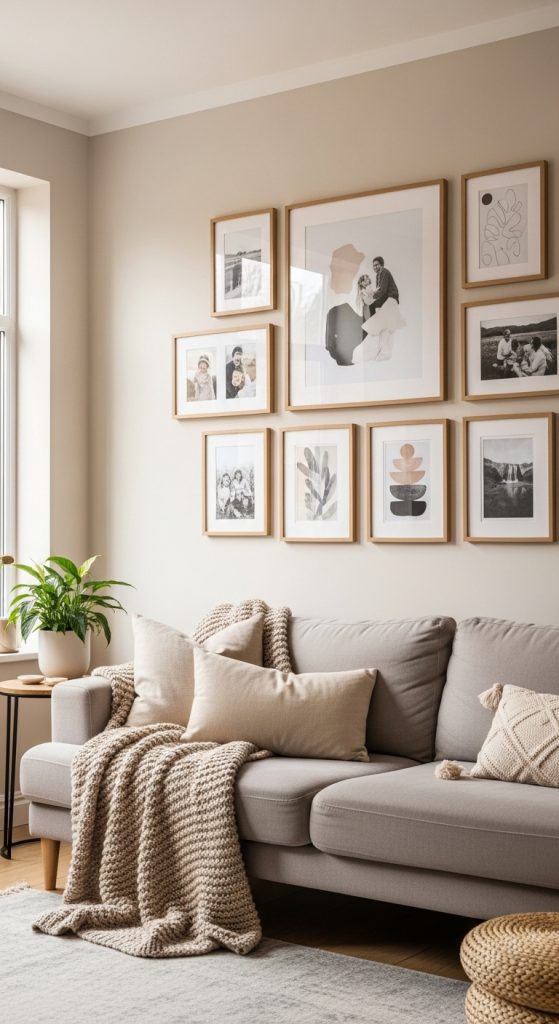
A gallery wall is a creative and personal way to decorate the space behind a sofa. It allows you to display family photos, artwork, quotes, or illustrations in a structured layout. Preparation is important for this style to avoid a cluttered appearance.
Start by selecting a consistent theme, such as black-and-white photos, wooden frames, or a single color palette. Lay the frames on the floor first to plan the arrangement. This step helps you decide spacing and alignment before making holes in the wall.
Materials include lightweight frames, measuring tape, level tool, and removable hooks or nails. Maintain equal spacing between frames to create a neat look. The gallery should start a few inches above the sofa back and not extend too far outward.
This wall styling adds warmth and storytelling to the living room. It reflects personal memories while maintaining style. Regular dusting and occasional frame cleaning are enough to keep it looking fresh and organized.
3. Wooden Wall Panels or Slats
Wooden wall panels or vertical slats add texture, warmth, and depth behind a sofa. This style works especially well in modern and natural-themed interiors. Preparation involves measuring the wall area and deciding whether to cover the full wall or only a section behind the sofa.
Materials commonly used include MDF panels, plywood, or solid wood slats. These can be finished in natural wood tones, painted colors, or polished textures. Installation requires proper adhesive or screws, depending on panel weight.
Vertical slats make the ceiling appear higher, while horizontal panels add width to the room. Pairing wooden panels with neutral sofas creates a balanced and calming look. Soft lighting can enhance the texture and grain of the wood.
Maintenance involves regular dusting and occasional polishing. Wooden panels are durable and long-lasting, making them a practical and stylish choice for wall styling behind the sofa.

4. Accent Wall with Paint or Texture
An accent wall is created by using a different color, texture, or finish on the wall behind the sofa. This approach is budget-friendly and does not require heavy materials. Preparation includes selecting a color that complements the sofa and surrounding decor.
Popular choices include deep blues, warm earth tones, soft greys, or muted greens. Textured finishes like stucco, lime wash, or subtle patterns add interest without overwhelming the space. Use high-quality paint and tools for a smooth and even finish.
The accent wall should not clash with furniture or curtains. Keep the rest of the walls neutral to allow the accent wall to stand out. This styling method works well in both small and large living rooms.
Accent walls are easy to update with repainting and require minimal maintenance. They provide a clean and modern look while highlighting the sofa area naturally.

5. Floating Shelves for Decor Display
Floating shelves behind a sofa offer both decoration and function. They allow you to display books, plants, vases, and small art pieces. Preparation involves selecting shelf length and placement that does not interfere with seating comfort.
Materials include wooden, metal, or glass shelves with strong wall brackets. Install shelves securely using wall anchors, especially if you plan to place heavy items. Keep shelf depth shallow to avoid overcrowding.
Arrange decor items with balance, mixing tall and short pieces. Avoid clutter by leaving some empty space. Neutral shelves work well in most interiors, while dark or bold shelves create contrast.
Floating shelves are easy to rearrange and style over time. Regular dusting keeps them clean. This wall styling idea adds personality while keeping the living room organized.

6. Mirror Panels or Large Mirror
Mirrors behind a sofa help reflect light and make the living room feel larger and brighter. This is especially useful in small or low-light spaces. Preparation includes selecting mirror size and shape based on wall width.
A single large mirror creates a clean and elegant look, while mirror panels add modern appeal. Use high-quality glass and strong mounting hardware to ensure safety. Frameless mirrors offer a sleek finish, while framed mirrors add decorative detail.
Place the mirror slightly above the sofa back and ensure it reflects light or an attractive view. Avoid placing mirrors where they reflect clutter or harsh lighting.
Mirrors require regular cleaning but offer long-term visual benefits. They enhance space, brightness, and overall room balance when placed correctly behind the sofa.

7. Wallpaper or Wall Murals
Wallpaper or wall murals provide a dramatic and artistic effect behind the sofa. Preparation is key, including proper wall cleaning and surface leveling. Choose designs that suit the size of the room and sofa color.
Subtle patterns work well in small spaces, while bold murals suit large living rooms. Materials include vinyl wallpaper, fabric-backed wallpaper, or peel-and-stick options. Professional installation ensures better alignment and durability.
The sofa should remain the main focus, so avoid overly busy designs. Match cushions or decor colors with wallpaper tones for a cohesive look.
Wallpaper adds depth and style without additional decor. Maintenance involves gentle cleaning and avoiding moisture exposure. It is a strong visual solution for wall styling.

8. Metal Wall Art or Sculptures
Metal wall art introduces a modern and artistic feel behind the sofa. Preparation includes choosing lightweight metal pieces with secure mounting options. Designs range from abstract shapes to nature-inspired patterns.
Materials include iron, aluminum, or brass finishes. These pieces often come with built-in hooks for easy installation. Ensure the wall can support the weight and use anchors if needed.
Metal art looks best against plain walls and neutral sofas. It adds contrast and texture without needing multiple elements. Proper lighting enhances its design and shadows.
Maintenance is minimal, requiring only dusting. Metal wall art is durable and adds a sophisticated touch to the living room.

9. Fabric Panels or Upholstered Wall
Fabric panels behind a sofa add softness, comfort, and acoustic benefits. Preparation includes selecting fabric that matches the sofa or cushions. Common materials include velvet, linen, or padded fabric panels.
Panels are mounted using adhesive or frames. Neutral colors create a calm environment, while patterned fabrics add interest. Upholstered walls are especially suitable for cozy living rooms.
This style reduces echo and enhances comfort. Regular vacuuming or spot cleaning keeps fabric panels fresh. They also protect the wall from marks caused by daily use.
Fabric wall styling adds warmth and luxury to the sofa area while remaining practical and stylish.

10. Combination of Lighting and Wall Decor
Combining wall decor with lighting creates depth and highlights the sofa area. Preparation includes planning wiring and placement of wall lights. Popular options include wall sconces, LED strips, or picture lights.
Use lighting to highlight artwork, shelves, or textures. Warm lighting creates a relaxing atmosphere, while neutral lighting suits modern interiors. Ensure fixtures are installed safely and professionally.
Decor elements should not block light sources. Balance is important to avoid harsh shadows. Lighting enhances wall styling without adding clutter.
This combination improves both function and aesthetics. It adds a layered and well-designed look to the living room behind the sofa.
