10 Curved Wall Styling ideas
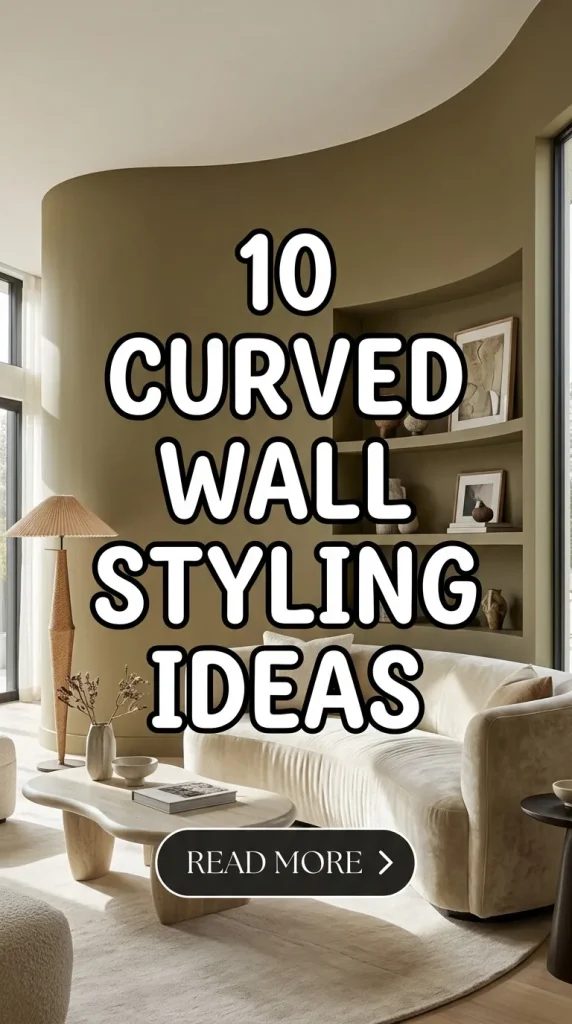
Curved walls are a design element that brings a soft, flowing aesthetic to interiors. Unlike straight walls, curved walls create unique spatial experiences, giving rooms an organic, dynamic feel. Styling a curved wall can transform a simple space into an eye-catching focal point. Here are ten ideas to enhance curved walls, along with preparation tips and material guidance.
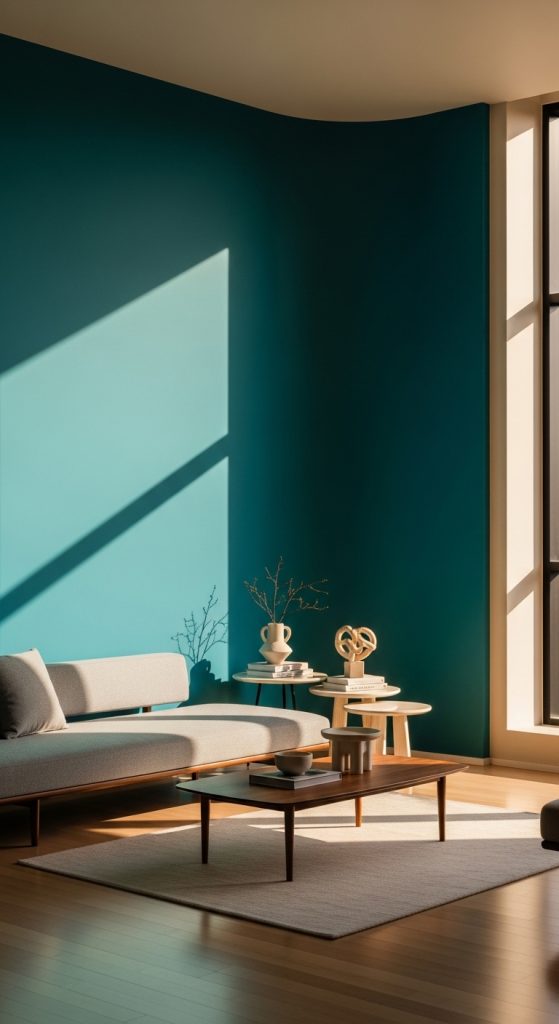
1. Painted Accent Wall
One of the simplest ways to highlight a curved wall is with paint. A bold or contrasting color draws attention to the curve, emphasizing its architectural uniqueness. Preparation starts with cleaning the wall thoroughly to remove dust and grease. Sand the surface lightly if it has imperfections. Use a primer suitable for your wall type to ensure even paint adhesion. Choose high-quality paint that provides full coverage with minimal coats. When applying paint to a curved surface, a small roller works better than large ones, allowing even application along the curve. You may also use painter’s tape for edges where the curve meets another wall or ceiling to maintain clean lines. Beyond solid colors, gradient effects or color blocking can further enhance the curve. Lighter shades make the space feel larger, while darker shades create intimacy and focus. A painted curved wall works well in living rooms, bedrooms, or hallways, adding personality without permanent changes.
2. Wall Paneling
Wall paneling adds depth and texture to curved walls. Wood or MDF panels can be bent or custom-cut to follow the wall’s curve. Begin by measuring the curve precisely to ensure each panel aligns perfectly. Choose panel materials that can bend without cracking, such as thin plywood or flexible MDF. Installation involves securing vertical or horizontal battens first, then attaching panels to them. Wood panels create a warm, natural atmosphere, while painted or lacquered MDF offers a modern, sleek finish. Paneling can include grooves or decorative molding to emphasize the curve. Another option is upholstered wall panels, which introduce softness and acoustic benefits. The color, finish, and style of panels should complement the rest of the interior. For a contemporary touch, consider mixing different panel widths or creating a geometric pattern along the curved surface. Wall paneling not only enhances the aesthetic but can also hide imperfections or structural elements, making it both functional and stylish.
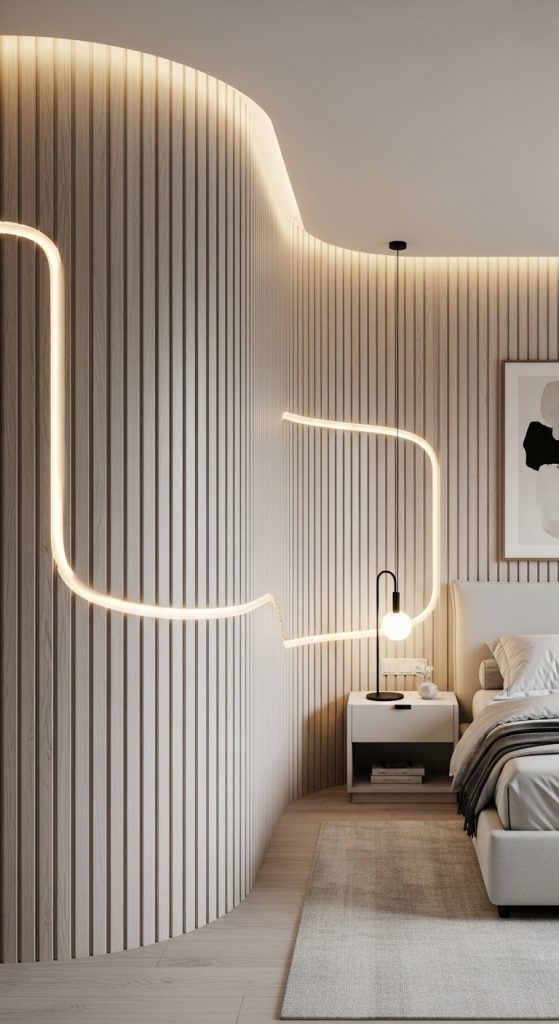
3. Feature Lighting
Lighting can dramatically enhance a curved wall’s visual appeal. Installing LED strips, sconces, or recessed lights along the curve highlights its form and creates a sense of depth. Preparation involves ensuring the wall surface is smooth and free from dust. Consider wiring needs before installation, as some lighting options require embedded electrical work. Flexible LED strips are ideal for following the curve accurately. For a dramatic effect, install lights at the base or ceiling edge of the curve, casting shadows that accentuate the shape. Warm lighting creates a cozy, inviting atmosphere, while cooler tones can highlight architectural features. Wall-mounted sconces can be arranged in a pattern following the curve, creating a sculptural effect. Dimmer switches allow control over mood and intensity. Feature lighting can be combined with paint or wall textures for maximum impact. Properly planned lighting transforms a curved wall from a subtle design feature into a central focal point in any room.
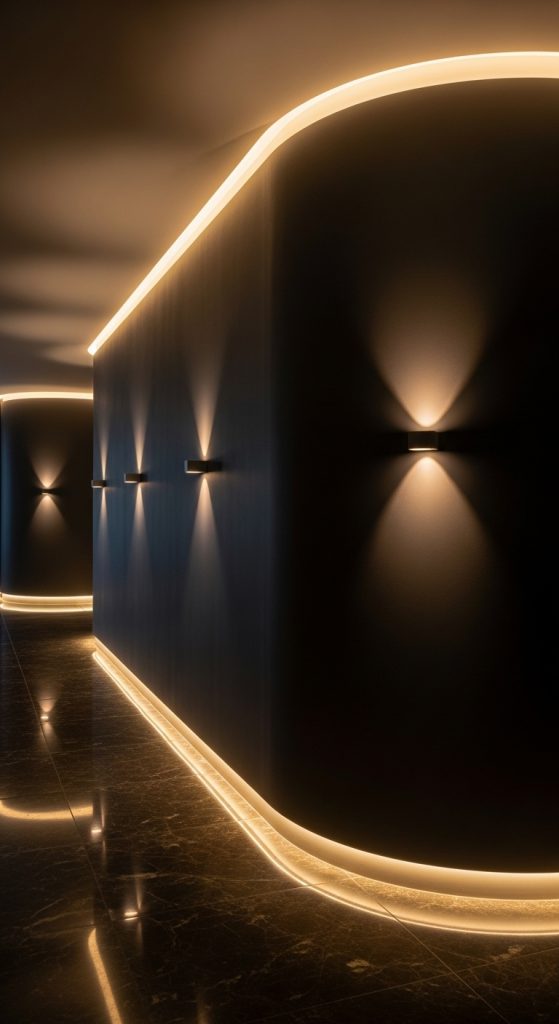
4. Textured Finishes
Applying textured finishes to a curved wall adds visual interest and dimension. Materials such as plaster, stucco, or Venetian plaster work well for achieving a tactile surface. Start by preparing the wall, repairing any cracks or uneven areas. Apply a base coat to smooth the wall, followed by a textured layer using a trowel or spatula. Textures can range from subtle sand finishes to dramatic swirling patterns that enhance the wall’s natural curve. Paint or metallic finishes can be applied over the texture for added depth and style. Textured walls are especially effective in living rooms, entryways, or feature areas, creating a sensory experience that engages both touch and sight. Textures can also help hide minor imperfections, making them practical as well as decorative. When selecting materials, consider durability, maintenance, and compatibility with the existing décor. Textured finishes combined with soft lighting create striking visual effects, emphasizing the unique architecture of a curved wall.
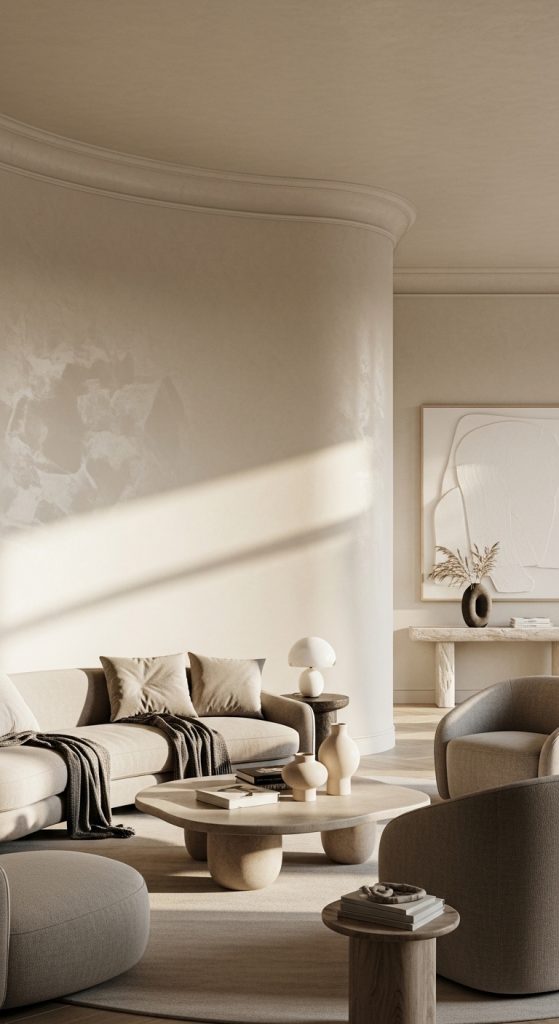
5. Wallpaper Designs
Wallpaper offers endless possibilities for styling curved walls. Flexible wallpaper materials, such as vinyl or fabric-backed options, can be applied smoothly over curves without creasing. Preparation begins with cleaning the wall and applying a suitable primer to ensure adhesion. Measure and cut wallpaper panels carefully to match the curve. For large or continuous patterns, adjust alignment to prevent distortion along the curve. Geometric patterns, floral designs, or abstract art can all complement the curved architecture. Some wallpapers feature metallic or textured finishes, adding depth and visual interest. Professional-grade adhesives ensure the wallpaper remains secure over time. Wallpaper is ideal for creating a statement wall in bedrooms, living rooms, or dining areas. Combining wallpaper with subtle lighting enhances its effect, highlighting the curve elegantly. This approach allows for seasonal or thematic changes, offering flexibility compared to permanent finishes. Wallpapers transform curved walls into artistic elements that instantly elevate interior style.
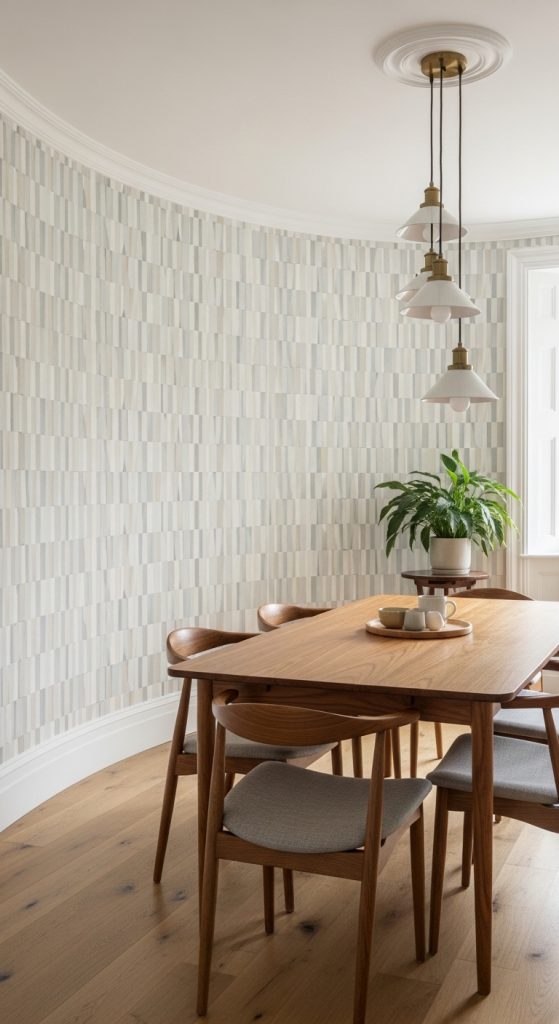
6. Built-In Shelving
Custom-built shelving along a curved wall maximizes space while adding functional beauty. Shelves can follow the curve seamlessly, creating fluid storage or display areas. Start by measuring the wall and designing shelving units that complement the curve. Choose materials such as wood, MDF, or metal, depending on the desired style. Ensure the wall structure can support the shelves, especially if heavier items will be displayed. Installation involves attaching brackets or supports that align with the wall’s curvature. Floating shelves enhance the sleek, modern look, while framed shelving units offer more traditional elegance. Curved shelving is ideal for books, decorative objects, or plants, transforming the wall into a visually dynamic focal point. Lighting can be added under shelves to highlight objects and accentuate the curve. This design solution balances functionality with aesthetic appeal, making it perfect for living rooms, offices, or hallways where space efficiency and style are equally important.
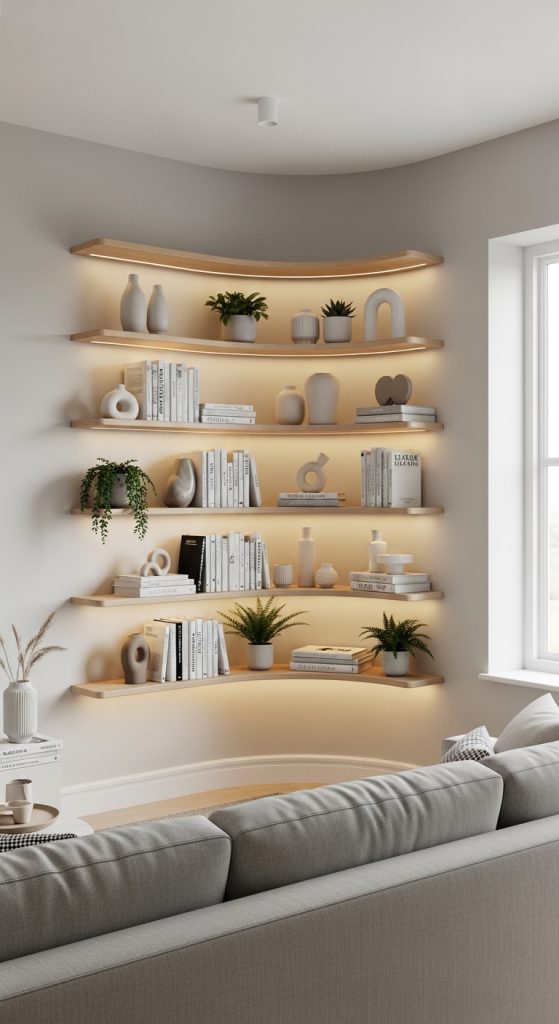
7. Art Display
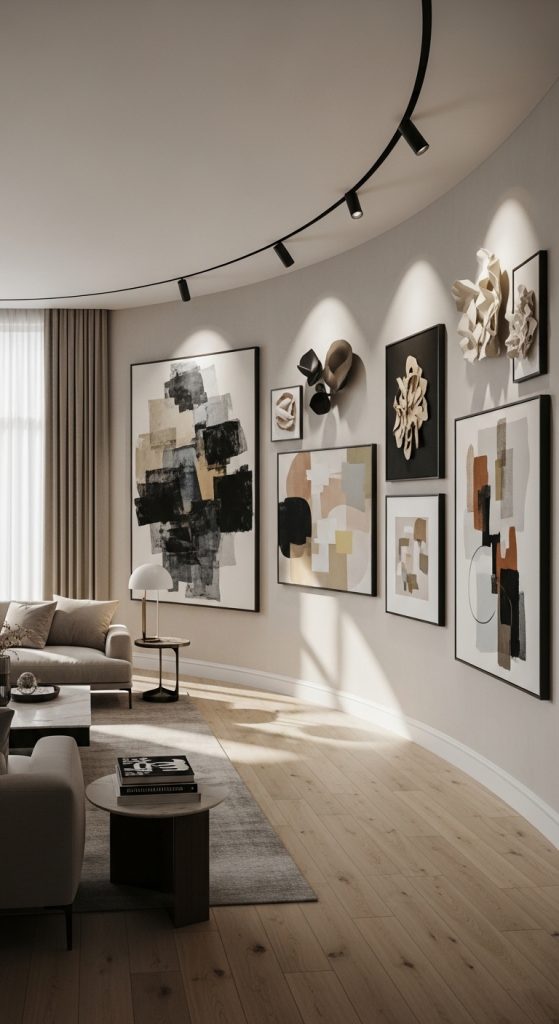
A curved wall can serve as a stunning backdrop for artwork. Large paintings, sculptures, or wall-mounted installations follow the wall’s natural line, creating a gallery-like effect. Begin by preparing the wall to ensure it is smooth and free of imperfections. Choose frames and mounting hardware that accommodate the curve. For a continuous display, stagger artwork along the curve, maintaining visual balance. Consider lighting to accentuate each piece and highlight the wall’s shape. Curved walls naturally guide the viewer’s eye, making them ideal for showcasing a focal collection. Art can also include mixed media, such as mounted fabric, mirrors, or 3D pieces, adding depth and interest. This styling technique works well in corridors, living rooms, or entryways, transforming a curved wall into a curated exhibition space. Combining color, texture, and lighting ensures that both the wall and the artwork harmonize to create a memorable interior feature.
8. Natural Materials
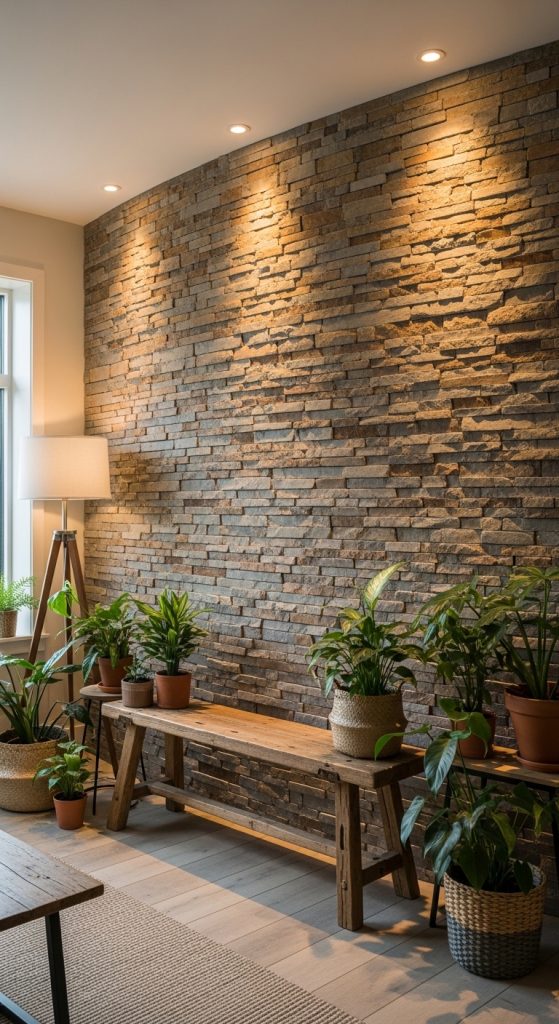
Incorporating natural materials like stone, brick, or reclaimed wood enhances a curved wall with organic texture and warmth. Preparation involves ensuring the wall is stable and applying appropriate adhesives or mortar for heavy materials. Flexible stone veneer or thin brick panels are ideal for curved surfaces. For wooden finishes, select materials that can bend or be cut precisely to follow the curve. Natural finishes bring depth and richness to interiors, complementing modern, rustic, or eclectic décor styles. The interplay of light on textured natural materials accentuates the curve beautifully. Protective coatings help maintain durability and ease of maintenance. Combining natural materials with minimalist furnishings allows the wall to become a focal point without overwhelming the space. These materials also introduce a tactile element, making rooms feel grounded and inviting. Curved walls clad in stone, wood, or brick elevate interior design by connecting architectural elegance with natural aesthetics.
9. Mirrors and Reflective Surfaces
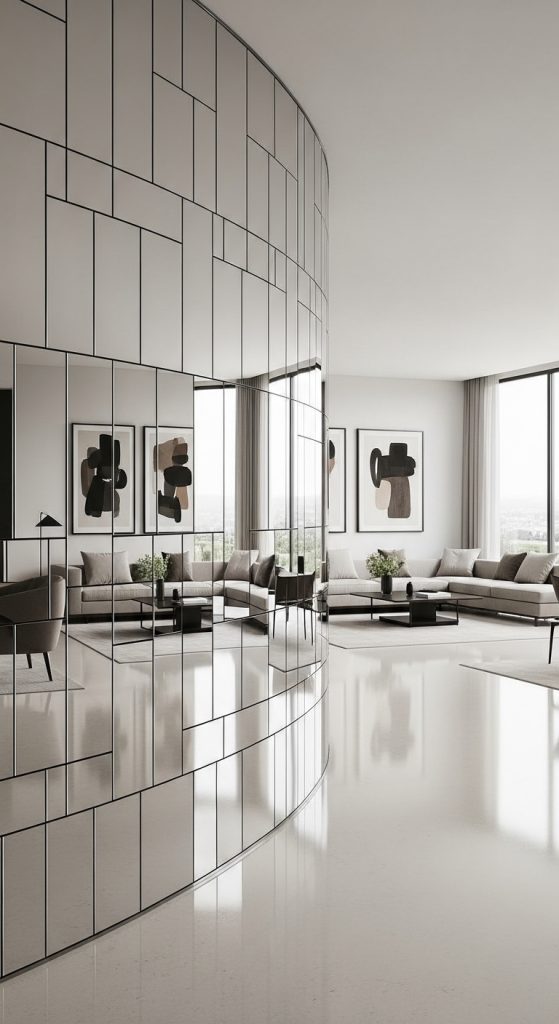
Mirrors and reflective panels create the illusion of space while emphasizing the curve of a wall. Glass, acrylic, or mirrored panels can be custom-cut to follow the curved shape seamlessly. Preparation includes cleaning the surface and ensuring it is level for proper alignment. Mounting hardware or adhesive should be chosen based on panel weight and material. Reflective surfaces amplify light, making rooms appear larger and brighter, while the curve adds dynamic visual interest. Mirrored walls are particularly effective in smaller spaces like hallways, bathrooms, or compact living rooms. They also offer opportunities for creative patterns, such as segmented panels, geometric shapes, or backlit mirrors. Combining mirrors with subtle lighting enhances their impact, highlighting both the curve and the overall design. This approach blends functionality with aesthetic appeal, turning curved walls into interactive, luminous features that expand and enliven interior spaces.
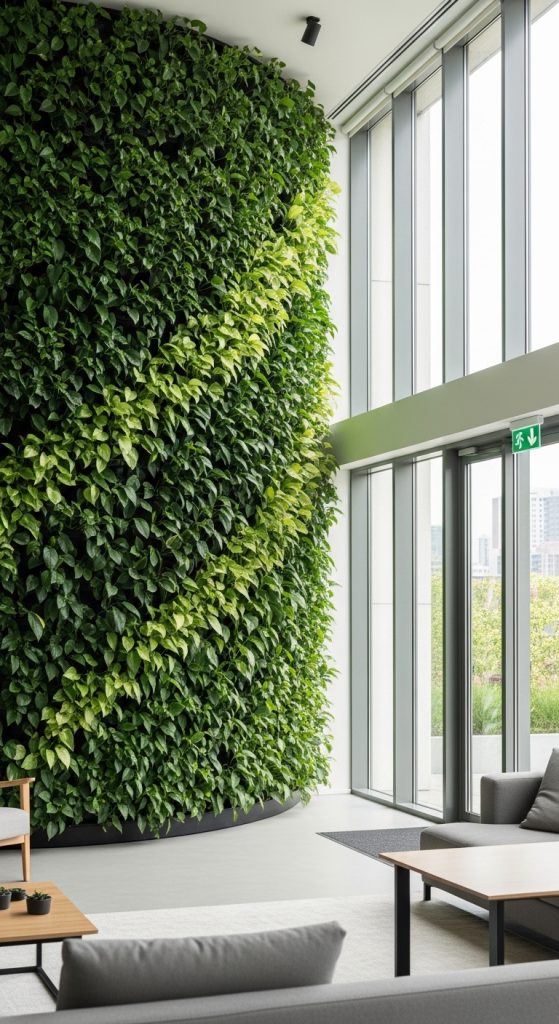
10. Green Walls
Living walls or vertical gardens transform curved walls into vibrant, natural focal points. Start by installing a sturdy frame or modular system that can support soil, plants, or hydroponic setups. Ensure proper water drainage and access to light for healthy plant growth. Choose plants that thrive in indoor environments, considering low-light, humidity, and maintenance requirements. Curved green walls create flowing organic forms, softening interiors and introducing natural color and texture. They also improve air quality and contribute to a sense of well-being. Maintenance involves regular watering, pruning, and occasional replacement of plants to keep the display fresh. Lighting can be added to highlight the curve and enhance plant growth. Green walls work well in living rooms, offices, or commercial spaces, combining environmental benefits with striking design. A curved vertical garden turns a simple wall into a living, breathing feature that adds beauty, freshness, and personality.