Industrial loft apartments have become a popular design style for people who love open spaces, raw materials, and modern urban living. This style originated from old factories and warehouses that were converted into living spaces, especially in cities like New York during the mid twentieth century. Designers kept many original elements such as exposed brick walls, large windows, metal structures, and concrete floors. Over time, this look evolved into a trendy interior design style that blends industrial features with modern comfort.
One of the most appealing aspects of an industrial loft apartment is the sense of space and character it offers. High ceilings, open floor plans, and minimal interior walls create a bright and airy environment. Instead of hiding construction elements, industrial design celebrates them. Pipes, beams, ductwork, and unfinished surfaces become part of the decoration. This creates a unique aesthetic that feels both rugged and stylish.
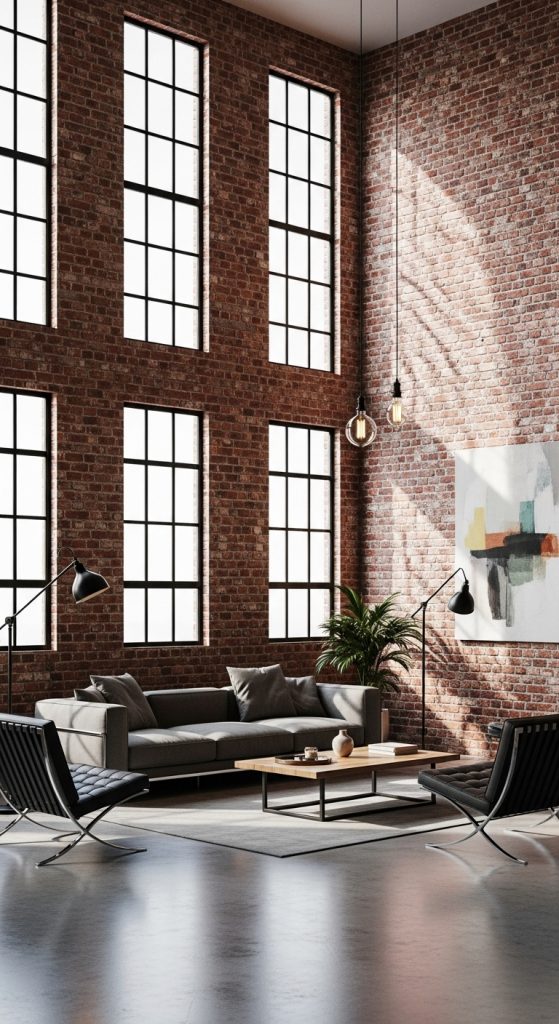
Industrial loft design also allows great flexibility in decoration. You can mix vintage furniture with modern lighting, or combine wood with metal to create balance and warmth. Neutral colors such as grey, black, brown, and white are commonly used, while textures and materials add visual interest.
This article explores ten industrial loft apartment ideas that can help you design a stylish and functional living space. Each idea includes preparation tips, materials to use, and practical guidance so you can successfully create an authentic industrial loft atmosphere in your home.
1. Exposed Brick Walls for Authentic Industrial Character
Exposed brick walls are one of the most recognizable features of industrial loft apartments. They instantly add texture, warmth, and history to the space. In many converted loft buildings, the original brick from old factories or warehouses is preserved to maintain the authentic industrial look.
Preparation is important before exposing or installing brick walls. If the building already has brick hidden behind drywall or plaster, the first step is careful removal of the covering materials. Once the brick is revealed, it should be cleaned thoroughly using a soft brush and mild cleaning solution to remove dust and debris. After cleaning, sealing the brick with a protective sealant helps prevent moisture damage and makes maintenance easier.
If your apartment does not have natural brick, you can use brick veneer panels or brick wallpaper to achieve a similar effect. Brick veneer is a thin layer of real brick that can be attached to interior walls using mortar or construction adhesive.
Common materials used include red brick, reclaimed brick, brick veneer panels, mortar, wall sealant, and cleaning brushes. Warm lighting can enhance the texture of the brick and highlight its natural patterns.
Exposed brick works well in living rooms, kitchens, and bedrooms. It creates a strong industrial foundation that can be paired with metal furniture, wooden shelves, and simple neutral color palettes.