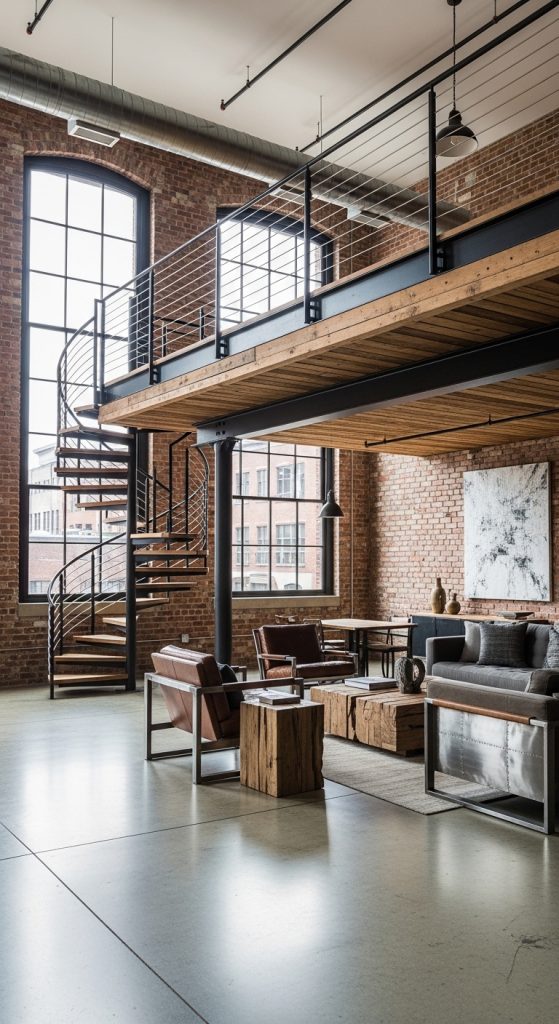
10 Industrial Loft Apartment ideas
Industrial loft apartments have become a popular design style for people who love open spaces, raw materials, and modern urban living. This style originated from old factories and warehouses that were converted into living spaces, especially in cities like New York during the mid twentieth century. Designers kept many original elements such as exposed brick walls, large windows, metal structures, and concrete floors. Over time, this look evolved into a trendy interior design style that blends industrial features with modern comfort.
One of the most appealing aspects of an industrial loft apartment is the sense of space and character it offers. High ceilings, open floor plans, and minimal interior walls create a bright and airy environment. Instead of hiding construction elements, industrial design celebrates them. Pipes, beams, ductwork, and unfinished surfaces become part of the decoration. This creates a unique aesthetic that feels both rugged and stylish.
Industrial loft design also allows great flexibility in decoration. You can mix vintage furniture with modern lighting, or combine wood with metal to create balance and warmth. Neutral colors such as grey, black, brown, and white are commonly used, while textures and materials add visual interest.
This article explores ten industrial loft apartment ideas that can help you design a stylish and functional living space. Each idea includes preparation tips, materials to use, and practical guidance so you can successfully create an authentic industrial loft atmosphere in your home.
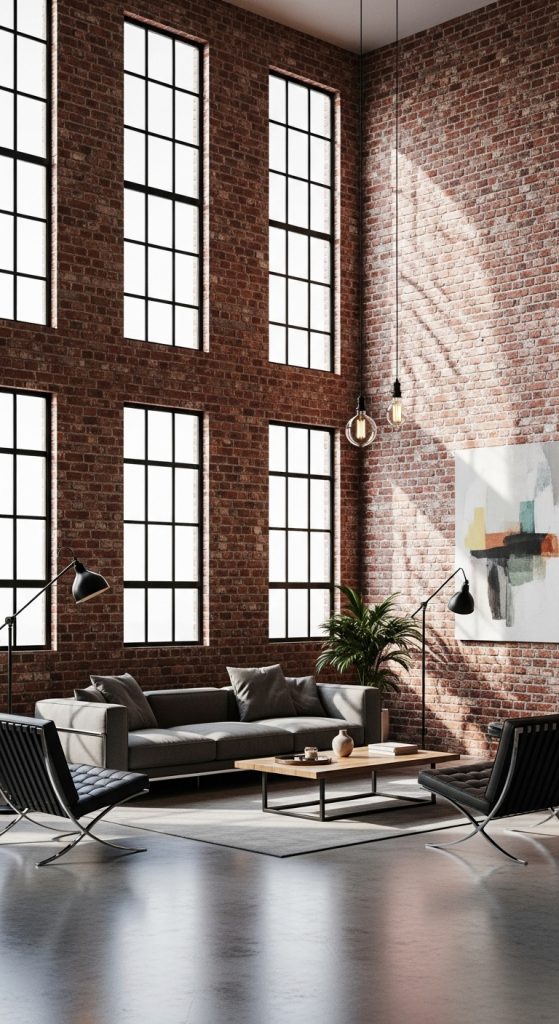
1. Exposed Brick Walls for Authentic Industrial Character
Exposed brick walls are one of the most recognizable features of industrial loft apartments. They instantly add texture, warmth, and history to the space. In many converted loft buildings, the original brick from old factories or warehouses is preserved to maintain the authentic industrial look.
Preparation is important before exposing or installing brick walls. If the building already has brick hidden behind drywall or plaster, the first step is careful removal of the covering materials. Once the brick is revealed, it should be cleaned thoroughly using a soft brush and mild cleaning solution to remove dust and debris. After cleaning, sealing the brick with a protective sealant helps prevent moisture damage and makes maintenance easier.
If your apartment does not have natural brick, you can use brick veneer panels or brick wallpaper to achieve a similar effect. Brick veneer is a thin layer of real brick that can be attached to interior walls using mortar or construction adhesive.
Common materials used include red brick, reclaimed brick, brick veneer panels, mortar, wall sealant, and cleaning brushes. Warm lighting can enhance the texture of the brick and highlight its natural patterns.
Exposed brick works well in living rooms, kitchens, and bedrooms. It creates a strong industrial foundation that can be paired with metal furniture, wooden shelves, and simple neutral color palettes.
2. Open Floor Plan for Spacious Industrial Living
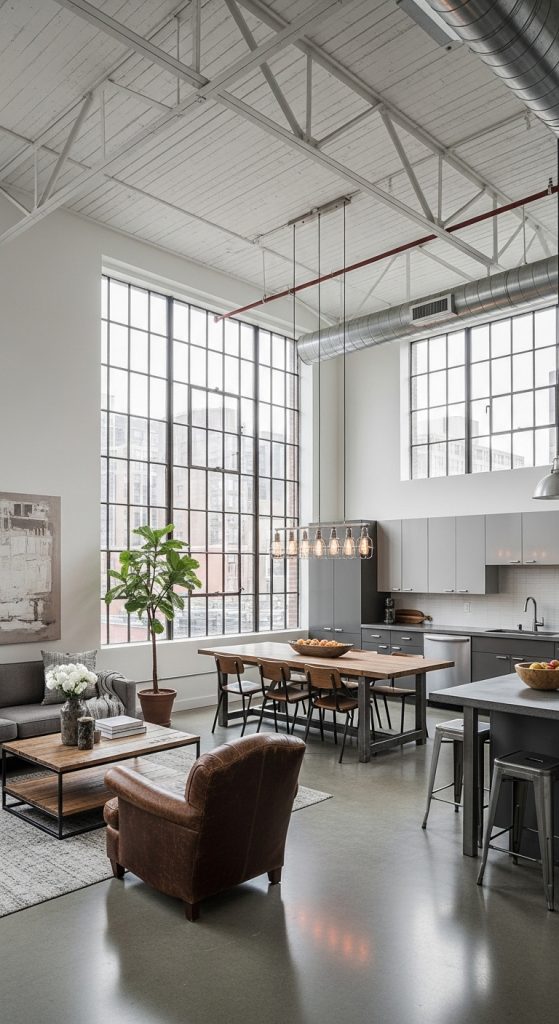
Industrial loft apartments are known for their open floor plans. Unlike traditional homes with many separate rooms, lofts usually combine the living room, kitchen, and dining area into one large space. This design reflects the original warehouse layout, where large open areas were used for industrial work.
The first step in creating an open floor plan is evaluating which walls are structural and which are not. Structural walls support the building and cannot be removed without professional engineering approval. Non structural walls, however, can often be removed to create more open space.
After removing unnecessary partitions, the space can be organized into functional zones. For example, a sofa and rug can define the living area, while a dining table can mark the dining zone. Kitchen islands often act as natural separators between cooking and living areas.
Preparation materials include demolition tools, drywall finishing materials, floor leveling compounds, and paint. Neutral color palettes such as grey, white, and black are commonly used to maintain a clean and cohesive look.
Open floor plans also allow natural light to travel freely throughout the apartment, especially when large windows are present. This helps make the loft feel larger and more inviting. Furniture placement becomes very important because it defines how the space flows.
By embracing an open layout, industrial loft apartments maintain their spacious character while providing flexibility in interior design.
3. Concrete Floors for a Raw Industrial Look
Concrete flooring is a classic element of industrial loft design. Many old factories originally used concrete floors because they were durable and easy to maintain. Today, polished concrete floors are valued for their sleek appearance and strong industrial character.
Before installing concrete flooring, the surface must be properly prepared. If the apartment already has a concrete slab, it can be polished and sealed to create a finished look. The polishing process involves grinding the surface using specialized machines to create a smooth and glossy texture.
If the existing floor is wood or tile, a new concrete overlay can be applied. This thin layer of concrete is poured over the existing floor and then polished once it cures.
Materials required include concrete mix, floor grinders, polishing pads, sealant, and protective coatings. Staining can also be used to add subtle color variations such as light grey, charcoal, or earth tones.
Concrete floors work well with underfloor heating systems because concrete retains heat effectively. Area rugs are often added to soften the space and make it more comfortable.
One advantage of concrete floors is their durability. They resist scratches, moisture, and heavy furniture. They are also easy to clean with simple sweeping and occasional mopping.
When combined with exposed brick and metal furniture, concrete flooring creates a powerful industrial aesthetic that defines the loft environment.
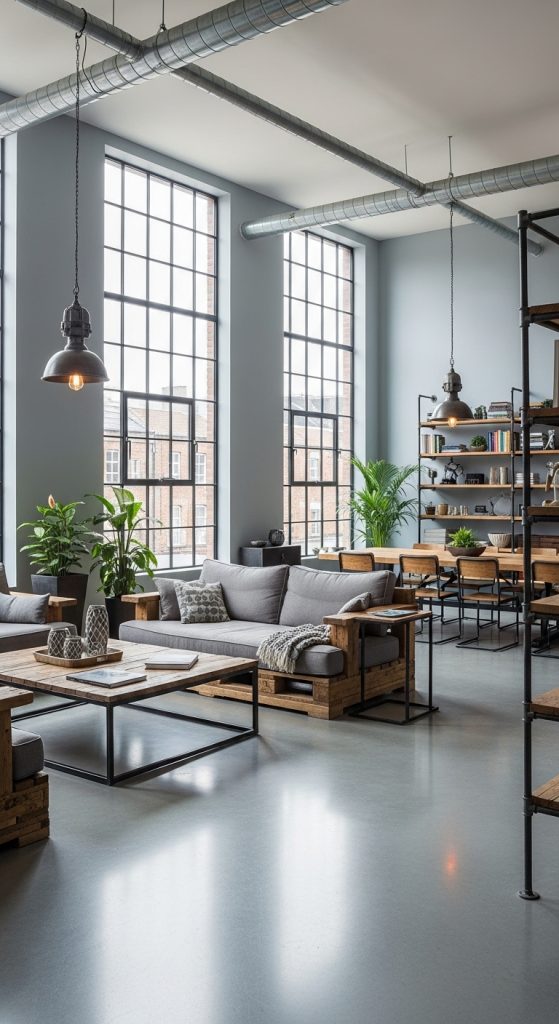
4. Large Industrial Windows for Natural Light
Large windows are a signature feature of industrial loft apartments. In old warehouses and factories, large steel framed windows were installed to allow natural light into the workspace. Today, these windows are a key design element that enhances the open and airy atmosphere of loft living.
When planning large windows, preparation includes checking the structural integrity of the wall where the window will be installed or expanded. Professional installation is recommended because window frames must support heavy glass panels and maintain insulation.
Industrial style windows often use black steel or aluminum frames divided into multiple rectangular sections. This grid pattern is sometimes called factory style windows.
Materials used include steel window frames, tempered glass panels, insulation materials, and weather sealing components. Double glazed glass is often recommended because it improves energy efficiency while maintaining the industrial appearance.
Large windows allow sunlight to brighten the entire apartment, reducing the need for artificial lighting during the day. They also make the space feel larger and more connected to the outside environment.
Minimal window treatments are usually preferred in industrial lofts. Simple roller shades, linen curtains, or no curtains at all help preserve the raw aesthetic.
The combination of high ceilings and large windows creates dramatic lighting effects that highlight textures such as brick walls, metal fixtures, and concrete floors.
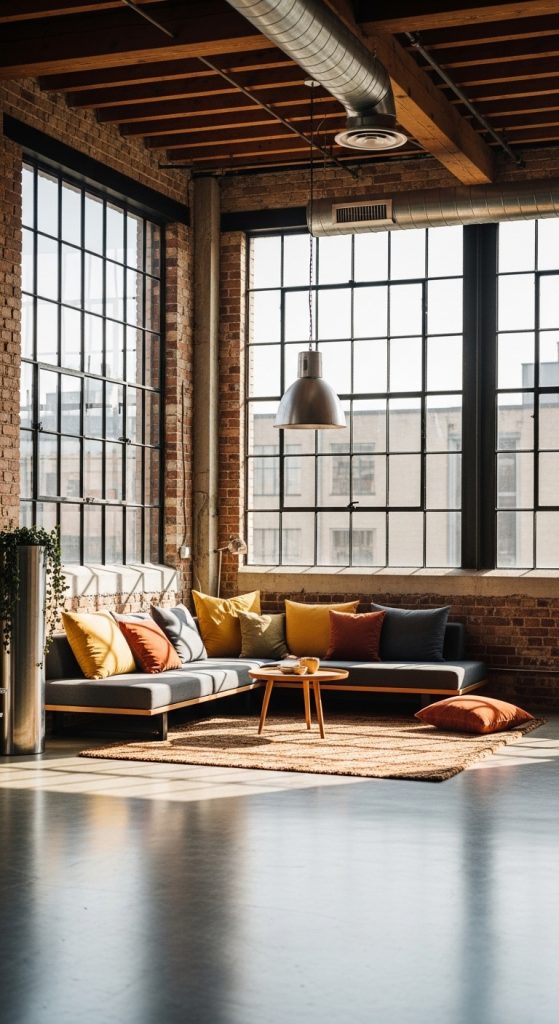
5. Metal and Steel Furniture for Industrial Strength
Furniture made from metal and steel plays a central role in industrial loft interiors. These materials reflect the mechanical and manufacturing roots of the industrial design style. Strong, durable furniture pieces also complement the raw architectural elements found in loft apartments.
When choosing metal furniture, preparation involves measuring the available space and selecting pieces that match the scale of the room. Industrial lofts often have large open areas, so furniture should be substantial enough to balance the environment.
Common furniture pieces include steel frame dining tables, iron bookshelves, metal bar stools, and industrial style coffee tables. These pieces often combine metal with reclaimed wood surfaces to create a balance between rugged and warm textures.
Materials typically include powder coated steel, cast iron, reclaimed wood planks, welded joints, and protective finishes to prevent rust. Dark finishes such as matte black or gunmetal grey are widely used.
Metal furniture is also known for its durability and low maintenance. It can support heavy loads and withstand daily wear without significant damage.
To soften the industrial feel, designers often add cushions, leather upholstery, or fabric elements to metal framed chairs and sofas. This combination helps maintain comfort while preserving the industrial aesthetic.
Metal furniture adds a bold structural presence that strengthens the identity of the industrial loft.
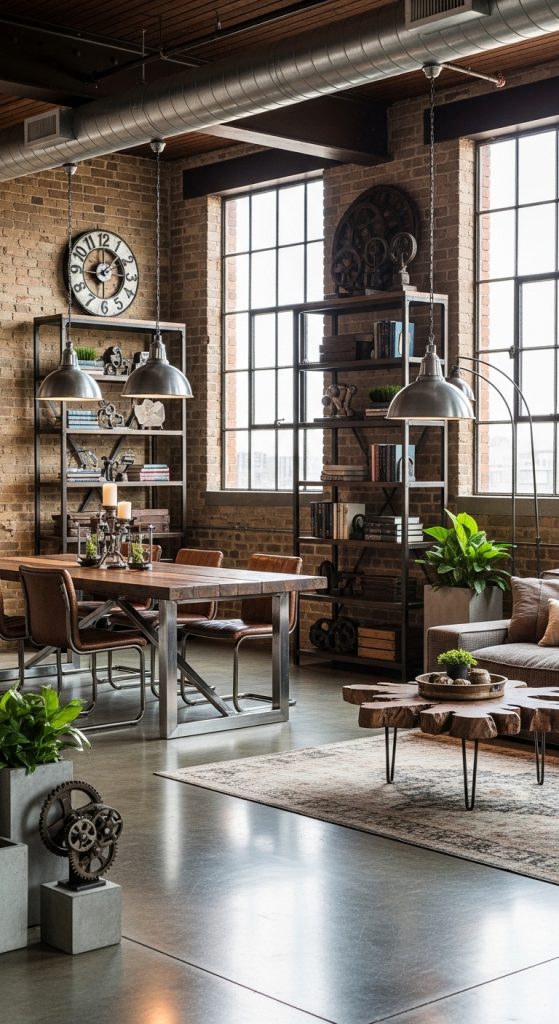
6. Exposed Pipes and Ductwork as Design Features
In traditional homes, plumbing pipes and ventilation ducts are usually hidden behind walls or ceilings. In industrial loft apartments, these elements are intentionally left visible to celebrate the building’s mechanical structure.
Exposed pipes and ductwork contribute to the authentic industrial look by showing how the building functions. Instead of hiding these components, designers paint or highlight them as part of the interior design.
Preparation involves inspecting the pipes and ducts to ensure they are safe and properly installed. Cleaning and repainting may be necessary to improve their appearance.
Materials used include metal duct pipes, copper plumbing pipes, industrial brackets, pipe clamps, and heat resistant paint. Matte black, silver, or metallic finishes are commonly used colors.
Ceiling mounted ductwork can run across the length of the apartment, adding visual interest and reinforcing the industrial theme. Lighting fixtures are sometimes attached directly to these pipes for a functional and stylish effect.
Exposed pipes work especially well with high ceilings, which are common in loft apartments. The extra vertical space allows mechanical systems to remain visible without making the room feel crowded.
By embracing these structural elements, industrial loft design transforms functional building components into unique decorative features.
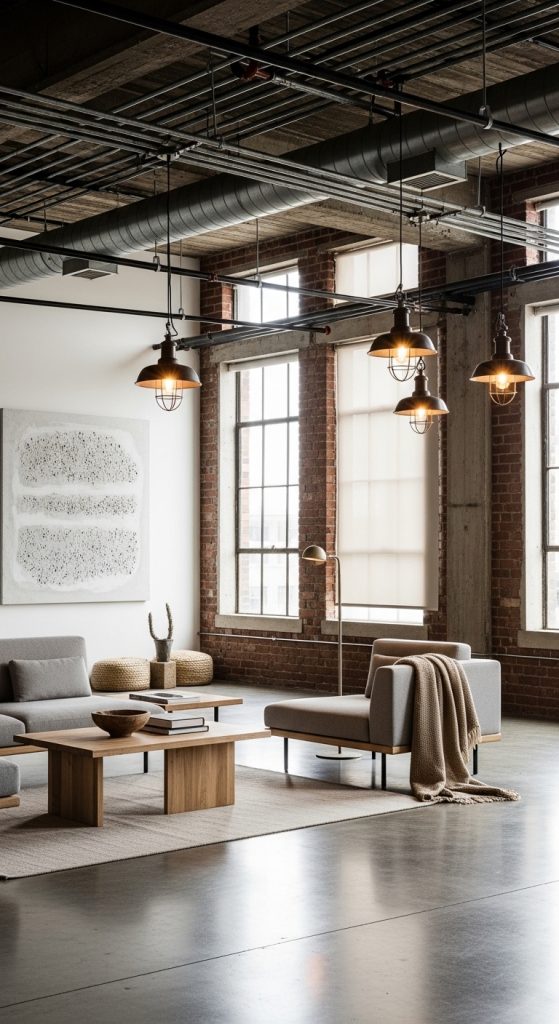
7. Reclaimed Wood Elements for Warmth and Balance
Industrial interiors can sometimes feel cold due to the heavy use of metal, concrete, and brick. Reclaimed wood is often introduced to balance these materials and add warmth to the environment.
Reclaimed wood comes from old barns, warehouses, shipping pallets, and demolished buildings. Because it has aged naturally over time, it often features unique textures, knots, and color variations that add character to the space.
Preparation includes cleaning, sanding, and treating the wood to remove dirt, insects, and moisture damage. Protective coatings such as wood sealants or natural oils help preserve the material.
Common uses for reclaimed wood in loft apartments include dining tables, wall panels, floating shelves, kitchen countertops, and bed frames. It can also be used to build sliding barn doors that enhance the industrial style.
Materials required include reclaimed wood planks, wood sealant, sanding tools, screws, and metal brackets.
The natural tones of wood contrast beautifully with grey concrete and black steel. This combination creates a balanced design that feels both rugged and comfortable.
Using reclaimed wood also supports sustainable design practices because it reuses materials that might otherwise be discarded.
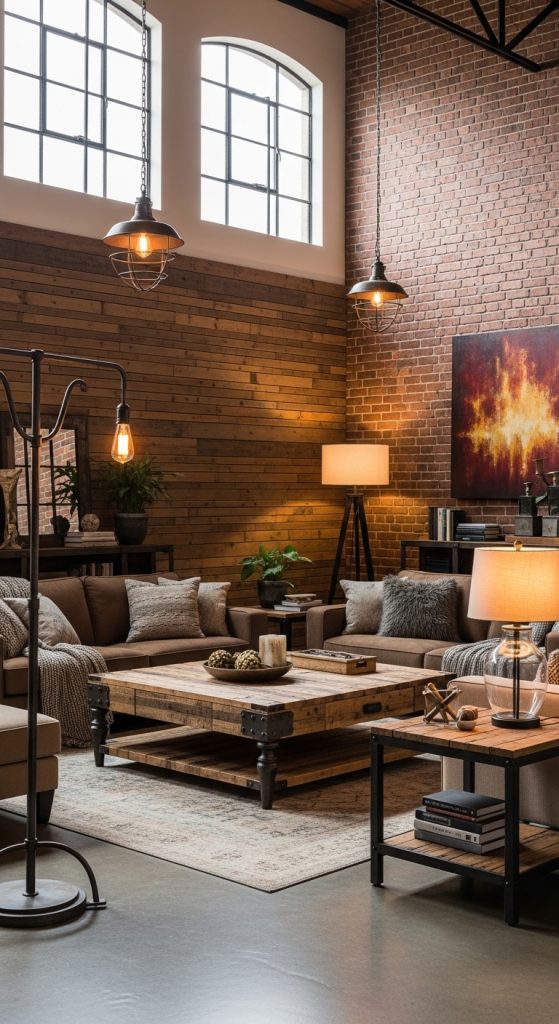
8. Industrial Lighting Fixtures for Dramatic Effect
Lighting plays a crucial role in industrial loft apartments. Because these spaces often feature high ceilings and open layouts, carefully selected lighting fixtures help define areas and create atmosphere.
Industrial lighting typically includes metal pendant lights, cage lamps, factory style wall sconces, and large hanging fixtures. These lights often resemble those used in old manufacturing facilities.
Preparation involves planning the lighting layout according to the apartment’s functional zones. For example, pendant lights may hang above the kitchen island, while floor lamps illuminate the living area.
Materials used include steel light fixtures, iron cages, Edison style bulbs, copper wiring, and dimmer switches. Edison bulbs are particularly popular because their warm glow complements the industrial aesthetic.
Track lighting systems are also commonly used because they can be adjusted to highlight different parts of the room.
Layered lighting is important in loft apartments. A combination of ambient lighting, task lighting, and accent lighting ensures that the space remains functional and visually appealing.
Industrial lighting fixtures act as both practical tools and decorative elements, reinforcing the overall design theme.
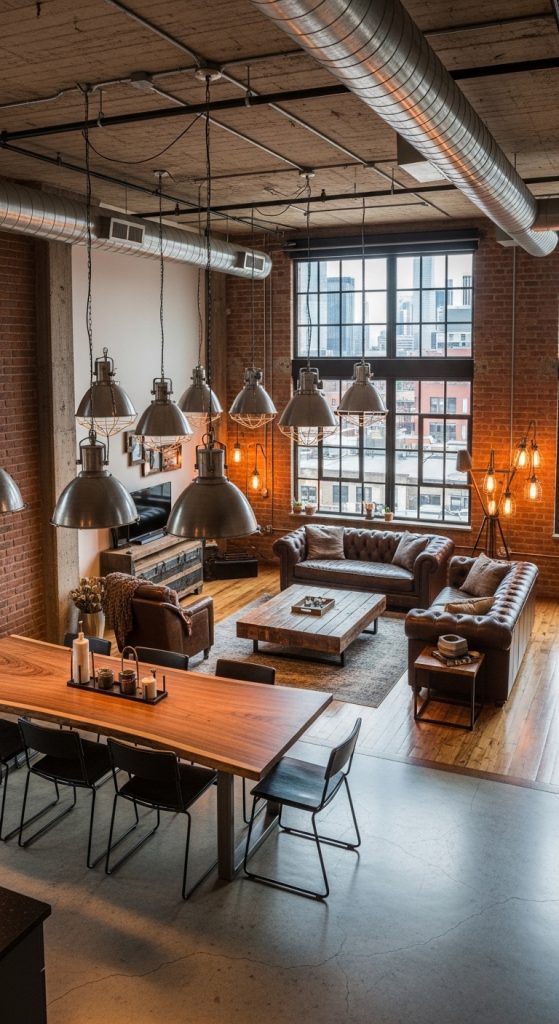
9. Minimalist Color Palette with Strong Textures
Industrial loft design usually relies on a minimalist color palette. Instead of bright colors, the style focuses on neutral shades such as grey, black, white, brown, and metallic tones. These colors help highlight the raw materials and architectural features of the space.
Preparation involves selecting a consistent color scheme before decorating the apartment. Walls are often painted in neutral shades that complement brick, metal, and concrete surfaces.
Materials used include matte wall paint, concrete stains, metal finishes, and natural wood coatings. Textiles such as linen curtains, leather sofas, and wool rugs can add subtle texture without overwhelming the design.
The key to this style is contrast. For example, a black metal table may sit on a light grey concrete floor, while a brown leather sofa may rest against a white wall.
By keeping colors simple, the natural beauty of industrial materials becomes the main visual focus. This approach also helps maintain a calm and uncluttered environment.
A minimalist palette allows homeowners to introduce small decorative accents such as artwork or plants without disrupting the overall design harmony.
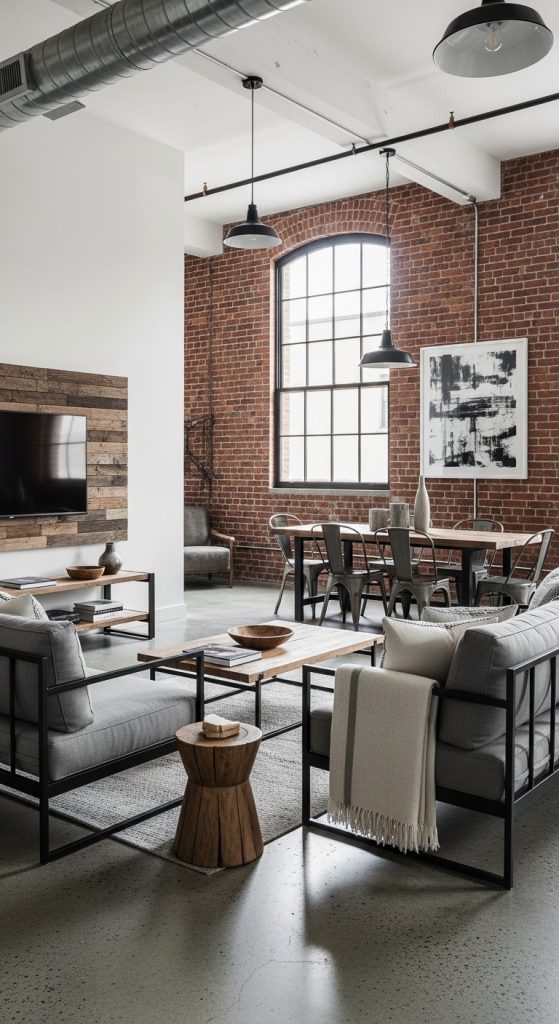
10. Mezzanine Levels to Maximize Vertical Space
Many industrial loft apartments have very high ceilings. This vertical space provides an opportunity to add mezzanine levels, which are intermediate floors built between the main levels of a building.
A mezzanine can be used as a bedroom, home office, library, or storage area. It allows residents to expand the functional space of the apartment without changing the overall floor plan.
Preparation begins with structural assessment. Engineers must confirm that the existing building can support the additional platform. Once approved, a steel or wood frame is constructed to create the mezzanine structure.
Materials commonly used include steel beams, wooden floor panels, metal railings, support columns, and staircase components. Spiral staircases are often chosen because they save space while complementing the industrial style.
Lighting and ventilation should also be considered when designing a mezzanine level. Skylights or additional lamps may be needed to ensure adequate brightness.
Mezzanines make excellent use of vertical height while preserving the open feeling of the loft. They also add architectural interest and create a multi level living experience within a single apartment.
This feature is especially valuable in smaller urban apartments where maximizing space is essential.