10 Studio Apartment Layout Ideas
Living in a studio apartment can be both exciting and challenging. A studio apartment usually combines the bedroom, living room, and kitchen into a single open space. Because everything exists in one room, the layout becomes extremely important. A well-planned layout can make a small apartment feel comfortable, organized, and even spacious. On the other hand, a poor layout can make the same space feel crowded and chaotic.
The key to designing a successful studio apartment is smart use of space. Furniture placement, storage solutions, lighting, and room division techniques all play an important role. With the right planning, even a small studio can include a sleeping area, living space, work corner, and storage without feeling cluttered.
Preparation is also important before starting the layout process. First, measure the entire apartment carefully, including wall lengths, window positions, and door openings. Second, decide which functions the apartment must support such as sleeping, cooking, working, relaxing, or entertaining guests. Third, choose furniture that fits the size of the space and offers multiple uses when possible.
Materials like lightweight furniture, folding tables, modular shelving, and fabric room dividers can help maximize the available area. Lighting and color choices also influence how large or open the space appears.
This article explores ten practical studio apartment layout ideas. Each layout focuses on improving comfort, storage, and functionality while maintaining a clean and organized look.
1. The Open Concept Layout
The open concept layout is one of the most common designs for studio apartments. In this arrangement, the entire apartment remains visually open without permanent barriers. Instead of dividing the space with walls, the layout relies on furniture placement to define different zones.
Preparation for this layout begins by identifying the natural focal point of the apartment. This could be a window, balcony door, or main wall. The bed is usually placed along one wall, while the sofa or seating area is placed opposite it. The kitchen area typically remains in its original location.
Materials used in this layout often include compact sofas, small coffee tables, floating shelves, and minimal storage cabinets. Lightweight furniture is ideal because it can easily be rearranged when needed.
The advantage of the open concept layout is that it makes the apartment feel larger. Natural light spreads throughout the entire space, and there are no visual barriers blocking the view.
To maintain organization, it is helpful to use area rugs to visually separate zones. For example, one rug can define the living space while another marks the sleeping area. Neutral colors and simple furniture designs also help create a clean and spacious appearance.
This layout works best for people who prefer a simple and flexible living space.

2. The Divider Layout
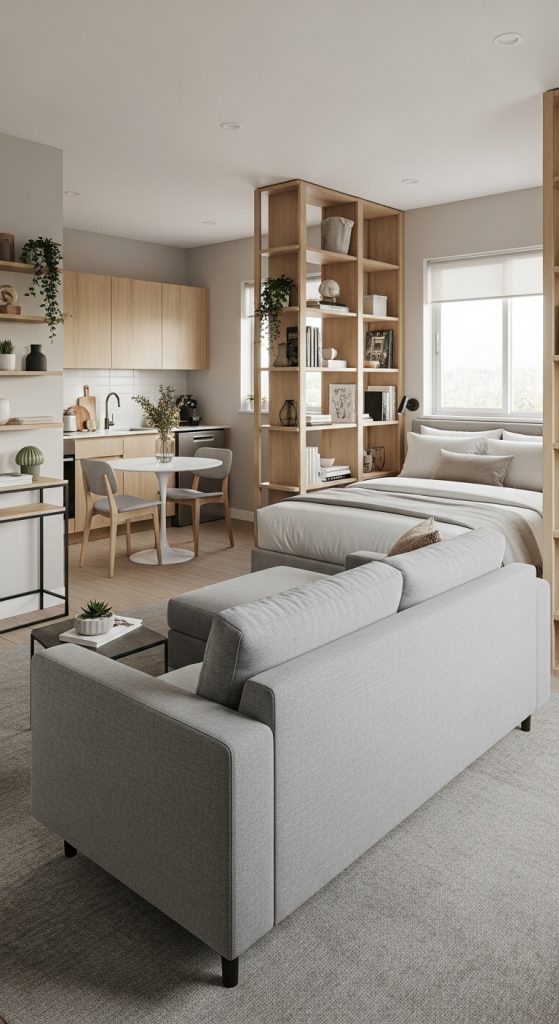
The divider layout introduces a physical separation between different areas of the studio apartment. Instead of building permanent walls, temporary dividers create privacy while keeping the space adaptable.
Preparation begins by deciding which area requires the most privacy. In most cases, the sleeping area benefits the most from separation. The bed can be placed behind a divider while the living area remains open.
Common materials used for dividers include wooden folding screens, curtain panels, sliding partitions, open shelving units, and glass partitions. Open shelves are especially useful because they provide both separation and storage.
The divider should not block natural light completely. Semi-transparent materials like fabric curtains or open shelving allow light to pass through while still defining the space.
This layout is ideal for people who want a more traditional feeling between their bedroom and living area. It also helps create a sense of order in small apartments.
One important design tip is to keep the divider height moderate. A divider that is too tall may make the apartment feel smaller. The goal is to create separation without making the space feel closed.
With the right materials and placement, the divider layout can provide both privacy and openness.

3. The Corner Bedroom Layout
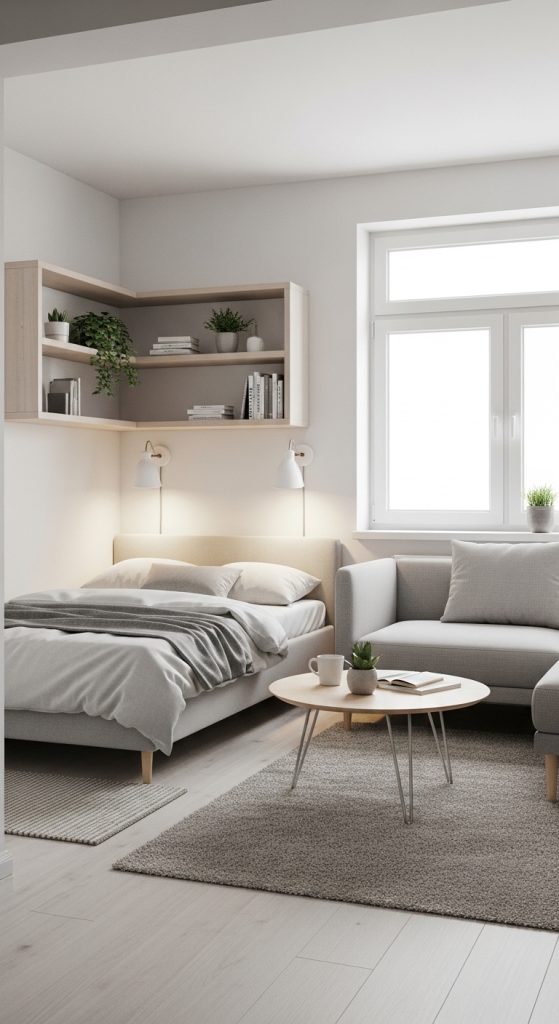
The corner bedroom layout places the bed in a corner of the apartment to maximize usable floor space. This design works particularly well in square or rectangular studio apartments.
Preparation involves selecting the quietest corner of the apartment. Ideally, this corner should be away from the kitchen and main entrance. Placing the bed against two walls naturally creates a cozy sleeping zone.
Materials used in this layout include a platform bed, wall-mounted lamps, corner shelves, and compact bedside tables. Using wall-mounted lighting saves space and keeps the floor clear.
To visually separate the bedroom area, a small rug or low bookshelf can be placed near the foot of the bed. This creates a subtle boundary between sleeping and living zones.
One advantage of this layout is that it leaves the center of the apartment open. This open area can be used for the living room, dining table, or workspace.
Storage can also be integrated under the bed using drawers or storage boxes. Vertical wall shelves near the bed provide additional storage without taking up floor space.
This layout is simple, efficient, and ideal for people who want a clear division between relaxation and daily activities.
4. The Loft Bed Layout
The loft bed layout is an excellent solution for very small studio apartments. By raising the bed above the floor, valuable space becomes available underneath.
Preparation for this layout requires careful measurement of ceiling height. The ceiling must be high enough to allow comfortable movement both above and below the bed platform.
Materials used include a sturdy loft bed frame made from wood or metal, a ladder or small staircase, and supportive wall anchors for safety. Under the loft bed, the space can be used for a sofa, desk, or storage cabinets.
Lighting is important in this layout. Installing LED lights or wall lamps under the loft bed ensures the lower space remains bright and comfortable.
One major advantage of the loft layout is that it creates two functional levels within a single room. This dramatically increases the usable area of the apartment.
However, it is important to choose a strong and stable bed frame to ensure safety. Good ventilation and easy access to the bed should also be considered.
When properly designed, a loft bed layout can transform a compact studio into a highly efficient living space.

5. The Furniture Zoning Layout
Furniture zoning is a layout method that divides the apartment into areas using strategic furniture placement. Instead of walls or dividers, furniture itself defines each section.
Preparation begins by deciding the main zones needed in the apartment. These may include a sleeping area, living area, workspace, and dining space.
Materials used include sofas, bookshelves, cabinets, and console tables. For example, a sofa placed with its back facing the bed can create a clear boundary between the bedroom and living room.
Bookshelves are especially useful because they serve both as storage and space separators. Low cabinets can also mark transitions between zones.
One key advantage of furniture zoning is flexibility. If the resident wants to change the layout later, furniture can easily be moved or rearranged.
Another benefit is that this layout maintains an open feel while still providing structure. Each activity has its own designated space without making the apartment feel crowded.
When using furniture zoning, it is important not to overcrowd the space. Choosing compact and multifunctional furniture ensures that the layout remains comfortable and practical.
This layout is perfect for residents who want an organized yet open studio apartment.
6. The Murphy Bed Layout
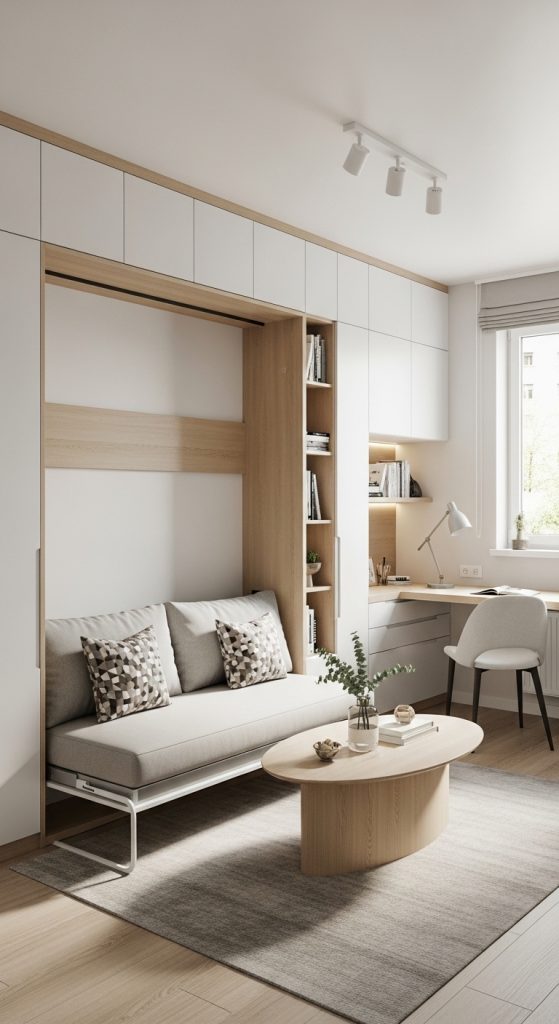
A Murphy bed layout focuses on maximizing daytime living space by using a foldable bed that can be stored vertically against the wall.
Preparation includes selecting a strong wall for mounting the Murphy bed system. The wall must be able to support the weight of the bed frame and mattress.
Materials required include a Murphy bed unit, wall anchors, storage cabinets, and sometimes a foldable desk or sofa integrated into the unit.
During the day, the bed folds up into a cabinet, allowing the apartment to function as a living room or workspace. At night, the bed can be easily pulled down for sleeping.
This layout is ideal for people who want maximum open space during the day. It is especially useful for studio apartments used for work or entertaining guests.
Additional storage shelves can be built around the Murphy bed cabinet to maximize vertical space. Neutral colors and minimal decoration help maintain a clean look.
Although installation requires careful planning, the Murphy bed layout provides one of the most efficient space-saving solutions for small apartments.
7. The Curtain Partition Layout
The curtain partition layout uses fabric curtains to create flexible separation between different areas of the studio apartment.
Preparation begins with installing a ceiling-mounted curtain track. This allows the curtain to slide easily and adjust the level of privacy.
Materials used include lightweight curtains, curtain rods or tracks, and decorative fabric panels. Thick curtains provide more privacy, while sheer curtains allow more light to pass through.
The bed area is usually the main section hidden behind curtains. When guests visit, the curtain can be closed to hide the sleeping area.
One advantage of this layout is flexibility. Curtains can be opened to create a larger open space or closed to create private zones.
Curtains also add softness and texture to the apartment, making the environment feel more comfortable. Choosing light colors helps maintain brightness in the room.
This layout is affordable, easy to install, and suitable for renters who cannot make permanent structural changes to their apartment.

8. The Workspace Studio Layout
For people who work or study from home, a workspace-focused layout is extremely useful. In this arrangement, the studio apartment includes a clearly defined work zone.
Preparation involves identifying the quietest and best-lit area of the apartment for the desk. Natural light is beneficial for productivity and comfort.
Materials used include a compact desk, ergonomic chair, floating shelves, desk lamps, and cable organizers. Wall-mounted shelves help store office supplies without occupying floor space.
The workspace should remain separate from the sleeping area to maintain focus during work hours. A small bookshelf or screen can create a subtle boundary.
Proper lighting is important for this layout. Task lighting such as desk lamps reduces eye strain and improves productivity.
This layout helps maintain a balance between professional tasks and personal relaxation. At the end of the day, the workspace remains organized while the rest of the apartment functions as a living area.
For freelancers, students, or remote workers, this layout can significantly improve daily comfort and efficiency.

9. The Storage-Focused Layout
The storage-focused layout prioritizes organization and efficient storage solutions throughout the apartment.
Preparation begins by identifying all storage needs such as clothing, kitchen supplies, books, and personal items. Once these needs are understood, storage solutions can be integrated into the layout.
Materials include tall wardrobes, under-bed storage drawers, wall-mounted cabinets, floating shelves, and storage benches. Multi-purpose furniture such as ottomans with hidden storage is especially helpful.
Vertical storage plays a major role in this layout. By using wall space from floor to ceiling, the apartment can store many items without using valuable floor space.
A well-organized storage layout reduces clutter and makes the apartment feel larger and more comfortable.
It is important to maintain a balance between storage and open space. Too many cabinets may make the apartment feel crowded.
This layout is ideal for people who own many belongings but still want a clean and organized living environment.

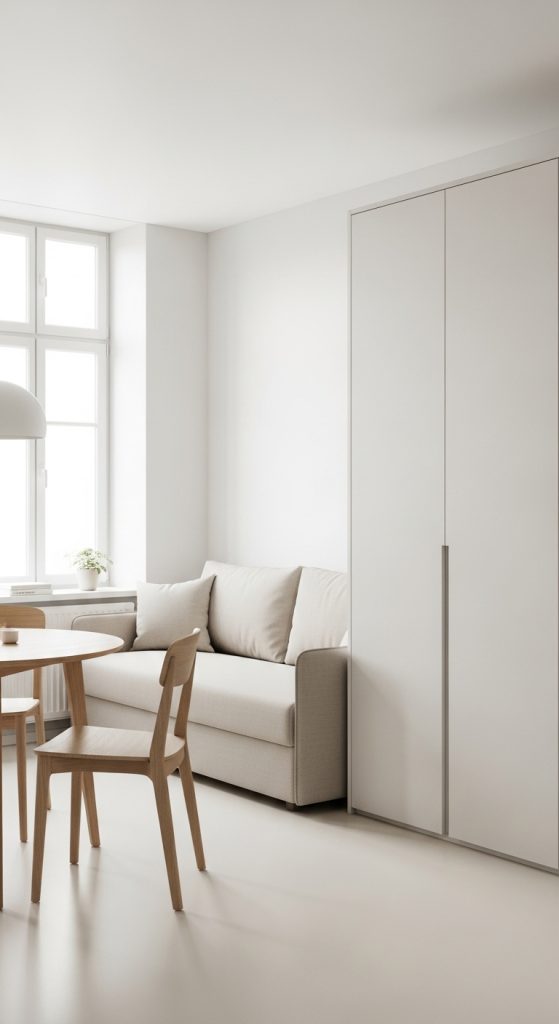
10. The Minimalist Layout
The minimalist layout focuses on simplicity, functionality, and reduced clutter. In this design approach, only essential furniture and items are included.
Preparation begins with decluttering the apartment. Unnecessary furniture, decorations, and unused items should be removed or stored.
Materials used in this layout include simple furniture with clean lines, neutral colors, and multifunctional pieces. A sofa bed, small dining table, and compact wardrobe may be all that is needed.
Lighting and color choices play an important role. Light colors such as white, beige, and soft gray make the space feel brighter and more open.
Storage solutions should remain hidden whenever possible. Built-in cabinets and under-bed drawers help maintain a tidy appearance.
The minimalist layout emphasizes quality over quantity. Each item in the apartment serves a specific purpose.
This layout is particularly suitable for people who prefer calm, organized living spaces and want to maximize the feeling of openness within a small studio apartment.