3. Choosing Moisture Resistant Materials
Basements naturally tend to have higher humidity levels than other parts of the home. Because of this, selecting moisture-resistant materials is essential for maintaining the durability and cleanliness of the kitchen.
Cabinets should be made from materials that resist moisture damage. Plywood cabinets with protective laminate finishes are often better than particleboard, which can swell or deteriorate when exposed to humidity. Waterproof cabinet coatings can add extra protection.
For countertops, quartz, granite, and solid surface materials are excellent choices because they resist moisture and stains. Laminate countertops can also work well if properly sealed.
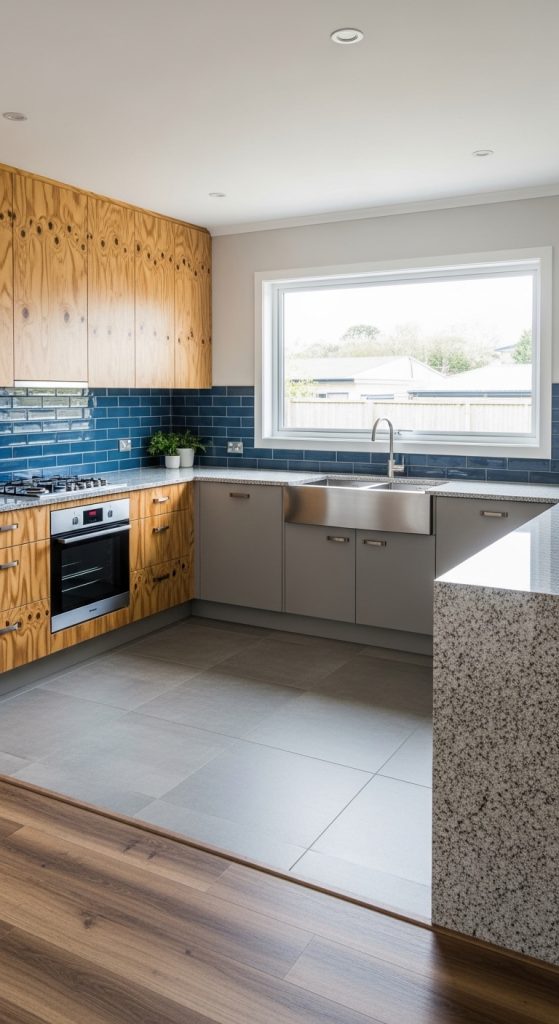
Flooring is another important consideration. Materials like ceramic tile, vinyl plank flooring, or sealed concrete are commonly used in basement kitchens because they tolerate moisture better than hardwood. Hardwood flooring may warp or crack in humid environments.
Using moisture-resistant drywall or cement board behind sinks and cooking areas can also prevent mold growth. Adding a vapor barrier in the walls and floors may further reduce moisture problems.
Choosing the right materials from the start helps protect the basement kitchen from damage and reduces maintenance costs over time.