2. Addressing Plumbing Requirements
Plumbing is a major consideration when installing a basement apartment kitchen. Because basements are located below the main sewer line in many homes, special plumbing solutions may be necessary to ensure proper drainage.
One common solution is installing a sewage ejector pump or an upflush plumbing system. These systems allow wastewater from the kitchen sink and dishwasher to be pumped upward to the main drainage line. Without this equipment, gravity alone may not move wastewater effectively.
Before installing plumbing, inspect the basement floor and existing water supply lines. In many cases, connecting to existing plumbing systems can reduce installation costs. However, professional plumbing assistance is usually required to ensure everything meets building codes.
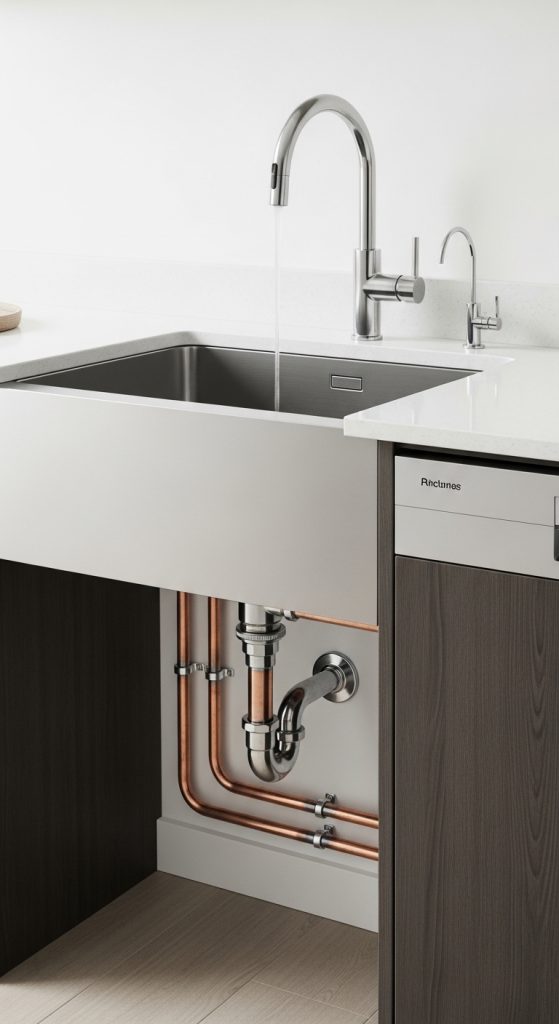
Proper pipe insulation is also important in basements because temperatures may be lower than in the rest of the house. Insulated pipes help prevent freezing during colder months.
Additionally, consider installing a shut-off valve specifically for the basement kitchen. This allows water to be turned off quickly in case of leaks or repairs. Proper plumbing planning ensures that the kitchen operates efficiently and avoids long-term maintenance problems.