
10 Green Kitchen Designs ideas

Green kitchens have become a popular choice for homeowners looking to create spaces that are not only visually appealing but also environmentally friendly. A green kitchen is designed with sustainability in mind, using materials, appliances, and layouts that reduce environmental impact while promoting health and energy efficiency. This concept goes beyond just using the color green—it involves choosing renewable materials, energy-efficient appliances, and smart design strategies that minimize waste. Implementing green kitchen ideas can also enhance the overall atmosphere of your home by creating a space that feels fresh, calm, and connected to nature. From choosing eco-friendly cabinets to incorporating plants and natural lighting, a green kitchen combines functionality with sustainability. Whether you are renovating your existing kitchen or designing a new one, these ideas can help you create a space that is practical, beautiful, and environmentally conscious. This article will explore ten green kitchen design ideas, providing guidance on materials, preparation, layout considerations, and tips to achieve a sustainable and stylish kitchen that meets modern needs without compromising the planet’s resources.
1. Eco-Friendly Cabinetry
Choosing eco-friendly cabinetry is a key step in creating a green kitchen. Traditional cabinets often use wood treated with harmful chemicals or sourced unsustainably. Instead, consider cabinets made from reclaimed wood, bamboo, or plywood certified by the Forest Stewardship Council (FSC). These materials are renewable and reduce the impact of deforestation. Bamboo, for instance, grows quickly and provides a durable alternative to hardwood. Reclaimed wood adds character to your kitchen while giving old materials a new life. When selecting finishes, opt for water-based, low-VOC (volatile organic compound) paints or stains to reduce indoor air pollution. For installation, ensure proper insulation around cabinets to improve energy efficiency. Eco-friendly cabinets not only support sustainability but also bring warmth and texture to the space, creating a natural, calming environment. Planning cabinet layouts to maximize storage will also reduce clutter, limiting the need for additional furniture. Investing in sustainable cabinetry may have a higher upfront cost, but it saves resources and creates a healthier home environment in the long run.

2. Energy-Efficient Appliances
Energy-efficient appliances are essential for a green kitchen. Modern appliances labeled with ENERGY STAR certification consume less electricity and water, reducing your carbon footprint. Refrigerators, ovens, dishwashers, and cooktops that use advanced technology can save significant energy over time. Induction cooktops, for example, heat more quickly and efficiently than gas or traditional electric models. When choosing a refrigerator, consider one with a smaller footprint if you do not need a large model, as size affects energy consumption. For dishwashers, select models that adjust water usage based on load size. In addition to appliances, smart kitchen technology, like timers and sensors, can prevent energy waste. Regular maintenance, such as cleaning filters and seals, ensures appliances operate efficiently. Incorporating energy-efficient appliances is not only environmentally responsible but also reduces utility bills and increases the long-term value of your kitchen. Planning the kitchen layout around appliance placement can further optimize energy usage and workflow.

3. Sustainable Countertops
Countertops are a major design element in any kitchen, and choosing sustainable options can have a significant environmental impact. Traditional materials like granite and marble require extensive mining and processing, which can harm ecosystems. Eco-friendly alternatives include recycled glass, bamboo, reclaimed wood, and composite materials made from post-consumer products. Recycled glass countertops, for instance, combine crushed glass with a resin binder, offering durability and a modern aesthetic. Bamboo countertops are renewable, naturally resistant to moisture, and provide warmth to the space. For maintenance, select countertops that can be cleaned with non-toxic, biodegradable cleaners to reduce chemical exposure. Sustainable countertops not only contribute to a greener home but also offer versatility in design, colors, and textures. When planning installation, ensure the surface is properly sealed to prevent water damage and prolong its lifespan. Choosing renewable or recycled materials supports a circular economy while creating a functional and visually appealing workspace.

4. Natural and Low-VOC Paints
The color of your kitchen walls plays a role in sustainability. Traditional paints can release harmful chemicals into the air, known as volatile organic compounds (VOCs), which affect indoor air quality. Low-VOC or zero-VOC paints are a safer alternative that maintain durability and a wide range of color options. These paints reduce exposure to toxic chemicals while still providing excellent coverage and longevity. Consider using natural pigments derived from minerals or plants for an even greener approach. Light green or earthy tones can create a calming environment and complement sustainable materials like wood or bamboo. For preparation, ensure surfaces are properly cleaned and primed with eco-friendly primers before painting. Ventilate the space well during and after application to minimize lingering odors. Choosing natural and low-VOC paints enhances the aesthetic of your kitchen while prioritizing the health of your household. This choice is simple, affordable, and highly effective in making a kitchen more environmentally friendly.

5. Recycled or Reclaimed Flooring
Flooring is a high-impact area for sustainability. Traditional flooring options, such as vinyl or certain hardwoods, may involve environmentally harmful production processes. Eco-friendly alternatives include reclaimed wood, cork, bamboo, and tiles made from recycled materials. Reclaimed wood adds rustic charm and reduces the demand for new lumber, while cork is renewable, soft underfoot, and has natural insulating properties. Bamboo flooring grows rapidly and is highly durable, making it an excellent choice for high-traffic kitchens. Recycled ceramic or glass tiles combine durability with minimal environmental impact. When preparing flooring, ensure proper underlayment and moisture barriers are installed to protect the surface and prolong its lifespan. Sustainable flooring is not only environmentally responsible but also contributes to the overall comfort and style of your kitchen. Regular maintenance with non-toxic cleaning products ensures longevity and keeps the space looking fresh. Choosing recycled or reclaimed flooring can transform your kitchen into a sustainable yet stylish environment.

6. Water-Saving Fixtures
Water efficiency is a crucial aspect of green kitchen design. Installing water-saving fixtures, such as low-flow faucets and aerators, reduces water consumption without compromising performance. Touchless or sensor-activated faucets help prevent unnecessary water waste while improving hygiene. For dishwashers, select models with water-efficient cycles that use less water per load. Consider installing a greywater system to recycle water from sinks for tasks like irrigation. Choosing high-quality fixtures made from durable, recyclable materials ensures longevity and reduces the need for replacements. Proper installation is essential to prevent leaks and maximize water savings. By combining water-efficient fixtures with smart usage habits, you can significantly reduce water bills while promoting environmental responsibility. Integrating these fixtures seamlessly into your kitchen design ensures functionality, convenience, and sustainability without sacrificing style.
7. Indoor Plants and Herb Gardens
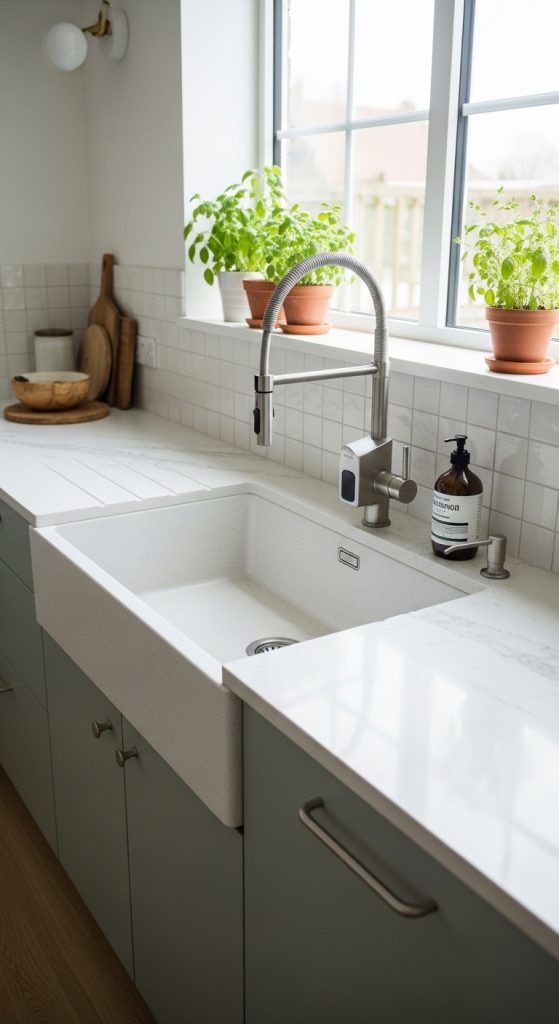
Incorporating indoor plants and herb gardens is an effective way to enhance a green kitchen. Plants improve indoor air quality by absorbing pollutants and releasing oxygen, creating a healthier environment. Herbs like basil, parsley, and rosemary can be grown in small pots or vertical gardens, providing fresh ingredients while reducing the carbon footprint associated with store-bought herbs. Choose low-maintenance plants that thrive indoors and require minimal water. Position plants near natural light sources, such as windows or skylights, to encourage growth. Sustainable pots made from recycled materials or biodegradable options add to the eco-friendly theme. An indoor herb garden not only supports sustainable living but also enhances the aesthetics of the kitchen with greenery and fragrance. Caring for plants encourages a connection with nature and makes the kitchen a more inviting and lively space.
8. Natural Lighting and Energy-Efficient Windows
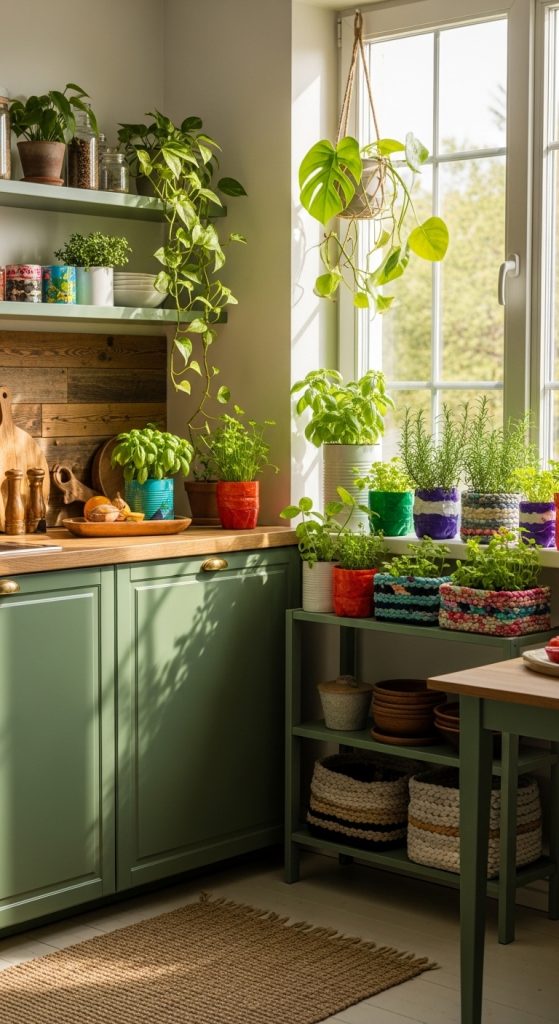
Maximizing natural light is a fundamental aspect of a green kitchen. Large windows, skylights, and glass doors reduce the need for artificial lighting, saving electricity and creating a bright, cheerful environment. Energy-efficient windows with double or triple glazing improve insulation, maintain indoor temperature, and reduce heating and cooling costs. For preparation, consider window placement to ensure light reaches key areas like countertops and workspaces. Use eco-friendly blinds or shades to control sunlight without consuming much energy. Reflective surfaces and light-colored walls can further enhance natural light distribution. Properly designed natural lighting reduces energy consumption, creates a healthier atmosphere, and highlights the kitchen’s eco-friendly materials. Incorporating energy-efficient windows is an investment that pays off through comfort, reduced utility bills, and environmental benefits.

9. Minimalist and Functional Design
A minimalist kitchen design supports sustainability by emphasizing efficiency, simplicity, and reduced consumption. By choosing fewer, high-quality items and avoiding unnecessary clutter, you reduce waste and focus on functionality. Built-in storage solutions, multi-purpose furniture, and open shelving can maximize space without excess materials. Select furniture and accessories made from sustainable materials such as bamboo, reclaimed wood, or recycled metals. A minimalist layout reduces the need for frequent renovations and replacements, promoting long-term sustainability. Lighting, countertops, and cabinetry can be streamlined to create a clean, cohesive look while minimizing energy use. Thoughtful design planning ensures that every element serves a purpose, reducing the environmental footprint of your kitchen. Minimalist green kitchens are not only environmentally responsible but also easier to maintain, creating a calm and organized environment that enhances daily cooking and dining experiences.

10. Waste Management and Recycling Stations
Efficient waste management is an important feature of any green kitchen. Integrating recycling stations for paper, plastics, glass, and compostable waste encourages proper disposal and reduces landfill impact. Composting organic waste provides nutrient-rich material for gardens or indoor plants. Select bins made from recycled materials and design the stations to be easily accessible yet discreet, maintaining the aesthetic of your kitchen. Planning for separate storage of recyclables and compost ensures convenience and encourages family participation. Additionally, using reusable containers, bags, and utensils minimizes single-use waste. Proper preparation includes determining the space for bins, ensuring ventilation, and making cleaning easy. Incorporating waste management systems into kitchen design fosters sustainability and promotes environmentally conscious habits. A well-planned recycling and composting area ensures that your green kitchen is truly functional, efficient, and responsible.
