2. Handmade Soap Bars
Handmade soap bars are in high demand because people prefer natural and skin-friendly products. These soaps are often made with plant-based oils and do not contain harsh chemicals. Customers buy handmade soap for personal use, gifts, and skincare routines.
The most common methods are melt-and-pour soap and cold-process soap. Melt-and-pour is beginner-friendly and requires soap base, colorants, fragrances, and molds. Cold-process soap needs oils, lye, water, and more careful handling. Always follow safety guidelines when working with lye.
Soap bars are used for bathing, handwashing, and skincare. You can create different types such as moisturizing soaps, herbal soaps, charcoal soaps, or exfoliating soaps. Adding ingredients like oatmeal, honey, or essential oils increases value.
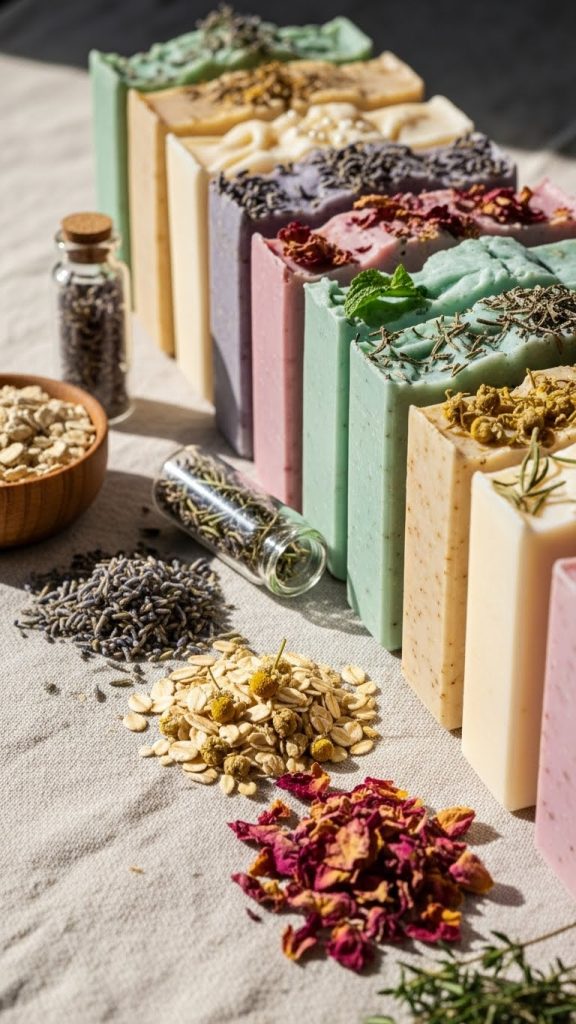
For selling, cut soap bars evenly and allow them to cure if required. Wrap them in paper or boxes that allow airflow. Clear labeling with ingredients is important. Handmade soaps sell well in gift sets and attract customers who value natural living and self-care.