10 Kids Playroom Decor Ideas
Designing a kids’ playroom is more than simply filling a room with toys. A well-planned playroom creates a safe, inspiring, and organized environment where children can explore, learn, and develop important skills. When children have a dedicated space for play, creativity, and learning, they are more likely to stay engaged, develop independence, and enjoy their time indoors. A thoughtfully designed playroom can also help parents manage clutter in the rest of the home while encouraging healthy play habits.
Before decorating a playroom, it is important to think about preparation, safety, materials, and the needs of the children who will use the space. Factors such as the child’s age, interests, available room size, and safety requirements should all influence the design. Choosing durable materials, organizing toys effectively, and creating activity zones can make a playroom both functional and attractive.
In addition, a playroom should be flexible. Children grow quickly and their interests change over time. Designing the room in a way that allows easy updates will help the space remain useful for many years. With the right ideas, even a small room can become a wonderful place for imagination, creativity, and learning.
The following ten playroom decor ideas provide practical inspiration, including preparation tips, materials to use, and helpful design considerations that will help parents create a fun and organized space for children.
1. Create Colorful Walls That Inspire Creativity
Color is one of the most important elements in a kids’ playroom. Bright and cheerful colors can stimulate imagination, improve mood, and make the room feel lively. Before starting, prepare the walls by cleaning them properly and filling any cracks or holes. Smooth walls will ensure that paint or wallpaper applies evenly and lasts longer.
Choose non-toxic, washable paints because children often touch walls with their hands or draw on them. Water-based paints are usually the safest option for playrooms. Soft shades like pastel blue, light green, or warm yellow can create a calm environment, while brighter colors such as orange or turquoise can add excitement.
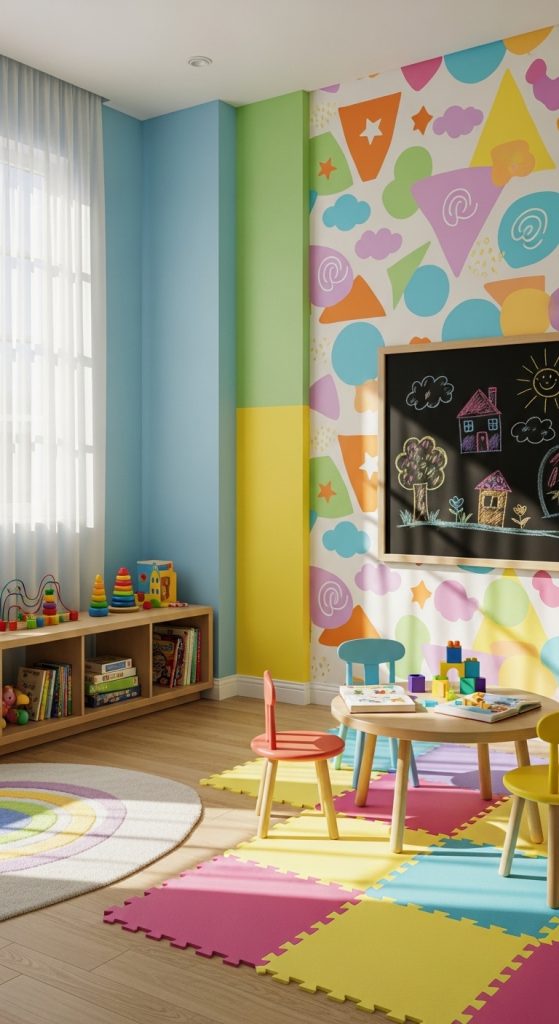
Another creative option is to paint one wall as an accent wall. This wall could feature playful shapes, mountains, clouds, or simple geometric patterns. Wall decals and removable stickers are also excellent because they can be replaced as children grow and their interests change.
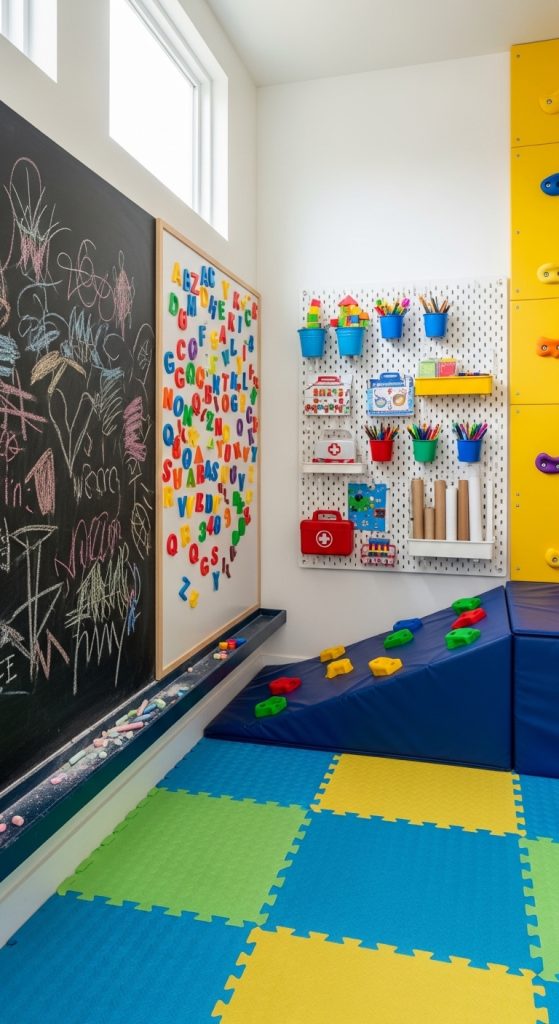
Some parents also install chalkboard or whiteboard paint on one section of the wall. This allows kids to draw freely and express their creativity without damaging the rest of the room.
When planning wall colors, it is best to balance bright tones with neutral shades so the room does not feel overwhelming. Proper lighting will also enhance the colors and make the space more welcoming for play and learning.
2. Use Soft and Safe Flooring for Active Play
Children spend a lot of time sitting, crawling, jumping, and playing on the floor, so flooring is one of the most important design elements in a playroom. Safety should be the main priority when selecting flooring materials.
Before installing new flooring, ensure the floor surface is clean, level, and free from sharp edges or nails. If the existing floor is hard tile or concrete, adding soft layers will make the room safer and more comfortable.
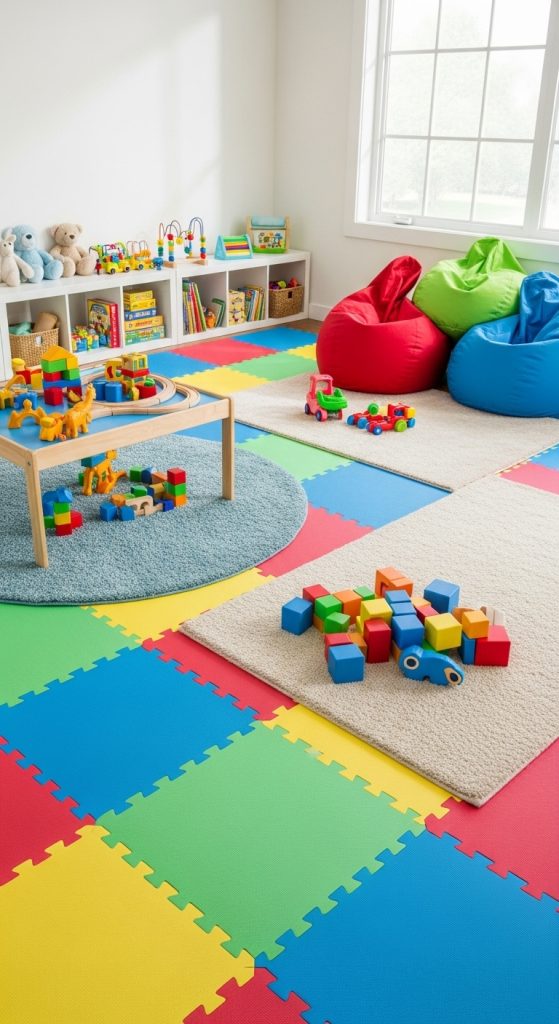
Foam play mats are a popular option because they are soft, lightweight, and easy to clean. Many foam mats come in puzzle shapes that children can assemble themselves, which adds an extra element of fun. These mats also provide cushioning that reduces the risk of injury during active play.
Another good option is a large, soft area rug made from durable and stain-resistant materials. Rugs with non-slip backing help prevent accidents and keep the rug in place. Natural materials like cotton or wool are comfortable, but synthetic fibers may be easier to clean in homes with younger children.
Parents should also avoid rugs with long fibers because small toys can become trapped inside them. Choosing easy-to-clean flooring materials ensures that the playroom remains hygienic and safe while allowing children to move freely and comfortably.
3. Install Smart Storage Solutions to Keep the Room Organized
A playroom can quickly become messy if toys, books, and craft supplies are not organized properly. Smart storage solutions are essential for maintaining a clean and functional space.
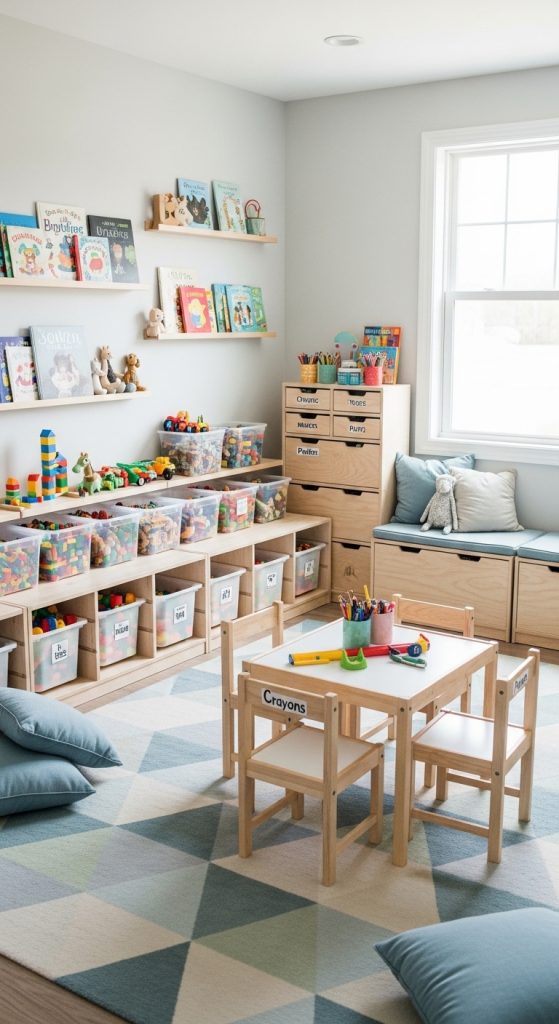
Before adding storage furniture, evaluate the types of items children use most frequently. Grouping toys by category will help determine the type of storage needed. For example, bins for building blocks, shelves for books, and drawers for art supplies.
Low shelves are ideal for playrooms because children can reach them easily and learn to organize their belongings independently. Open shelves also allow kids to see their toys clearly, making it easier to find what they need.
Storage bins made from plastic, fabric, or wood can help keep smaller items organized. Transparent containers allow children to see what is inside, while labeled bins help teach organizational skills.
Wall-mounted shelves are another effective solution for storing books and decorative items while saving floor space. However, these shelves should be installed securely to ensure safety.
Furniture that doubles as storage is also very useful. For example, benches with hidden compartments or toy chests that serve as seating can maximize space.
When planning storage, keep frequently used toys within easy reach and place less frequently used items on higher shelves. This system keeps the playroom tidy while encouraging children to take responsibility for cleaning up.
4. Design a Creative Art and Craft Corner
An art and craft corner can transform a playroom into a space where children express their creativity. Having a designated area for drawing, painting, and crafting helps keep messy activities contained while encouraging artistic exploration.
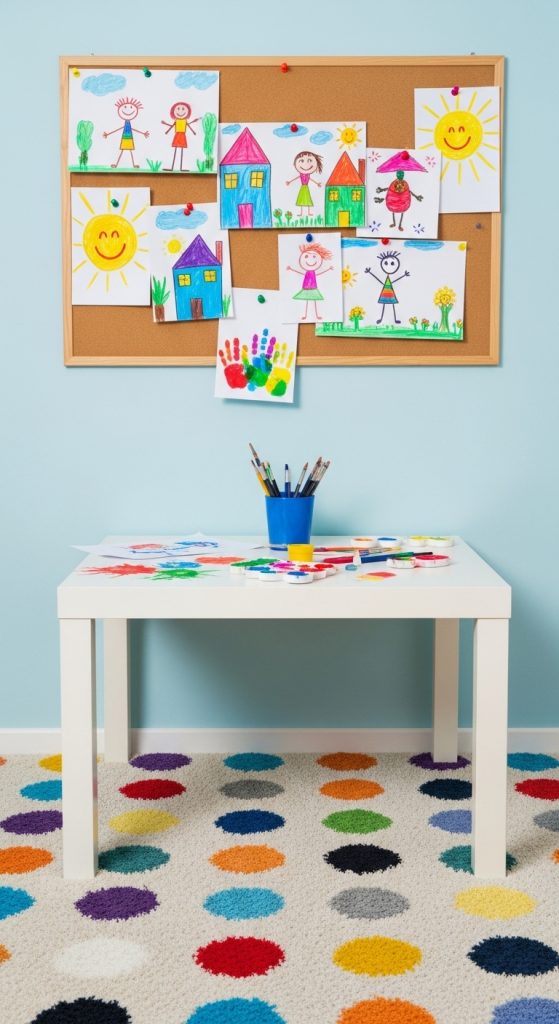
Begin by choosing a corner of the room with good lighting, preferably near a window or under bright overhead lights. Prepare the area by covering surfaces with easy-to-clean materials. For example, a plastic table cover or laminated tabletop can protect furniture from paint or glue.
A child-sized table and chairs provide a comfortable workspace. These should be sturdy, lightweight, and made from materials that are easy to wipe clean. Wooden or plastic furniture often works well in playrooms.
Organize art supplies in small containers or trays so children can easily access crayons, markers, colored pencils, scissors, and paper. A rolling cart or small storage shelf can keep supplies organized without taking up too much space.
Installing a small display board or corkboard allows children to showcase their artwork. This helps build confidence and encourages them to continue creating.
Parents should also store potentially messy materials like paints or glue in sealed containers to prevent spills. With the right preparation and organization, an art and craft corner can become one of the most inspiring areas in the playroom.
5. Build a Reading Nook for Quiet Time
While playrooms are often designed for active play, children also benefit from quiet spaces where they can relax and read. A reading nook provides a peaceful corner that encourages a love for books and learning.
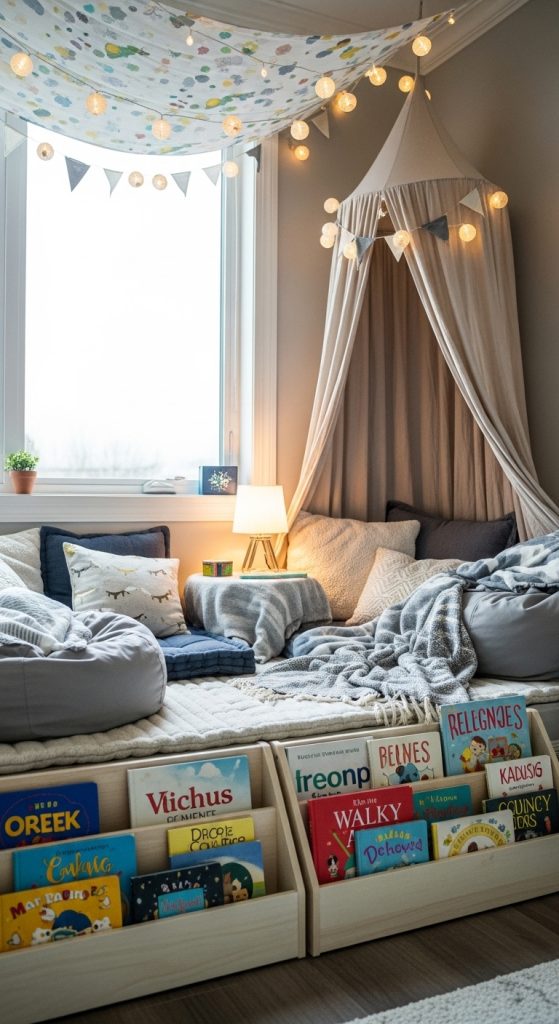
To create a reading nook, start by selecting a quiet corner of the room. Soft lighting is important, so placing the nook near a window or adding a small reading lamp can make the space comfortable.
Comfortable seating is essential. Floor cushions, bean bags, or a small upholstered chair can create a cozy environment where children enjoy spending time. Soft blankets and pillows can make the space even more inviting.
Bookshelves should be placed nearby so children can easily choose their favorite stories. Front-facing bookshelves are particularly helpful for younger children because they allow the book covers to be visible.
Parents can also decorate the reading nook with calming colors, soft rugs, and simple wall art related to stories or nature. A small canopy or tent can make the space feel special and encourage children to use it more often.
By including a quiet reading area in the playroom, parents help children balance active play with moments of relaxation and imagination through books.
6. Create Themed Play Zones for Different Activities
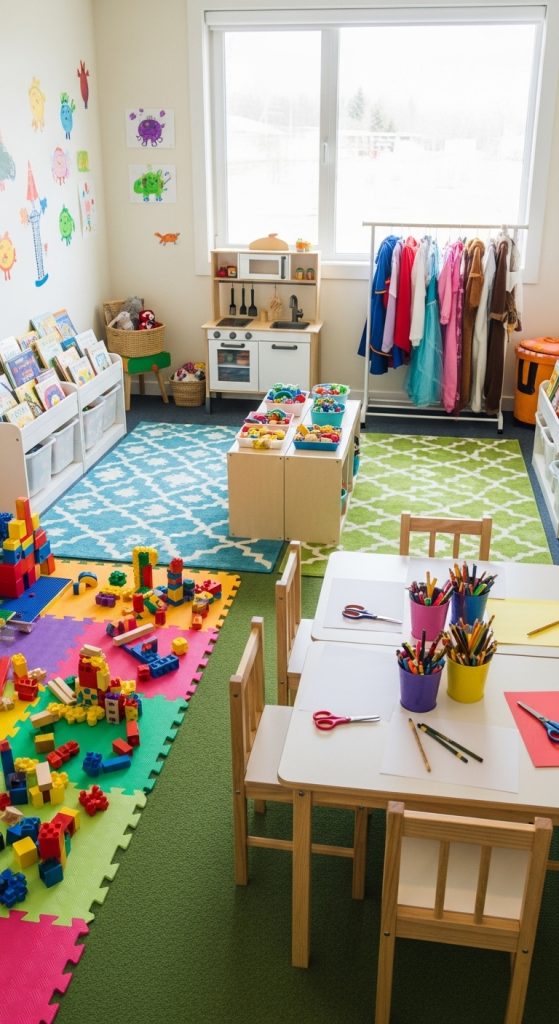
Dividing the playroom into themed zones can make the space more organized and engaging. Each zone can focus on a different type of activity, allowing children to move easily from one activity to another.
Before creating zones, consider the child’s interests and favorite types of play. Common zones include building areas, pretend play corners, reading spaces, and craft stations.
For example, a building zone might include blocks, construction toys, and a play mat. A pretend play area could include a toy kitchen, dollhouse, or dress-up costumes.
Use rugs, shelves, or furniture placement to visually separate each zone. This helps children understand where each activity should take place and makes the room feel structured.
Different colors or decorations can also help define zones. For instance, bright colors might highlight the active play area, while softer tones can mark the reading corner.
The key is to keep the layout simple so children can move freely without obstacles. A well-organized playroom with clear activity zones supports learning, creativity, and independent play.
7. Add Interactive Wall Features
Interactive walls can turn a simple playroom into an exciting learning environment. Instead of leaving walls empty, they can be used for educational and creative activities.
One popular option is installing a chalkboard wall or whiteboard panel. This allows children to draw, write, and practice letters or numbers. It also provides a creative outlet that does not damage regular walls.
Magnetic boards are another interactive feature. Children can use magnetic letters, shapes, or puzzles to learn while playing. These boards can also hold artwork or educational charts.
Some parents install pegboards on walls to hang small toys, craft supplies, or tools for building activities. Pegboards are versatile and can be rearranged easily as children’s needs change.
Another idea is a climbing wall designed specifically for children. If space and safety conditions allow, a small climbing wall with soft flooring below can provide physical activity indoors.
When installing interactive features, safety is very important. All fixtures should be securely mounted, and sharp edges should be avoided. Interactive walls make the playroom dynamic and help children learn through hands-on experiences.
8. Include Comfortable Seating for Kids and Parents
Seating is often overlooked in playroom design, but it is an important part of creating a comfortable environment for both children and parents.
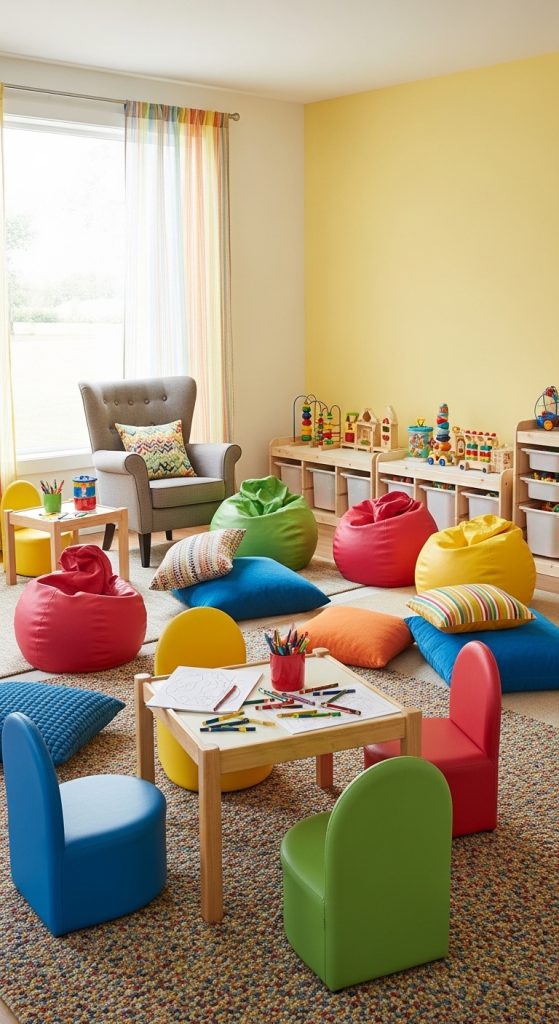
Children need seating options that match their size. Small chairs, bean bags, floor cushions, and soft benches provide comfortable places to sit while playing games, reading, or drawing.
Parents may also spend time in the playroom supervising activities or reading stories. Adding one adult-sized chair or small sofa can make the room more practical for family interaction.
Choose furniture made from durable and easy-to-clean materials. Upholstery with removable covers is helpful because it can be washed when spills occur.
Lightweight furniture is ideal because it can be moved easily to create more space for active play. Rounded edges and stable construction also reduce the risk of injury.
By providing a variety of seating options, the playroom becomes a welcoming place where children and parents can relax, play, and spend quality time together.
9. Use Proper Lighting to Make the Room Bright and Safe
Lighting plays a major role in how comfortable and functional a playroom feels. Poor lighting can make it difficult for children to read, draw, or focus on activities.
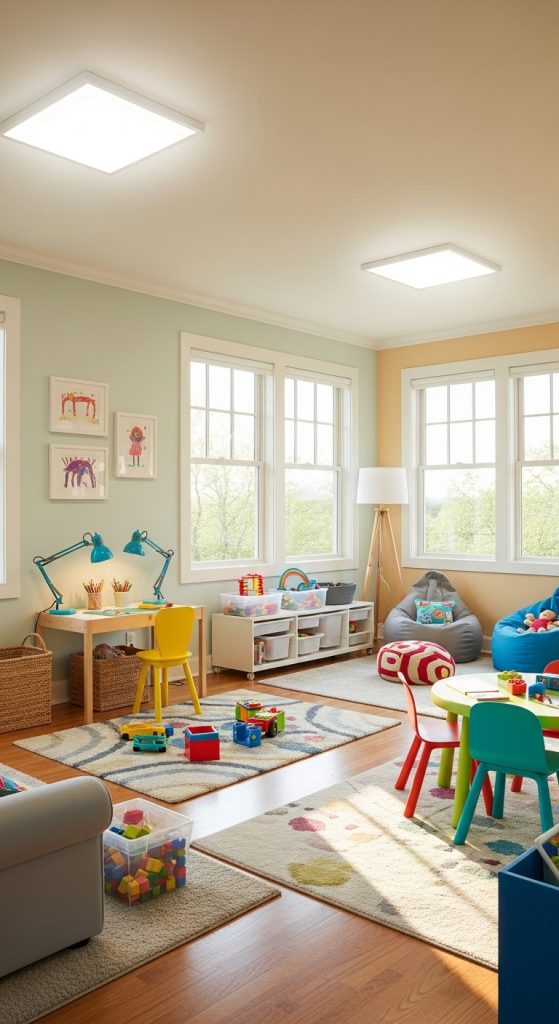
Start with strong overhead lighting that brightens the entire room. LED lights are energy-efficient and provide consistent brightness. Ceiling fixtures with diffused light help reduce glare and create a comfortable atmosphere.
Natural light is also very valuable. If the room has windows, keep them uncovered during the day so sunlight can enter. Natural light improves mood and helps create a pleasant environment for play.
In addition to general lighting, task lighting should be added to areas such as the reading nook or craft table. Small lamps or wall lights can provide focused illumination for detailed activities.
Night lights may also be helpful for younger children who feel uncomfortable in the dark.
Safety should always be considered when installing lighting. All wires should be secured and out of reach, and fixtures should be installed properly to prevent accidents.
With the right lighting setup, the playroom becomes bright, safe, and inviting for children to enjoy throughout the day.
10. Add Personal Touches That Reflect the Child’s Personality
The final step in decorating a kids’ playroom is adding personal elements that make the space unique. Personal touches help children feel connected to the room and encourage them to use it more often.
Parents can include decorations related to the child’s favorite interests. For example, wall art featuring animals, space themes, or favorite cartoon characters can make the room more exciting.
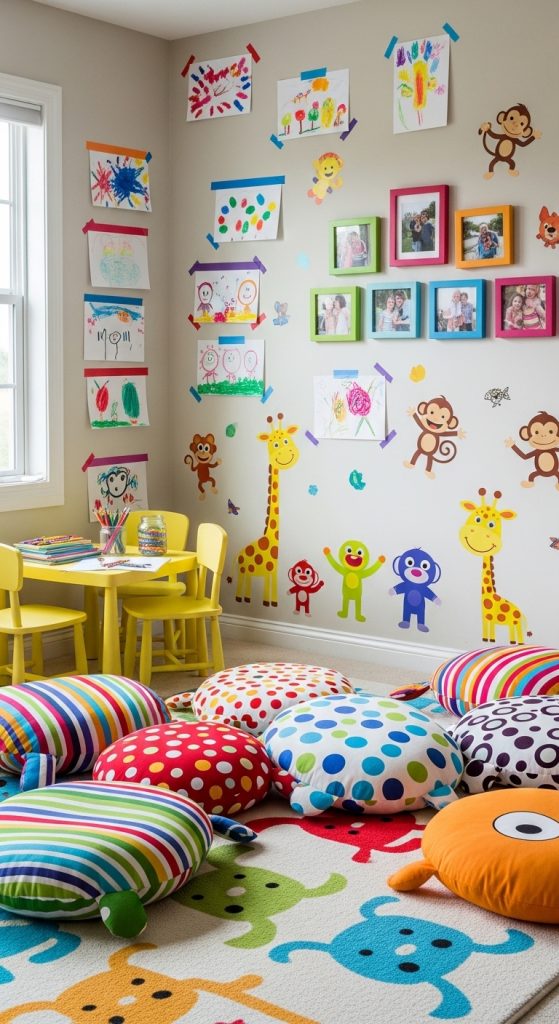
Displaying children’s artwork on walls or bulletin boards adds a personal and meaningful element to the space. It shows children that their creativity is valued and appreciated.
Photo frames with family pictures or images of memorable moments can also create a warm and welcoming environment.
Another idea is allowing children to choose some decorative items themselves, such as cushions, rugs, or wall stickers. This gives them a sense of ownership and responsibility for the room.
While decorating, it is important to keep the design flexible. As children grow older, their interests will change. Using removable decorations and adaptable furniture will make it easier to update the room in the future.
A playroom that reflects the child’s personality becomes more than just a play area. It becomes a special space where creativity, learning, and happy memories grow together.