Designing a kids’ playroom is more than simply filling a room with toys. A well-planned playroom creates a safe, inspiring, and organized environment where children can explore, learn, and develop important skills. When children have a dedicated space for play, creativity, and learning, they are more likely to stay engaged, develop independence, and enjoy their time indoors. A thoughtfully designed playroom can also help parents manage clutter in the rest of the home while encouraging healthy play habits.
Before decorating a playroom, it is important to think about preparation, safety, materials, and the needs of the children who will use the space. Factors such as the child’s age, interests, available room size, and safety requirements should all influence the design. Choosing durable materials, organizing toys effectively, and creating activity zones can make a playroom both functional and attractive.
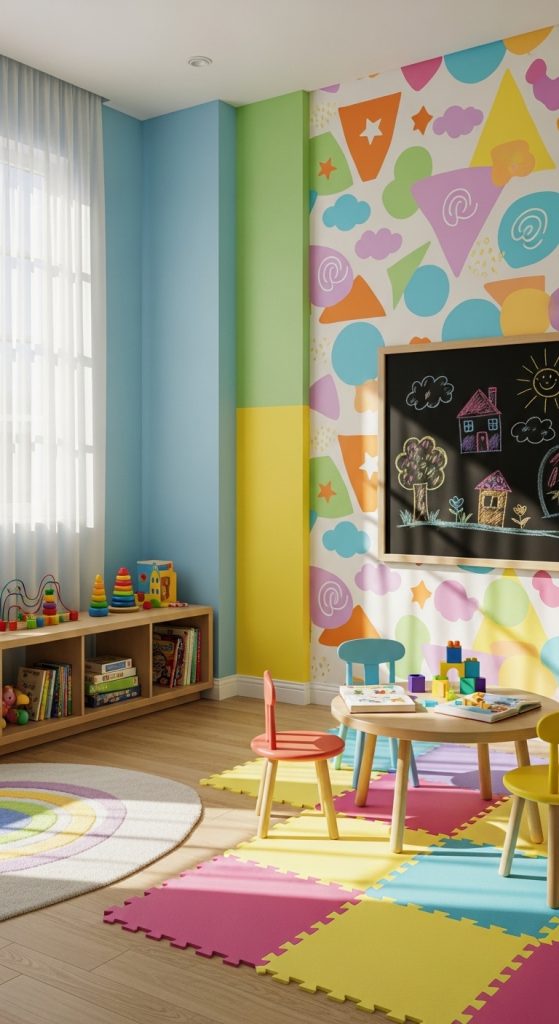
In addition, a playroom should be flexible. Children grow quickly and their interests change over time. Designing the room in a way that allows easy updates will help the space remain useful for many years. With the right ideas, even a small room can become a wonderful place for imagination, creativity, and learning.
The following ten playroom decor ideas provide practical inspiration, including preparation tips, materials to use, and helpful design considerations that will help parents create a fun and organized space for children.
1. Create Colorful Walls That Inspire Creativity
Color is one of the most important elements in a kids’ playroom. Bright and cheerful colors can stimulate imagination, improve mood, and make the room feel lively. Before starting, prepare the walls by cleaning them properly and filling any cracks or holes. Smooth walls will ensure that paint or wallpaper applies evenly and lasts longer.
Choose non-toxic, washable paints because children often touch walls with their hands or draw on them. Water-based paints are usually the safest option for playrooms. Soft shades like pastel blue, light green, or warm yellow can create a calm environment, while brighter colors such as orange or turquoise can add excitement.
Another creative option is to paint one wall as an accent wall. This wall could feature playful shapes, mountains, clouds, or simple geometric patterns. Wall decals and removable stickers are also excellent because they can be replaced as children grow and their interests change.
Some parents also install chalkboard or whiteboard paint on one section of the wall. This allows kids to draw freely and express their creativity without damaging the rest of the room.
When planning wall colors, it is best to balance bright tones with neutral shades so the room does not feel overwhelming. Proper lighting will also enhance the colors and make the space more welcoming for play and learning.