10 Craft Hobby ideas

Craft hobbies are a wonderful way to express creativity, relieve stress, and even develop new skills. Whether you are a beginner or an experienced crafter, there is always something new to learn and create. Crafting allows individuals to transform simple materials into beautiful, functional, or decorative items. Beyond the artistic satisfaction, these hobbies also offer mental and emotional benefits, such as improved focus, patience, and problem-solving skills. Many crafts can be done at home with minimal investment, making them accessible to almost anyone.
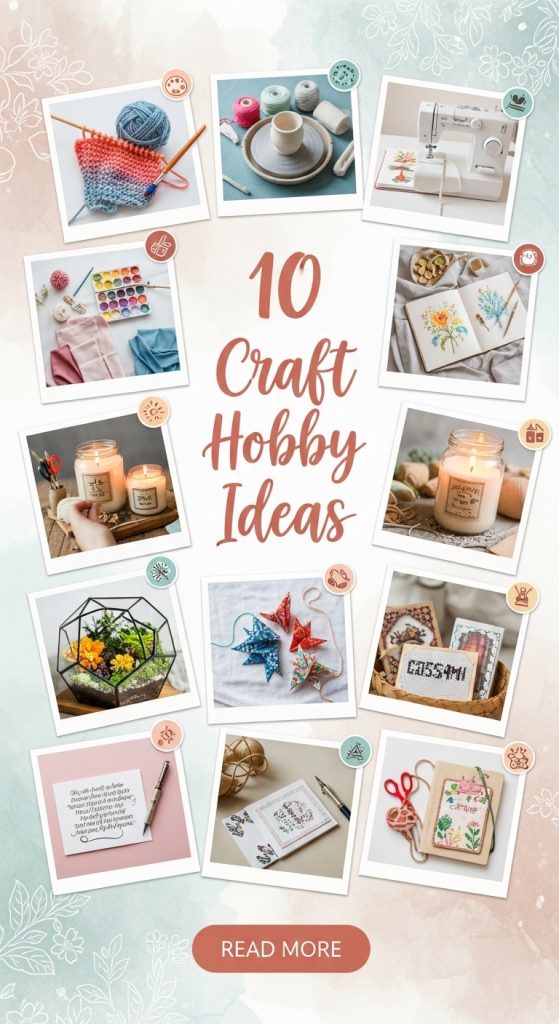
This blog post will explore 10 craft hobby ideas that are fun, engaging, and suitable for all ages. Each idea will include a brief description, the materials needed, preparation steps, and tips for getting started. From traditional crafts like knitting and scrapbooking to modern DIY projects like resin art and macramé, these hobbies can become both a relaxing pastime and a potential source of personal fulfillment. Let’s dive into the world of crafting and discover hobbies that can ignite your creativity.


1. Knitting and Crocheting

Knitting and crocheting are timeless crafts that allow you to create scarves, blankets, sweaters, and other fabric items using yarn. These hobbies are highly versatile because you can choose from various yarn types, textures, and colors to suit your project. Beginners can start with simple scarves or dishcloths, while more experienced crafters can experiment with intricate patterns.

Materials Needed: Yarn, knitting needles or crochet hooks, scissors, measuring tape, stitch markers.

Preparation and Tips: Begin by learning basic stitches such as the knit, purl, or single crochet. Online tutorials and books are excellent resources. Keep your yarn organized to prevent tangling, and always measure your work as you go to maintain consistent sizing. Knitting and crocheting not only produce functional items but also provide a sense of accomplishment as you complete each project.


2. Scrapbooking

Scrapbooking is a creative way to preserve memories by combining photos, decorative papers, and embellishments in a visually appealing album. This hobby allows crafters to tell personal stories, create themed projects, or make gifts for loved ones. Scrapbooking can also be digital, using software to design pages before printing.

Materials Needed: Scrapbook album, patterned papers, adhesives, scissors, stickers, photos, markers, embellishments.

Preparation and Tips: Begin by selecting a theme or event, such as a vacation or birthday. Plan your layout before attaching materials to ensure balance and flow. Experiment with layering and textures for added depth. Scrapbooking encourages creativity while allowing for personal expression and emotional connection to memories.


3. Painting and Acrylic Art

Painting is a classic hobby that allows unlimited creativity. Acrylic paints are especially beginner-friendly because they dry quickly and are easy to work with. This craft can be adapted to create landscapes, abstracts, portraits, or decorative items like painted plant pots or furniture.

Materials Needed: Acrylic paints, paintbrushes, palette, canvas or paper, water cup, apron.

Preparation and Tips: Start with basic color mixing techniques and simple sketches. Use reference images or create abstract patterns to explore color and texture. Ensure proper ventilation when painting indoors. Painting not only enhances artistic skills but also provides therapeutic relaxation and a satisfying visual outcome for your home or gifts.


4. Candle Making

Candle making is a craft that combines creativity and functionality. You can produce candles in various shapes, colors, and scents. This hobby can be as simple as melting wax and pouring it into molds or as advanced as creating layered and decorated candles.

Materials Needed: Wax (soy, paraffin, or beeswax), wicks, molds, double boiler or microwave-safe container, fragrance oils, dyes, thermometer.

Preparation and Tips: Begin by selecting a wax type and wick size suitable for your mold. Melt the wax carefully and add fragrance or color as desired. Pour slowly to avoid bubbles and let candles cool completely. Candle making can be a relaxing process, and the final product is perfect for gifting or home decoration.


5. Resin Art

Resin art is a modern craft involving epoxy resin, which can be used to create jewelry, coasters, trays, and abstract artwork. The clear, glossy finish of resin allows for stunning effects with embedded objects, glitter, or pigments.

Materials Needed: Epoxy resin, hardener, silicone molds, pigments, gloves, mixing cups, stir sticks, protective mat.

Preparation and Tips: Carefully measure resin and hardener according to instructions to ensure proper curing. Mix thoroughly to avoid streaks or bubbles, and work in a well-ventilated area. Experiment with layering and embedding objects for unique designs. Resin art offers an impressive, professional-looking result with minimal technical skill once the basics are learned.


6. Macramé

Macramé is the art of knotting cords or threads to create decorative items such as wall hangings, plant hangers, or jewelry. It’s a tactile, hands-on craft that allows for endless creativity and personal expression.

Materials Needed: Cotton or jute cords, scissors, measuring tape, wooden dowels or rings, optional beads.

Preparation and Tips: Start with basic knots like the square knot or half hitch. Measure cords accurately to avoid running short mid-project. Plan your design and experiment with patterns for unique creations. Macramé is highly meditative and helps improve hand-eye coordination while producing beautiful functional art for your home.


7. Pottery and Clay Craft

Pottery is a tactile hobby that transforms clay into functional or decorative items, from bowls and mugs to sculptures. Clay crafting can be done by hand-building techniques or using a potter’s wheel, depending on skill and access to equipment.

Materials Needed: Clay (air-dry or kiln-fired), sculpting tools, rolling pin, water, paint or glaze, workspace mat.

Preparation and Tips: Begin with small, simple projects to practice shaping and smoothing. Keep clay moist while working, and allow finished items to dry or fire properly. Pottery enhances fine motor skills and provides a tangible, lasting product. Glazing and painting offer additional creative possibilities.


8. Jewelry Making

Jewelry making is a versatile craft that allows crafters to design earrings, necklaces, bracelets, and rings. It can involve beads, wire, clay, or even resin to create custom pieces.

Materials Needed: Beads, wires, clasps, pliers, jump rings, thread, or chains.

Preparation and Tips: Learn basic techniques such as stringing, wire wrapping, and crimping. Plan your design for symmetry and balance. Start with simple projects and gradually explore advanced methods like metalwork or resin inclusion. Jewelry making provides a creative outlet and can also become a small business or personalized gift option.


9. Paper Crafting and Origami

Paper crafting includes a wide range of activities such as origami, card making, and paper quilling. This craft is accessible, inexpensive, and suitable for all ages. It allows crafters to create decorative or functional items entirely from paper.

Materials Needed: Colored paper, scissors, glue, ruler, pencil, quilling tools (optional).

Preparation and Tips: Start with basic folds and shapes before attempting complex designs. For card making, plan your layout and experiment with layers and embellishments. Paper crafts improve hand-eye coordination, patience, and attention to detail while producing visually striking creations.


10. Embroidery and Needlework

Embroidery is a traditional craft that involves stitching patterns onto fabric using needle and thread. Modern embroidery includes decorative patterns, monograms, and even wearable art.

Materials Needed: Embroidery hoop, needles, embroidery floss, fabric, scissors, pattern templates.

Preparation and Tips: Start with simple stitches like the backstitch, satin stitch, or French knot. Use a hoop to keep fabric taut and maintain even tension. Patterns can be traced or freehanded, depending on skill level. Embroidery enhances precision, creativity, and patience, offering satisfying results for decoration or gifts.


Leave a Reply

Your email address will not be published. Required fields are marked *