
10 Live Edge Island kitchen
A live edge island kitchen brings nature directly into the heart of the home. Unlike factory-cut countertops, live edge wood keeps the natural shape of the tree, including its curves, grain, and organic lines. This makes every kitchen island unique. No two slabs are ever the same. Live edge islands combine modern kitchen function with rustic beauty, creating a warm and welcoming space for cooking, eating, and gathering.
Homeowners today want kitchens that feel personal and natural, not cold or overly polished. A live edge island does exactly that. It becomes the focal point of the kitchen, drawing attention without feeling forced. Whether your kitchen style is modern, farmhouse, industrial, or traditional, live edge wood can adapt and enhance the space.
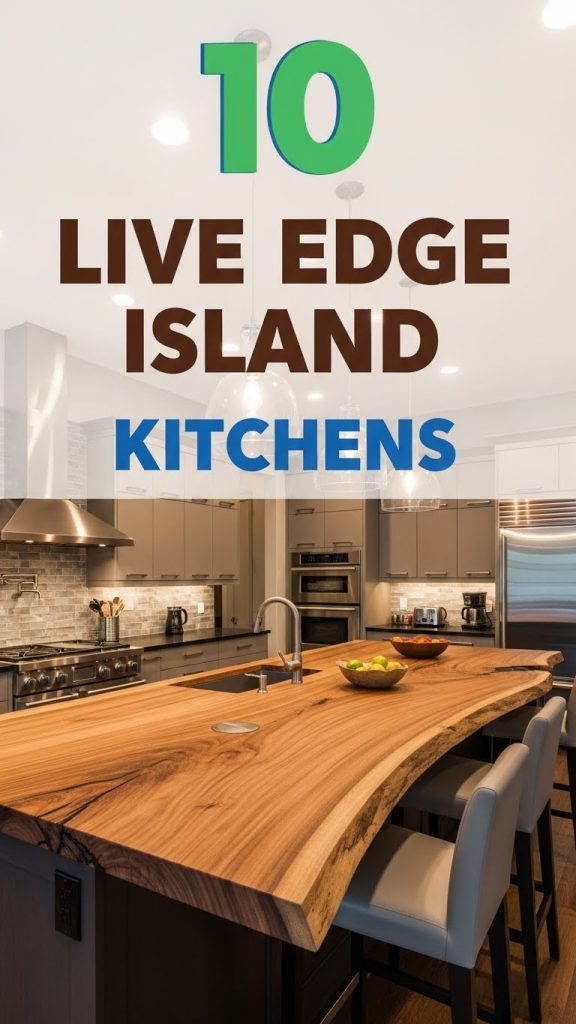
This blog explains everything you need to know about live edge island kitchens. From choosing the right wood to installation, maintenance, design styles, seating options, and lighting, each section breaks down the process clearly. If you are planning a renovation or building a new kitchen, this guide will help you understand materials, preparation, costs, and design choices so you can create a kitchen island that is both beautiful and practical.
1. What Is a Live Edge Kitchen Island
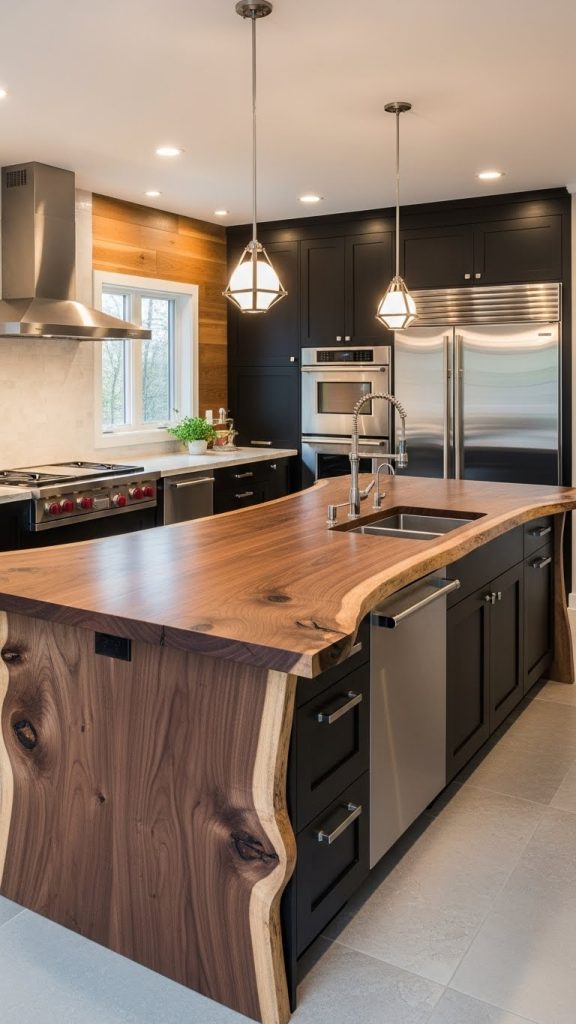
A live edge kitchen island is a kitchen island that uses a slab of natural wood where at least one edge remains uncut. Instead of straight, machine-made lines, the edge follows the natural shape of the tree. This creates an organic and artistic look that stands out from standard countertops.
Live edge islands are often made from hardwood trees such as walnut, oak, maple, cherry, or acacia. These woods are strong enough to handle daily kitchen use while showing rich grain patterns. The slab is carefully dried, sanded, and sealed to make it safe and durable for kitchen environments.
The live edge can be placed on one side or both sides of the island, depending on design preference. Some homeowners prefer the live edge facing the seating area, while others highlight it on the cooking side. The rest of the island structure may be made from wood, metal, or stone.
This type of island works as both a functional surface and a statement piece. It offers workspace, storage, and seating while adding warmth and character to the kitchen.

2. Choosing the Right Wood for a Live Edge Island
Selecting the right wood is one of the most important steps in creating a live edge island kitchen. Different woods offer different colors, grain patterns, hardness, and durability. Walnut is a popular choice because of its deep brown color and smooth grain. Oak is strong and classic, with visible grain that suits both modern and rustic kitchens.
Maple provides a lighter color, making it ideal for small or bright kitchens. Cherry darkens over time and adds warmth. Acacia offers dramatic grain contrast and natural movement in the wood.
When choosing wood, consider how much daily use the island will get. Hardwoods resist dents and scratches better than softwoods. Also think about how the color of the wood will match your cabinets, flooring, and appliances.
The slab should be properly kiln-dried to prevent cracking or warping. A professional wood supplier can help you choose a slab with stable moisture content. Always inspect the slab for large cracks or weak spots before purchase.
3. Preparing the Wood Slab for Kitchen Use
Before a live edge slab can be used in a kitchen, it must be properly prepared. Raw wood cannot be installed directly because kitchens have moisture, heat, and heavy use. Preparation ensures durability and safety.
The process begins with drying the slab. Kiln drying removes excess moisture and stabilizes the wood. After drying, the slab is flattened to ensure a level surface. This step is essential for cooking and food preparation.
Next, the wood is sanded in stages, starting with coarse grit and finishing with fine grit. This creates a smooth surface while preserving the natural edge. Any cracks or voids may be filled with clear or tinted epoxy to strengthen the slab without hiding its character.
Finally, the slab is sealed with food-safe finishes such as hardwax oil, polyurethane, or epoxy resin. These finishes protect against water, stains, and bacteria while enhancing the wood’s natural beauty.

4. Live Edge Island Base and Support Options
The base of a live edge kitchen island is just as important as the countertop. Since solid wood slabs are heavy, the base must provide strong support. Common base options include wood cabinetry, steel frames, or a combination of both.
Wood bases create a cohesive look and offer storage space through drawers and cabinets. Steel or iron frames provide a modern or industrial feel and allow the live edge slab to stand out as the main feature.
Some homeowners choose stone or concrete bases for contrast. These materials balance the warmth of the wood with a solid, grounded appearance.
The base must be properly anchored to the floor to prevent movement. Weight distribution is also important, especially if the slab extends outward for seating. Professional installation is recommended to ensure safety and long-term stability.

5. Designing Seating and Overhang Areas
One of the most popular features of a live edge island kitchen is seating. The natural edge creates a comfortable and inviting place for casual dining or social gatherings. When designing seating, overhang depth is critical.
A typical overhang ranges from 12 to 15 inches for standard stools. For deeper seating comfort, 18 inches may be used with added support brackets. The live edge should be smooth and sealed to prevent splinters or discomfort.
Stool height should match island height. Counter-height stools work for 36-inch islands, while bar-height stools suit taller islands. Choose seating that complements the organic nature of the wood, such as leather, fabric, or wood stools.
Seating areas are ideal for highlighting the live edge, as guests can see and feel the natural curves up close.

6. Integrating Appliances and Storage
A live edge island kitchen can include modern appliances and storage without losing its natural appeal. Popular additions include sinks, cooktops, dishwashers, wine coolers, and built-in shelves.
When cutting into a live edge slab for appliances, precision is essential. Cuts must be sealed carefully to prevent moisture damage. Undermount sinks are commonly used to keep the wood edge clean and protected.
Storage options may include drawers, cabinets, open shelving, or hidden compartments. Soft-close hardware helps protect the structure from wear over time.
Planning appliance placement early ensures the live edge remains visually balanced and functional.

7. Lighting Ideas for Live Edge Kitchen Islands
Lighting plays a major role in highlighting the beauty of a live edge island. Proper lighting enhances the wood grain and creates a welcoming atmosphere.
Pendant lights are the most common choice. Simple metal, glass, or wooden pendants work well without overpowering the natural slab. Warm light temperatures bring out the richness of the wood.
Recessed lighting can be added for general illumination, while under-counter lighting highlights the live edge from below. This creates depth and drama, especially in the evening.
Lighting placement should avoid casting harsh shadows on the work surface. Adjustable fixtures allow flexibility for cooking and entertaining.

8. Matching Live Edge Islands with Kitchen Styles
Live edge islands are surprisingly versatile and can match many kitchen styles. In modern kitchens, they add warmth and contrast to sleek cabinets and appliances. In farmhouse kitchens, they enhance rustic charm.
Industrial kitchens benefit from pairing live edge wood with metal frames and concrete floors. Traditional kitchens gain character through natural textures.
Color coordination is key. Neutral cabinets allow the wood to stand out, while darker cabinets create a bold contrast. Natural stone backsplashes complement the organic feel.
The goal is balance. The live edge should feel intentional, not out of place.

9. Maintenance and Care of Live Edge Islands
Proper maintenance keeps a live edge island beautiful for years. Daily care includes wiping spills immediately and cleaning with a damp cloth and mild soap. Avoid harsh chemicals.
Periodic re-oiling or resealing may be needed depending on the finish. This protects the wood from drying out and maintains its shine.
Use cutting boards and trivets to prevent scratches and heat damage. Avoid prolonged exposure to water.
With proper care, a live edge island becomes more beautiful over time as the wood develops character.

10. Cost, Installation, and Final Considerations
The cost of a live edge island kitchen varies based on wood type, slab size, finish, and installation complexity. Prices may range from moderate to high compared to standard islands.
Custom slabs and professional installation increase cost but ensure quality and safety. Budget should also include sealing, base construction, and appliance integration.
Before committing, consider lifestyle needs, kitchen size, and maintenance comfort level. A live edge island is an investment that adds value and personality to your home.
When done right, it becomes the heart of the kitchen, blending natural beauty with everyday function.
