10 Pothos Climbing ideas
Pothos is one of the most versatile and popular indoor plants due to its low maintenance nature, fast growth, and ability to adapt to various interior styles. One of the most exciting aspects of pothos care is training the plant to climb. When supported correctly, pothos can become a stunning vertical feature that enhances interior aesthetics while promoting healthier and larger leaf growth. Climbing allows pothos to mimic its natural habitat where it attaches to tree trunks and rough surfaces. This encourages mature foliage and a fuller appearance compared to trailing growth. In this comprehensive guide, we explore ten effective and creative pothos climbing ideas while also covering preparation methods, materials you will need, and helpful tips to ensure success. Each idea includes a detailed explanation of how it works, why it is effective, and how you can apply it to your own space.

Before diving into the ideas, it is essential to understand the importance of choosing the right materials. Pothos needs surfaces that it can grip. These surfaces must be stable, moisture tolerant, and sturdy enough to support weight as the plant grows. Common materials include moss poles, trellises, wires, hooks, bamboo, wood, and mesh. Preparing the plant for climbing involves identifying the strongest stems, guiding vines upward, and securing them using plant ties or soft string. Positioning the plant near a light source also helps encourage upward growth. With these fundamentals in mind, let us explore ten climbing structures that can transform your pothos into a beautiful and healthy showpiece.
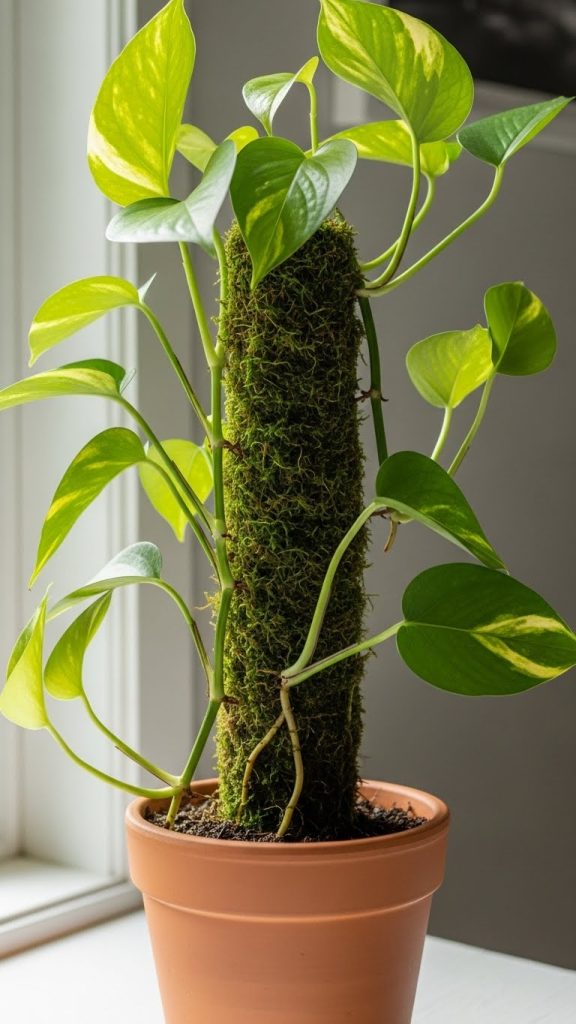
1 Moss Pole Climbing System
A moss pole is one of the most popular methods for training pothos to climb because it closely replicates the natural environment in which epiphytic plants grow. Moss poles are typically made from sphagnum moss wrapped around a wooden or plastic rod. The natural texture of moss provides a soft and moisture retaining surface that pothos aerial roots can easily attach to. This encourages the plant to grow upward while maintaining good hydration. To set up a moss pole system, you will need a sturdy pole, sphagnum moss, twine or wire, and a pot large enough to support the structure. The pole is placed firmly into the soil so that it does not wobble as the plant climbs.
Once the pole is secure, you can gently guide the pothos vines upward and tie them loosely to the moss using soft plant ties. Over time, the roots will naturally embed into the moss and the ties can be removed. Regularly misting the moss will improve root attachment and promote larger leaf growth. The moss pole also helps encourage the pothos to produce fenestrations or thicker leaves depending on the variety. This method works exceptionally well for golden pothos, jade pothos, and marble queen varieties. With proper care, a moss pole climbing system creates a tall, lush vertical plant that brings life to any indoor corner.
2 Wooden Trellis for Natural Aesthetic Growth
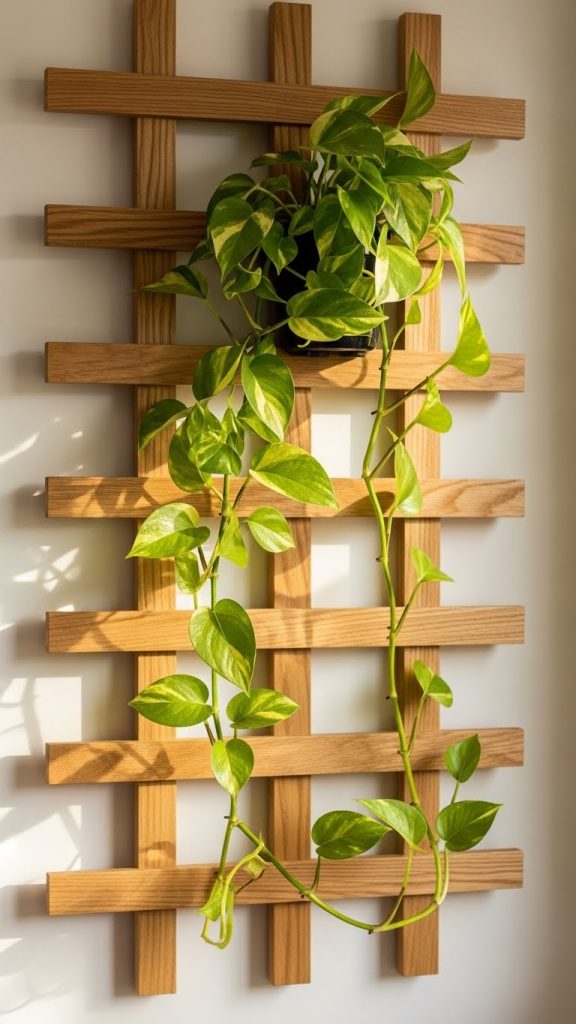
A wooden trellis is a visually appealing and structural way to help pothos climb. Wooden trellises come in various shapes including grids, diamonds, and ladders, allowing you to choose a style that complements your decor. Wood offers natural texture, which pothos roots find comfortable for gripping. To use a trellis, position it directly behind or inside the pothos pot and anchor it firmly so it does not shift. You may build a custom trellis using wooden slats or purchase a premade one from garden centers. The key to making this system work is stability and correct placement.
Begin by selecting the healthiest and longest pothos vines, then gently guide them toward the trellis and secure them with soft ties. As the plant grows, continue wrapping the vines around the trellis structure to encourage uniform coverage. Trellises can support large amounts of growth, making them ideal for those who want a full, layered look. With time, the pothos will naturally cling and climb without much assistance. The wooden trellis also enhances airflow around the plant, reducing the risk of fungal issues. Additionally, it creates an attractive living wall effect. This method fits perfectly in living rooms, bedrooms, offices, and entryways where natural style and structure blend harmoniously.
3 Wall Mounted Hooks for Minimalist Climbing
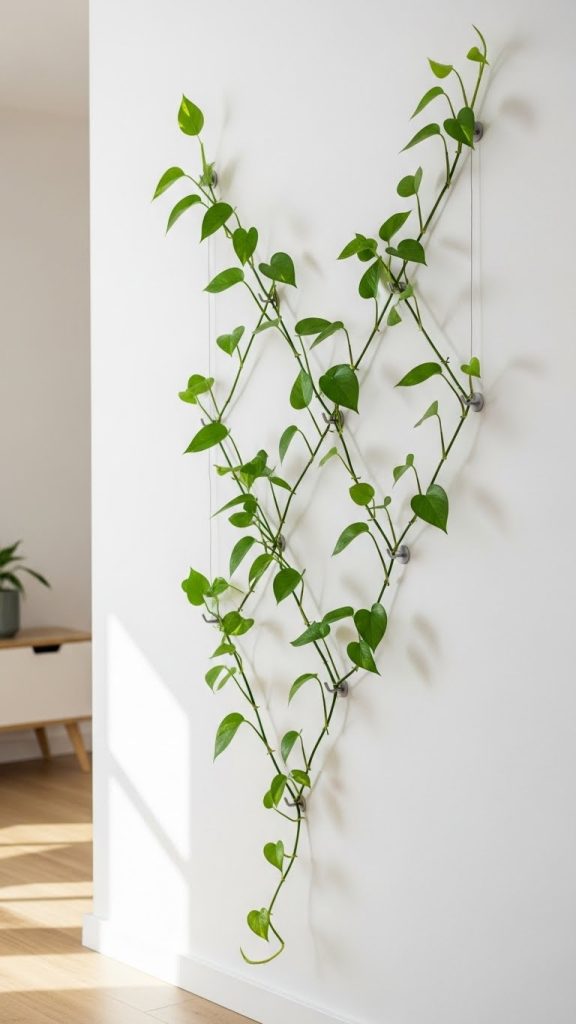
Wall mounted hooks offer a minimalist and space saving solution for training pothos to climb along the wall. This design uses small, sturdy hooks or adhesive clips mounted in a vertical or horizontal pattern. You can arrange the hooks in any creative shape such as waves, straight lines, zigzags, or geometric patterns, allowing endless customization possibilities. This method is suitable for renters who prefer removable hooks that do not damage the wall. Start with a well established pothos plant placed on a shelf or table near the wall. Secure the first section of the vine to the lowest hook and gently guide the remaining parts upward.
As the plant continues to grow, attach the newer sections to higher hooks until the wall displays a beautiful array of cascading leaves. Choosing hooks that are gentle on vines is important to avoid damaging stems. Wall mounted hook climbing allows long vines to spread elegantly while maintaining structure. It also encourages good airflow, preventing overcrowding and pests. This method is ideal for those who prefer a decorative yet subtle plant arrangement. With proper planning and regular adjustments, wall mounted hooks create a clean and charming climbing feature that transforms empty wall space into a botanical work of art.
4 Wire Grid Panel for Modern Industrial Appeal
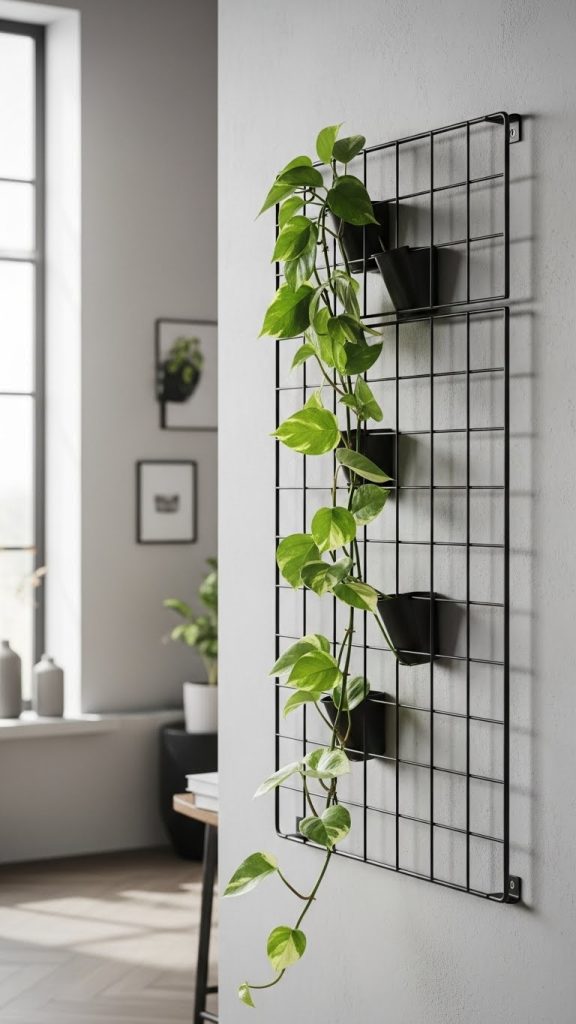
A wire grid panel is an excellent climbing structure for pothos, especially in spaces with modern or industrial decor. These panels are typically made from metal and feature evenly spaced squares. They can be mounted on walls or placed inside large pots. The wire grid offers multiple anchor points, making it an ideal surface for guiding vines. To begin, mount the grid securely using screws or brackets. Place your pothos near the base of the panel and start training the vines by threading them through the metal squares. Use plant clips to secure stems without causing damage.
The grid arrangement allows the plant to grow in symmetrical patterns, offering a clean and structured appearance. You can also customize the design by attaching small planters, lights, or decor to the grid. Metal grids provide long term support and are easy to clean. They do not warp with moisture, making them durable for indoor use. This method is perfect for large wall installations or for those who desire a bold statement piece. With proper care and frequent vine adjustments, a wire grid panel becomes a lush green feature that adds personality and texture to any room.
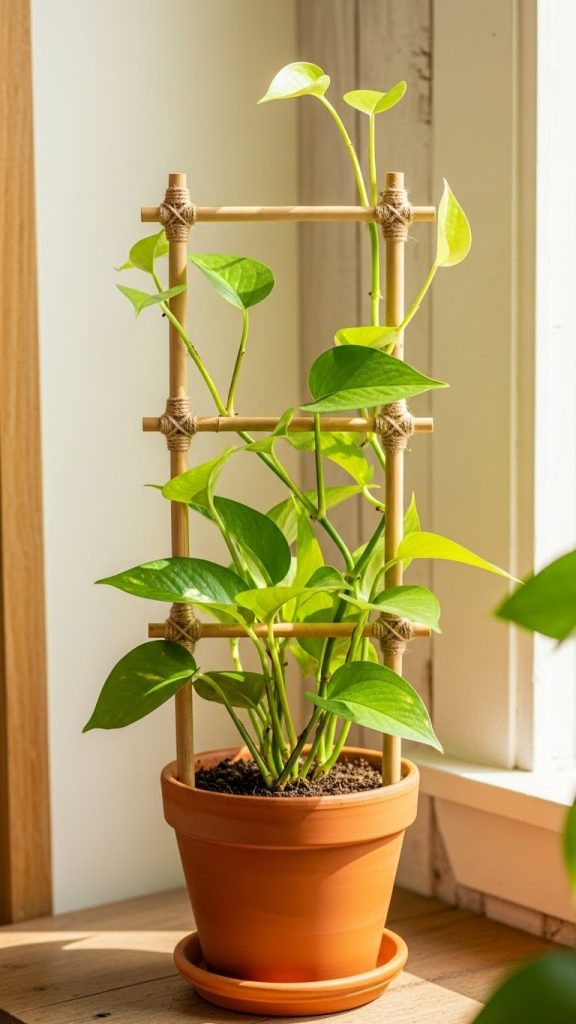
5 Bamboo Stick Ladder for Natural and Lightweight Support
A bamboo stick ladder is a simple, lightweight, and natural climbing structure for pothos. Bamboo is durable, eco friendly, and easy to work with. You can create a ladder by tying multiple bamboo sticks together using jute string or purchase a premade bamboo trellis. The ladder structure offers horizontal and vertical points of support, making it easy to train vines. Begin by inserting the bamboo ladder into the pot, ensuring it is stable and deep enough to withstand upward growth. Guide the pothos vines to the lower rungs and secure them loosely with ties.
As the plant grows, weave the vines through the ladder or wrap them around the bamboo sticks. Bamboo provides a textured surface that pothos roots can cling to naturally. This method is aesthetically pleasing and works well in bohemian, tropical, and rustic interior themes. It is also suitable for small spaces because bamboo ladders can be compact and narrow. Maintenance is simple, requiring occasional repositioning of vines and checking for stability. With consistent support, a bamboo stick ladder encourages strong vertical growth and enhances the natural beauty of the plant.
6 Ceiling Mounted Hanging Rod for Cascading Vertical Growth
A ceiling mounted hanging rod is a creative method for training pothos to climb downward or upward. In this setup, a metal or wooden rod is installed from the ceiling above the plant. The pothos is then encouraged to climb up strings attached to the rod or cascade down from hanging planters. This method adds a dynamic sense of movement to the room. It is ideal for corners, near windows, or over desks where you want to draw the eye upward. Begin by securely installing the rod using brackets or ceiling mounts. Ensure it can handle the weight of mature vines.
Attach strings or vertical supports to the rod and guide the pothos vines toward them. Over time, the plant will follow the path you have created and begin climbing upward. The height provided by the rod allows for long, lush growth, making it suitable for large spaces. This method also increases natural light exposure because the plant is elevated. Regularly adjust and rotate the plant to encourage even growth. A ceiling mounted system creates a dramatic display that blends functionality with artistic appeal, enhancing both small and large interiors.

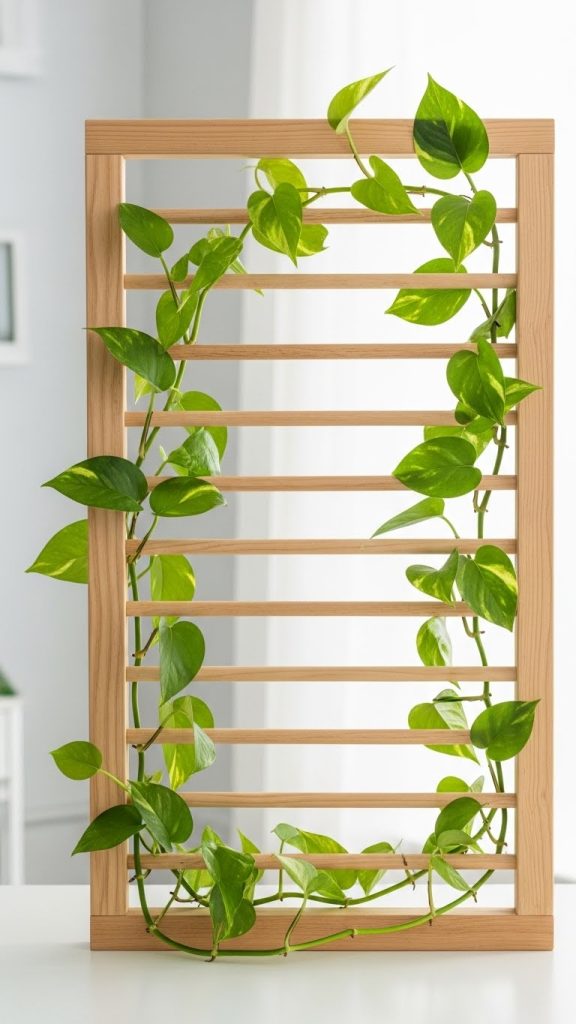
7 Wooden Dowel Frame for DIY Enthusiasts
A wooden dowel frame is a customizable and budget friendly climbing structure for pothos. This involves assembling wooden dowels into a rectangular or triangular frame using glue or screws. The frame can be placed directly into the plant pot or mounted on the wall. Wooden dowels offer a smooth but grippable surface for vines. Begin by planning the size of the frame according to your pot and space. Assemble the frame securely and ensure it is strong enough to support long term plant growth.
Once installed, gently wrap pothos vines around the dowels or guide them through the gaps. Wooden dowel frames allow for creativity because you can adjust the size, shape, and arrangement of dowels. This method adds architectural interest to interiors and is excellent for those who enjoy crafting. Over time, the pothos will fill the spaces between dowels, creating a dense and attractive living structure. Maintenance involves checking for stability and repositioning vines as needed. A wooden dowel frame offers a unique, customizable, and stylish way to support healthy climbing growth.
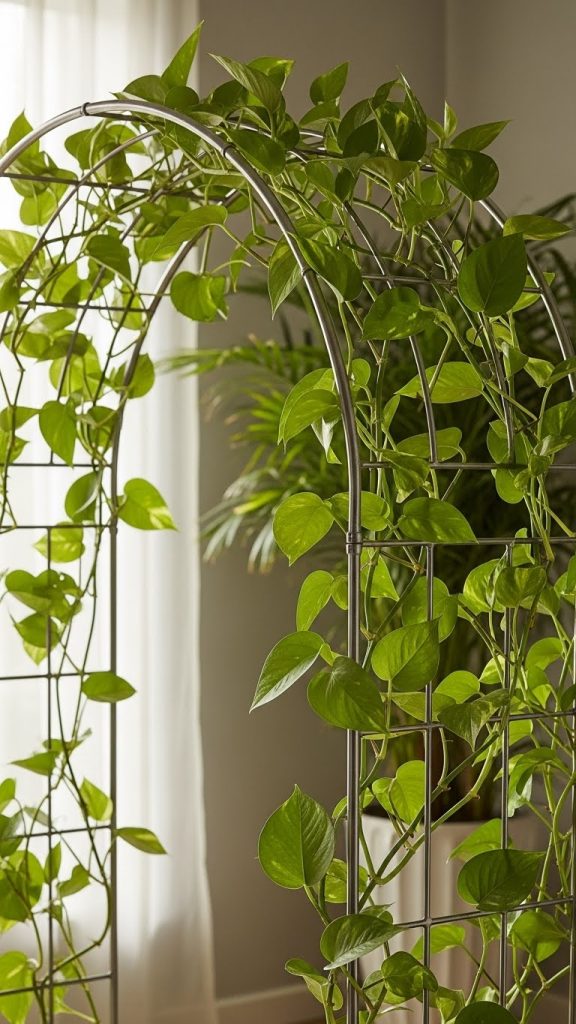
8 Metal Arch Trellis for Decorative Plant Displays
A metal arch trellis provides both structure and decorative flair. The arch shape encourages pothos to climb in a curved, elegant pattern. Metal trellises are durable and suitable for heavy vines. Begin by inserting the legs of the arch trellis into the soil. Make sure it is deep enough to stay secure as the plant climbs. Guide the longest pothos vines to the base of the arch and attach them gently using plant ties.
As the plant grows, continue wrapping or weaving the vines along the arch. The curved shape creates a beautiful canopy effect and makes the pothos look fuller. Metal trellises are often powder coated to prevent rust, making them ideal for long term indoor use. They suit classic, minimalistic, and modern interior styles because of their elegant silhouette. Over time, the pothos will adapt and climb naturally, creating a lush archway that becomes a focal point in the room. This method is perfect for tabletops, shelves, or floor planters.
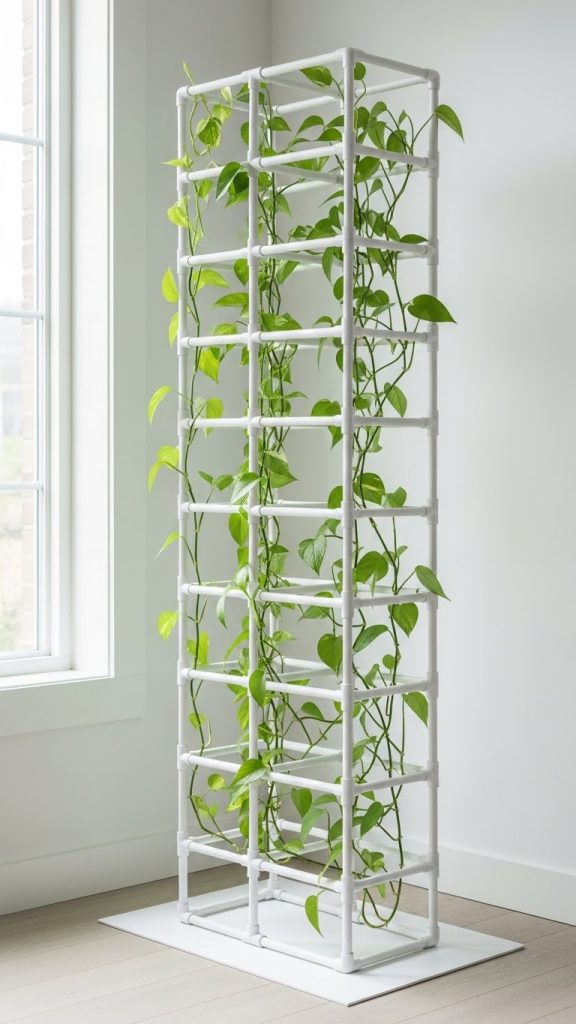
9 PVC Pipe Framework for Strong and Customizable Support
PVC pipe frameworks offer a highly customizable and durable climbing structure. This method is ideal for those who prefer a sturdy, long lasting solution that can support heavy vine growth. PVC pipes can be connected using elbow joints, T connectors, and straight connectors to create frames of any shape or size. Begin by designing your framework, such as a ladder, cube, or grid. Cut the pipes to your desired lengths and assemble them securely.
Place the framework into the pot or behind it. Guide pothos vines through or around the pipes and secure them with soft ties. PVC provides a smooth surface, so you may wrap sections with jute rope to improve grip. This also enhances the aesthetic appearance. PVC frameworks can be painted to match interior decor. The structure remains unaffected by moisture, making it ideal for humid environments or frequent misting. With proper care, the framework becomes a long term climbing solution that helps pothos grow vigorously and evenly.
10 String and Nail Wall Pattern for Artistic Climbing Design
A string and nail wall pattern allows you to turn your pothos into a living piece of art. This method involves hammering small nails into the wall in your desired pattern and connecting them with strings. The pattern could be geometric, abstract, or symmetrical. Begin by sketching your design or planning it directly on the wall. Hammer nails lightly so they hold firmly without causing damage. Attach cotton or jute string tightly between nails to form the climbing path.
Place your pothos pot at the base and guide the vines along the string. Secure gently using clips if needed. As the plant grows, it will follow the direction of the string and create a natural green artwork. This method is lightweight, affordable, and fully customizable. It is ideal for creative individuals who want to make an aesthetic statement in their home. Regular adjustments will ensure the design remains neat as growth continues. Over time, this method results in an intricate and beautiful climbing display.