Before diving into the ideas, it is essential to understand the importance of choosing the right materials. Pothos needs surfaces that it can grip. These surfaces must be stable, moisture tolerant, and sturdy enough to support weight as the plant grows. Common materials include moss poles, trellises, wires, hooks, bamboo, wood, and mesh. Preparing the plant for climbing involves identifying the strongest stems, guiding vines upward, and securing them using plant ties or soft string. Positioning the plant near a light source also helps encourage upward growth. With these fundamentals in mind, let us explore ten climbing structures that can transform your pothos into a beautiful and healthy showpiece.
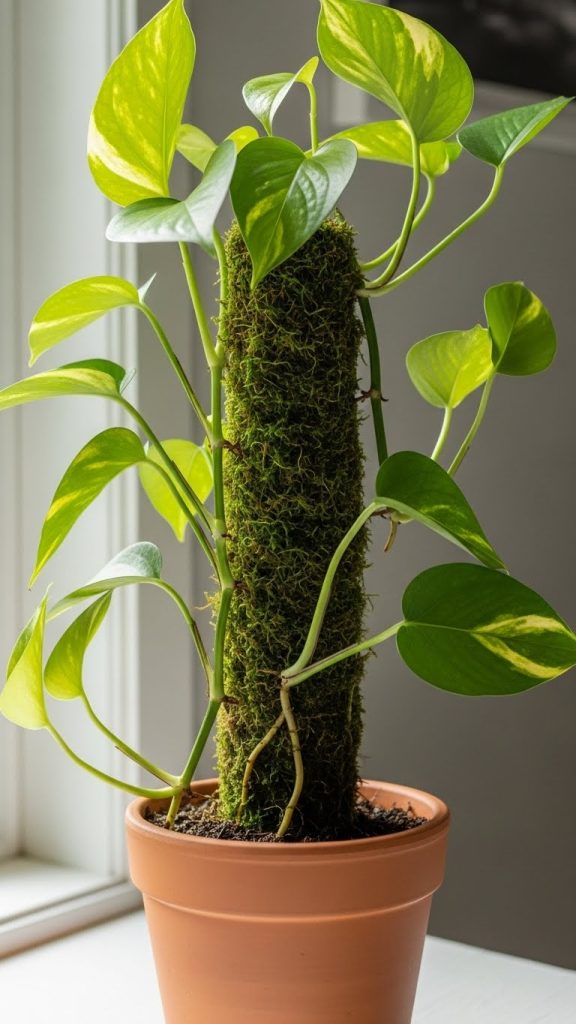
1 Moss Pole Climbing System
A moss pole is one of the most popular methods for training pothos to climb because it closely replicates the natural environment in which epiphytic plants grow. Moss poles are typically made from sphagnum moss wrapped around a wooden or plastic rod. The natural texture of moss provides a soft and moisture retaining surface that pothos aerial roots can easily attach to. This encourages the plant to grow upward while maintaining good hydration. To set up a moss pole system, you will need a sturdy pole, sphagnum moss, twine or wire, and a pot large enough to support the structure. The pole is placed firmly into the soil so that it does not wobble as the plant climbs.
Once the pole is secure, you can gently guide the pothos vines upward and tie them loosely to the moss using soft plant ties. Over time, the roots will naturally embed into the moss and the ties can be removed. Regularly misting the moss will improve root attachment and promote larger leaf growth. The moss pole also helps encourage the pothos to produce fenestrations or thicker leaves depending on the variety. This method works exceptionally well for golden pothos, jade pothos, and marble queen varieties. With proper care, a moss pole climbing system creates a tall, lush vertical plant that brings life to any indoor corner.