10 Plant Decoration ideas Bedroom
Plants are one of the easiest and most effective ways to improve bedroom design. They add natural beauty, create a calm feeling, and help turn a plain bedroom into a relaxing personal space. Many people think plants are only for living rooms or balconies, but bedrooms are actually perfect places for indoor plants when chosen and placed correctly. Plants can soften hard furniture lines, add color without paint, and bring life into corners that feel empty.
Bedroom plant decoration is not only about looks. Plants help improve air quality, increase humidity in dry climates, and create a peaceful environment that supports rest and relaxation. With the right preparation, materials, and placement, plant decoration can work in small rooms, large master bedrooms, and even rented spaces. You do not need expensive tools or rare plants to get good results. Simple pots, proper soil, and basic care are enough.

This blog explains ten practical and beautiful plant decoration ideas for bedrooms. Each idea includes preparation steps, materials needed, plant suggestions, placement tips, and maintenance guidance. Whether you prefer a modern style, a cozy look, or a natural theme, these ideas can be adapted to match your bedroom design and lifestyle.
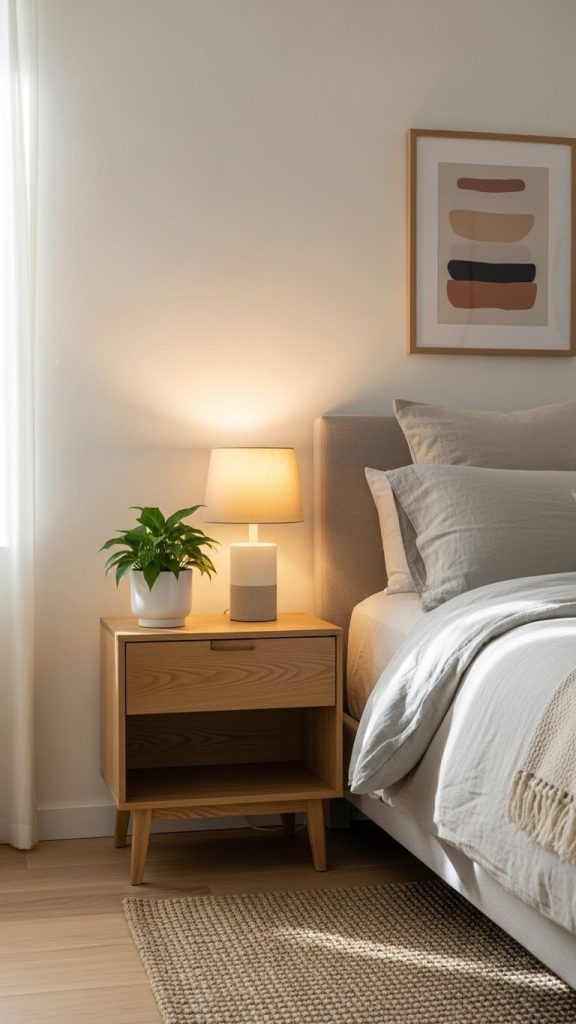
1. Bedside Table Plant Styling
Placing a plant on your bedside table is a simple way to add freshness without changing the entire room layout. This idea works well for both small and large bedrooms and requires very little preparation. The key is choosing a plant that stays compact and does not need strong sunlight.
Before placing a plant on a bedside table, measure the available space. Make sure the plant does not block lamps, clocks, or books. Select a lightweight pot with drainage holes to prevent water damage. Ceramic, clay, or matte-finish plastic pots work well for bedroom use.
Good plant options include snake plant, pothos, peace lily, or small rubber plants. These plants handle low to medium light and do not need frequent watering. Use well-draining potting soil and place a saucer under the pot to protect furniture surfaces.
Position the plant slightly to one side to maintain balance. Keep leaves trimmed so they do not touch your face or bedding. Water once the soil feels dry to the touch. This small addition creates a calm, natural feeling and makes your bedside area look styled and intentional.
2. Hanging Plants Near Windows
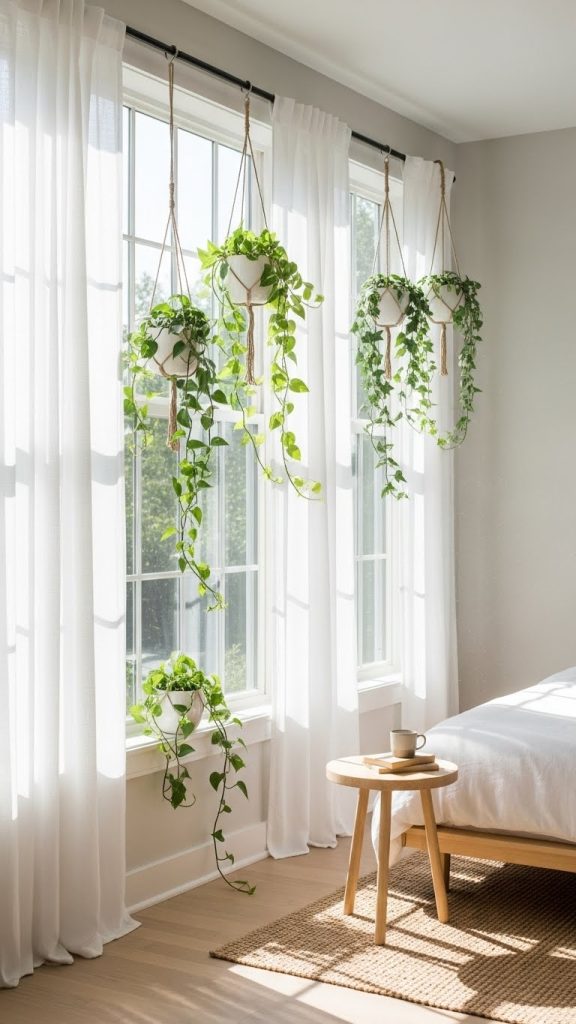
Hanging plants are excellent for bedrooms because they save floor space and add visual interest at eye level. This idea works best near windows where plants can receive indirect sunlight. Hanging plants also soften hard window frames and create a relaxed atmosphere.
Preparation starts with checking ceiling strength or window frame hooks. Use sturdy hooks, anchors, or curtain rods designed to hold weight. Choose lightweight hanging planters made from plastic, fiber, or metal with inner liners.
Plants like pothos, philodendron, spider plant, and trailing ivy are ideal for hanging. These plants grow downward naturally and do not require direct sunlight. Use loose, airy soil to allow proper root breathing and prevent water retention.
Hang plants at different heights for a layered look, but keep them away from head level. Water carefully to avoid spills. Remove plants occasionally for deep watering in the sink. Hanging plants add movement and softness to the bedroom without making the space feel crowded.
3. Floor Plants in Bedroom Corners
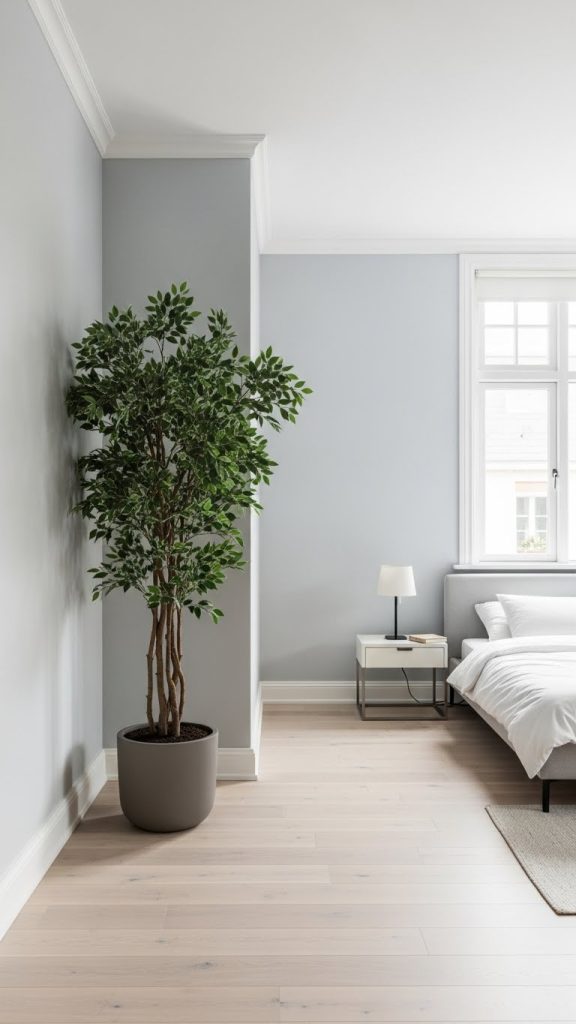
Empty bedroom corners often feel unfinished. Placing a tall floor plant in these spaces helps balance the room and adds natural height. This idea is perfect for master bedrooms or rooms with high ceilings.
Start by identifying corners that receive indirect light. Choose pots with stable bases to prevent tipping. Materials like ceramic, stone, or weighted planters are best for floor plants. Always ensure proper drainage.
Suitable plants include fiddle leaf fig, areca palm, rubber plant, or dracaena. These plants grow upright and fill vertical space beautifully. Use nutrient-rich soil and add small stones at the bottom of the pot to improve drainage.
Place the plant slightly away from the wall to allow air circulation. Clean leaves regularly to remove dust. Water according to plant needs, usually once a week or less. A well-placed corner plant adds structure and makes the bedroom feel complete and balanced.
4. Wall-Mounted Plant Shelves
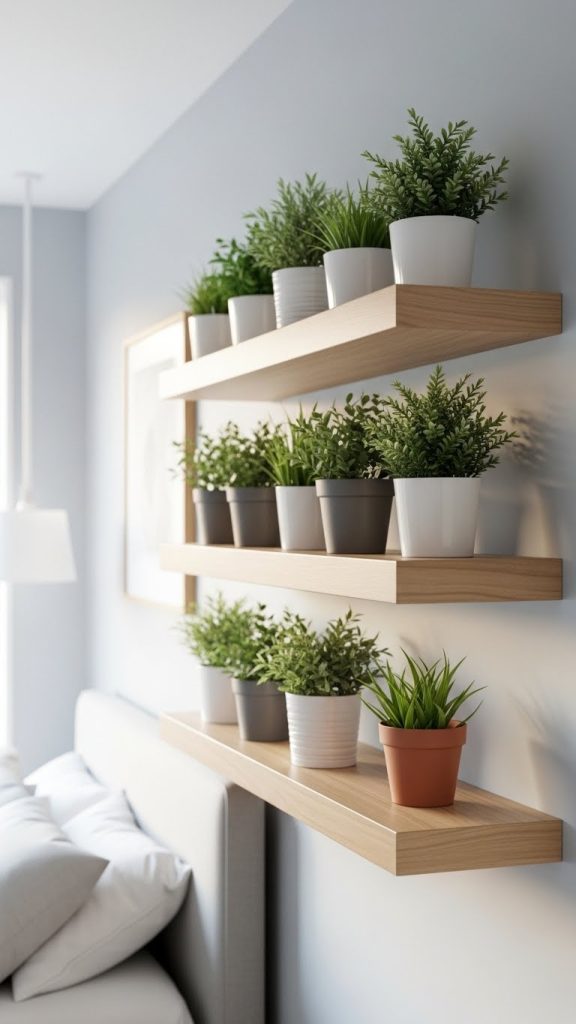
Wall-mounted plant shelves are ideal for bedrooms with limited floor space. They allow you to decorate vertically while keeping the room organized. This method also helps display multiple small plants without clutter.
Preparation includes measuring wall space and installing strong brackets or floating shelves. Wood or metal shelves work well depending on your bedroom style. Make sure shelves are level and properly anchored.
Choose lightweight plants such as succulents, small ferns, mini snake plants, or herb-style plants. Use matching pots for a clean look or mixed textures for a more relaxed style. Always use trays to protect shelves from water damage.
Arrange plants with some space between them to avoid overcrowding. Water plants carefully using a small watering can. Wall shelves with plants add personality and create a living wall effect that feels calm and organized.
5. Window Sill Plant Arrangement
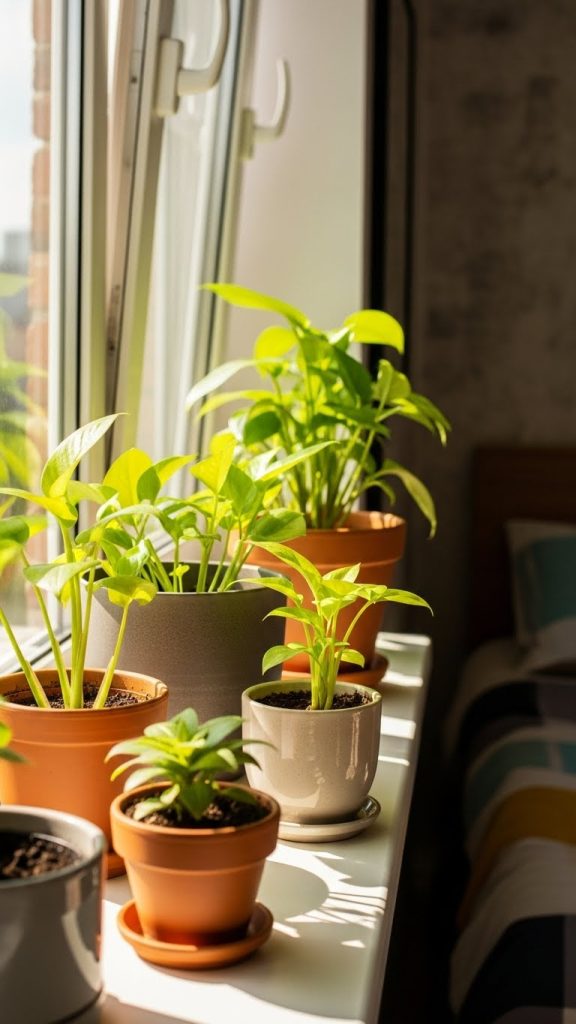
Window sills are natural spots for plants because they receive light and often remain unused. Decorating a bedroom window sill with plants brings nature closer to your resting area.
Clean the window sill and measure its depth before placing plants. Choose pots that fit securely without blocking window operation. Lightweight ceramic or plastic pots work best here.
Plants such as aloe vera, jade plant, herbs, and peace lilies grow well on window sills with filtered light. Use soil suitable for each plant type and avoid overcrowding to allow sunlight reach all plants.
Rotate plants every few weeks to ensure even growth. Wipe leaves to keep them clean. Window sill plants create a fresh view and connect indoor space with the outside environment, making the bedroom feel brighter and more open.
6. Plant Decor on Dressing Tables
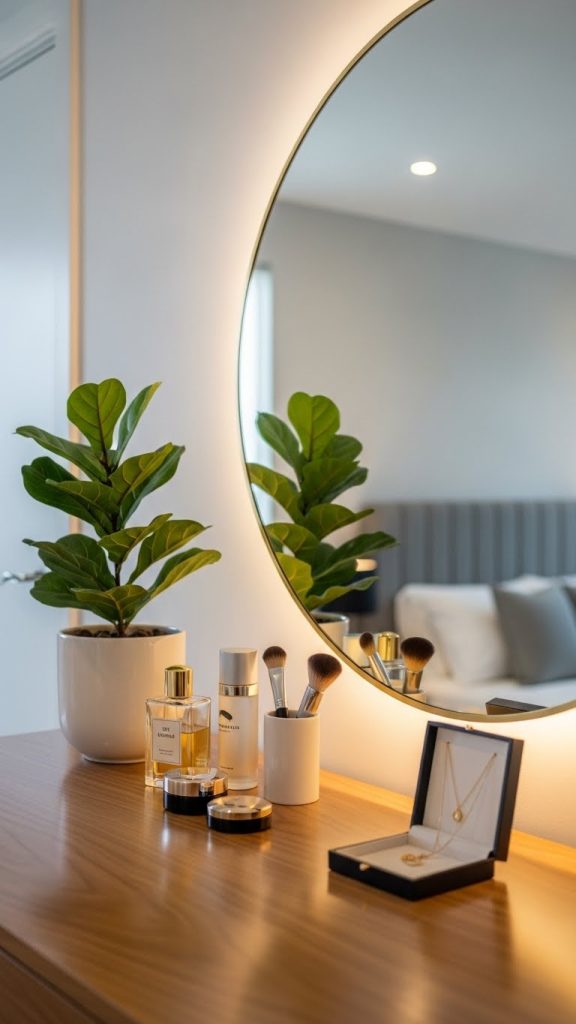
Dressing tables can feel dull without decoration. Adding plants helps soften mirrors and creates a balanced, natural look. This idea works well in both modern and traditional bedrooms.
Select small to medium-sized plants that do not shed leaves easily. Use decorative pots that match your furniture finish. Ceramic, glass, or matte-finish planters work well.
Good plant choices include orchids, ZZ plants, lucky bamboo, or small ferns. These plants tolerate indoor lighting and do not need constant care. Place plants where they do not interfere with daily use.
Avoid placing plants too close to makeup or perfumes to prevent moisture damage. Water lightly and keep soil dry between watering. A plant on the dressing table adds elegance and makes the space feel fresh and well cared for.
7. Minimalist Single Plant Statement
A single plant used as a statement piece fits perfectly in minimalist bedrooms. This approach focuses on quality rather than quantity and keeps the room clean and uncluttered.
Choose one strong plant with a clear shape. Plants like monstera, fiddle leaf fig, or large snake plant work best. Select a pot that matches the room color palette.
Place the plant near natural light but away from direct sunlight. Keep surrounding decor simple so the plant becomes the main visual focus. Use high-quality soil and ensure proper drainage.
Maintain the plant regularly by cleaning leaves and trimming dead growth. This idea adds calm strength to the bedroom and works especially well for modern and minimalist interiors.

8. Plants on Headboard Shelves
Headboard shelves provide a creative place for plant decoration. This idea combines function and beauty while keeping plants safely elevated.
Before placing plants, ensure the shelf is stable and securely attached. Use lightweight pots to avoid strain. Choose plants that do not drop leaves or soil.
Recommended plants include trailing pothos, small snake plants, or artificial plants mixed with real ones for safety. Use pot liners to prevent water leakage.
Arrange plants evenly and leave space between them. Avoid plants that need frequent watering. This idea creates a soft natural frame around the bed and adds warmth without affecting sleep comfort.

9. Low-Light Plants for Cozy Bedrooms
Not all bedrooms receive good sunlight. Low-light plants are perfect for cozy bedrooms with limited windows. These plants are easy to care for and very forgiving.
Preparation involves selecting plants specifically suited for low light. Use standard indoor potting soil and pots with drainage holes.
Plants like snake plant, ZZ plant, cast iron plant, and peace lily thrive in low light. Place them away from direct sunlight and water sparingly.
These plants improve indoor air quality and add greenery without demanding attention. Low-light plant decoration allows every bedroom, regardless of lighting, to feel fresh and inviting.
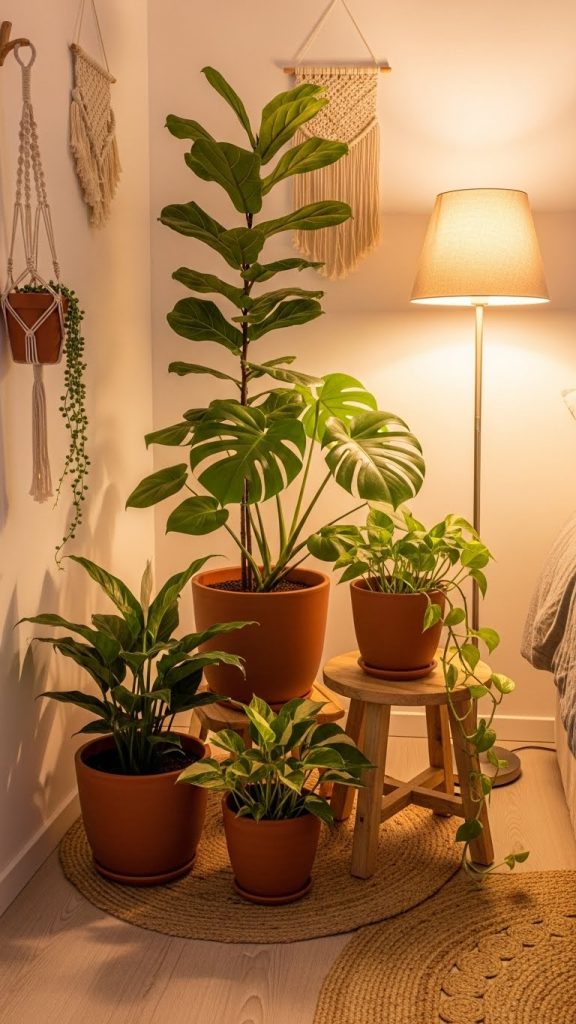
10. Plant Grouping for Natural Style
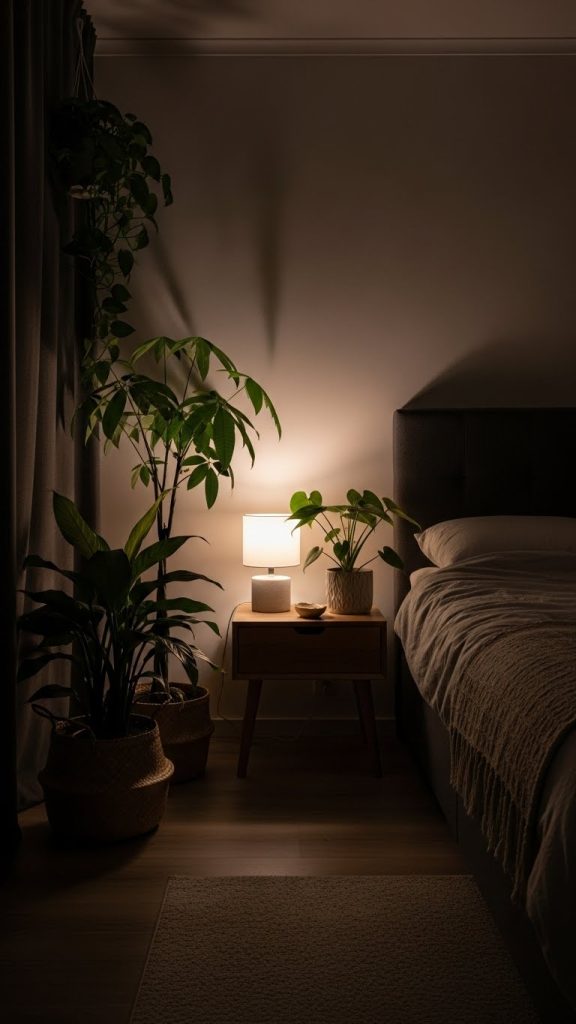
Grouping plants together creates a natural and relaxed bedroom look. This idea works well for people who enjoy greenery and want a lush environment.
Start by choosing plants of different heights and leaf shapes. Use matching pots to keep the look organized. Place plants on stands, stools, or low shelves.
Good combinations include ferns, snake plants, pothos, and palms. Arrange taller plants at the back and smaller ones in front.
Water plants individually based on their needs. Rotate positions occasionally. Grouped plant decoration adds depth and turns the bedroom into a calm, nature-inspired retreat.