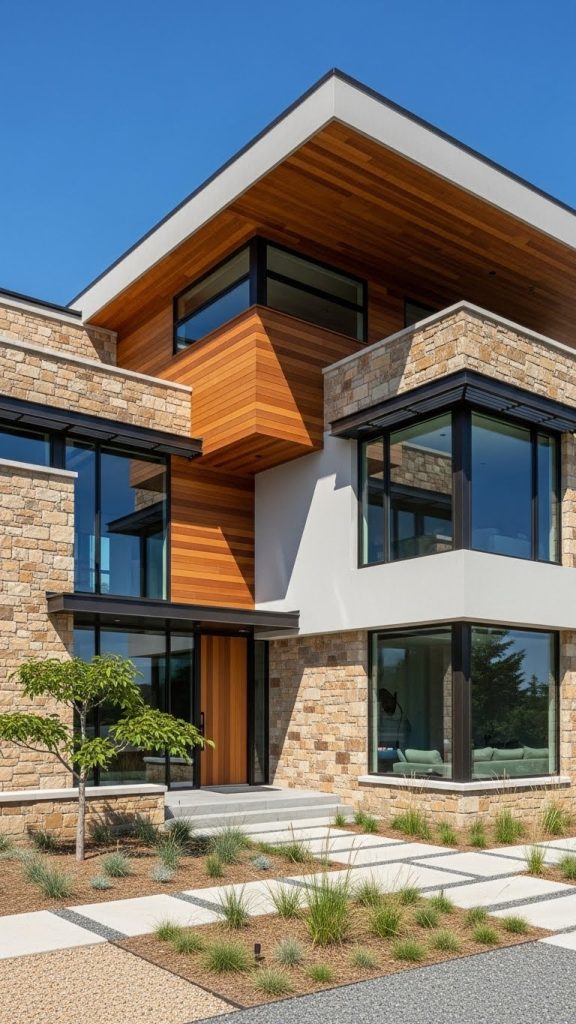
4. Mixed Material Exterior
Using mixed materials on a house exterior adds texture, contrast, and depth to the design. Modern houses often combine elements such as wood, stone, metal, and stucco to create visual interest. When planning a mixed material exterior, start by choosing a dominant material that will cover the largest areas of the facade. This could be smooth stucco, horizontal wood cladding, or metal panels. Next, select accent materials to highlight key architectural features such as entryways, corners, or cantilevered sections. Natural stone works well for grounding the design at the base of the house, while vertical wood slats add warmth and rhythm. Metal panels, such as corten steel or aluminum composite, give a modern industrial touch. Preparation before construction includes determining how different materials will meet at junctions. Since materials expand and contract at different rates, use proper flashing, expansion joints, and sealants to prevent cracks or water entry. Insulation behind each material also needs to be consistent to maintain thermal performance. Coordinate material delivery and storage on site to avoid damage, especially for wood and stone. During installation, skilled craftsmen will ensure that corners, edges, and transitions look seamless and intentional. Plan color coordination so that the palette feels balanced and harmonious rather than busy. Finally, consider long-term maintenance requirements. For example, natural wood may need periodic sealing, while metal panels may only need occasional cleaning. A mixed material exterior can make a modern house stand out while blending natural and contemporary elements.