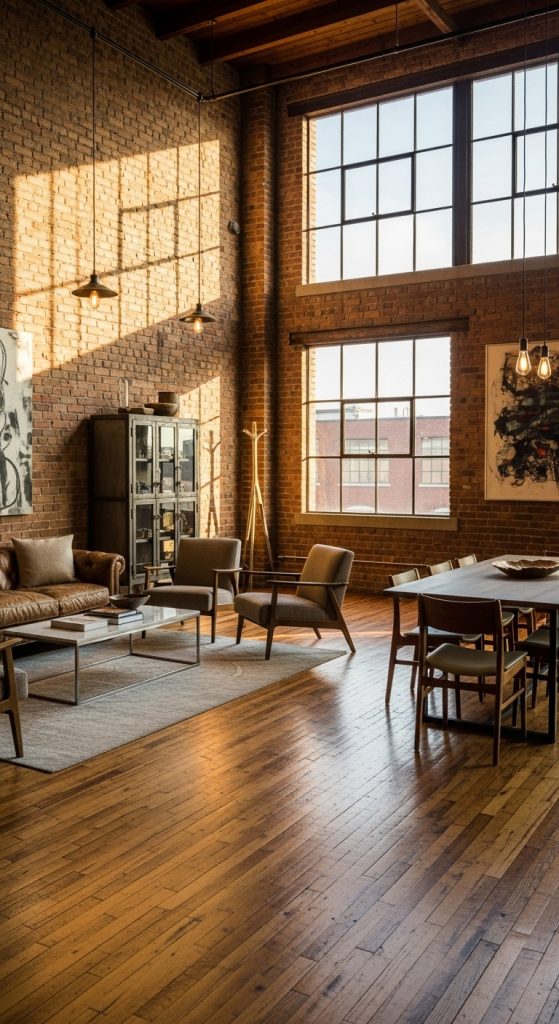
10 Hardwood flooring designs
Hardwood flooring has long been valued for its warmth, durability, and timeless appeal. Beyond the classic look, modern design approaches have expanded its potential, offering unique patterns, finishes, and wood types to suit every style. Whether you are renovating an old home or designing a new space, hardwood floors can dramatically elevate your interiors. This guide explores ten distinctive hardwood flooring designs, covering materials, preparation, installation, and design tips for each.

1. Classic Straight Plank Hardwood Flooring
Straight plank hardwood flooring remains the most traditional and widely used design. The boards are laid parallel to each other, running along the length or width of the room. This style creates a clean, uniform appearance suitable for nearly any décor. To prepare, ensure that the subfloor is even, dry, and free from debris. Use moisture-resistant underlayment for stability and sound reduction. The materials commonly include solid oak, maple, or engineered hardwood planks, finished in satin, matte, or glossy coatings. Installation can be nail-down or floating, depending on the subfloor and product choice. This design is cost-effective, visually simple, and enhances a room’s length. Straight plank flooring works perfectly for contemporary, rustic, or transitional interiors, offering a timeless base for furniture and accent pieces.

2. Herringbone Pattern Hardwood Flooring
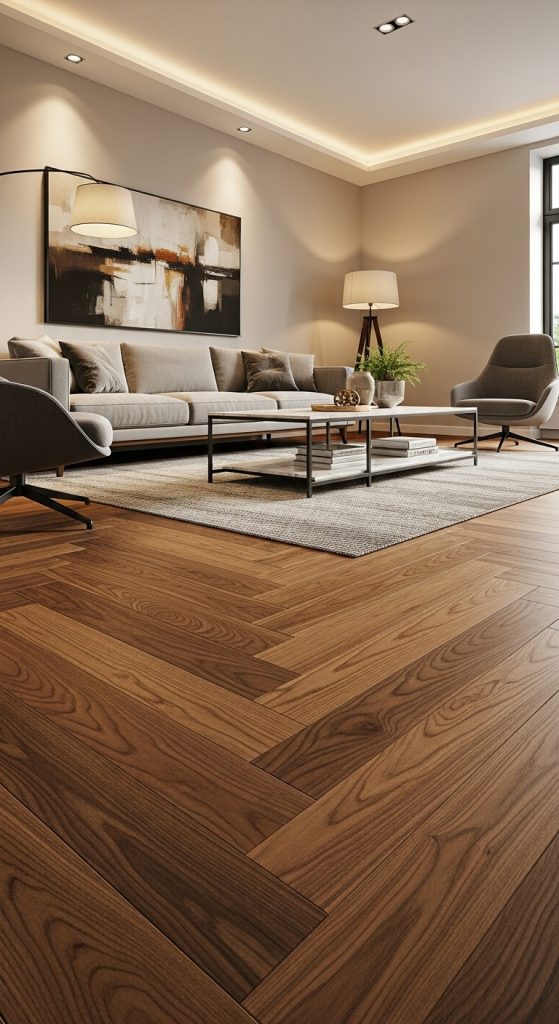
Herringbone flooring is one of the most sophisticated patterns used in both modern and traditional homes. This design features planks arranged in a zigzag layout, where each board meets another at a right angle, creating a visually dynamic V-shape. Preparation involves precise measurements and a perfectly leveled subfloor, as alignment accuracy is crucial. The materials often used are solid oak, walnut, or ash, pre-cut into equal sizes for consistent alignment. A glue-down installation method ensures long-lasting durability. Herringbone hardwood suits living rooms, entryways, and formal spaces, adding visual interest and movement. To emphasize the pattern, choose a matte finish that highlights the grain without excessive shine. The result is an elegant, tailored floor that conveys craftsmanship and luxury, elevating any space with geometric precision.
3. Chevron Pattern Hardwood Flooring
Chevron flooring is similar to herringbone but distinct in that the planks are cut at an angle and meet in perfect points, forming continuous V-shaped patterns. The effect is sleek, modern, and architectural. Preparation involves laying out the room’s centerline to ensure symmetrical alignment. Materials like engineered oak or walnut are commonly used due to their dimensional stability and availability in pre-cut chevron shapes. The installation requires a skilled professional to maintain precise joins and consistent direction. Chevron designs are ideal for creating a sense of movement and depth, particularly in large rooms or hallways. They pair beautifully with minimalist interiors and metallic or neutral décor schemes. Maintenance includes regular sweeping and the use of hardwood-safe cleaners to preserve the sharp, linear elegance that chevron floors deliver.

4. Wide Plank Hardwood Flooring
Wide plank flooring uses boards that are significantly broader than standard planks, often ranging from six to twelve inches in width. This design emphasizes the natural grain and character of the wood, creating a rustic yet refined look. Preparation includes acclimating the planks to the room’s humidity levels for at least 72 hours before installation to prevent warping. Popular wood species include white oak, hickory, and pine, finished in natural oils or matte sealants to highlight texture. The installation can be nail-down or adhesive, depending on the subfloor type. Wide planks are particularly effective in large, open-concept spaces, where fewer seams enhance visual flow. The result is a floor that feels both expansive and grounded, showcasing the organic beauty of real wood while offering long-term durability and charm.

5. Parquet Hardwood Flooring
Parquet flooring combines art and geometry, using small wooden pieces arranged into intricate patterns such as squares, diamonds, or baskets. It originated in 17th-century France and remains a hallmark of luxury interiors. Preparation involves ensuring a smooth subfloor and planning the layout carefully to align patterns evenly across the space. Typical materials include oak, maple, or walnut tiles, often preassembled in panels for easier installation. Glue-down installation is standard for parquet flooring. The design is highly customizable, allowing for contrasting stains or mixed wood species to create visual depth. Parquet flooring suits formal areas like dining rooms or libraries, adding a regal, decorative touch. With modern finishes, it can also suit contemporary interiors that blend classic craftsmanship with minimalist furniture and muted palettes.

6. Mixed-Width Hardwood Flooring
For homeowners seeking a unique, handcrafted feel, mixed-width hardwood flooring offers a creative solution. This design uses planks of varying widths, typically alternating between four, six, and eight inches. The pattern creates a more organic, textured look reminiscent of traditional hand-hewn floors. Preparation involves sorting planks before installation to achieve a balanced distribution of widths throughout the room. The materials can include reclaimed oak, maple, or hickory, finished with natural oils or matte sealers for a rustic yet refined appeal. Installation methods vary but usually involve nailing or gluing the boards to ensure even spacing. Mixed-width designs are excellent for farmhouse, cottage, or vintage-style interiors. They add personality, depth, and warmth, proving that irregularity can be beautiful when thoughtfully arranged.
7. Distressed or Hand-Scraped Hardwood Flooring
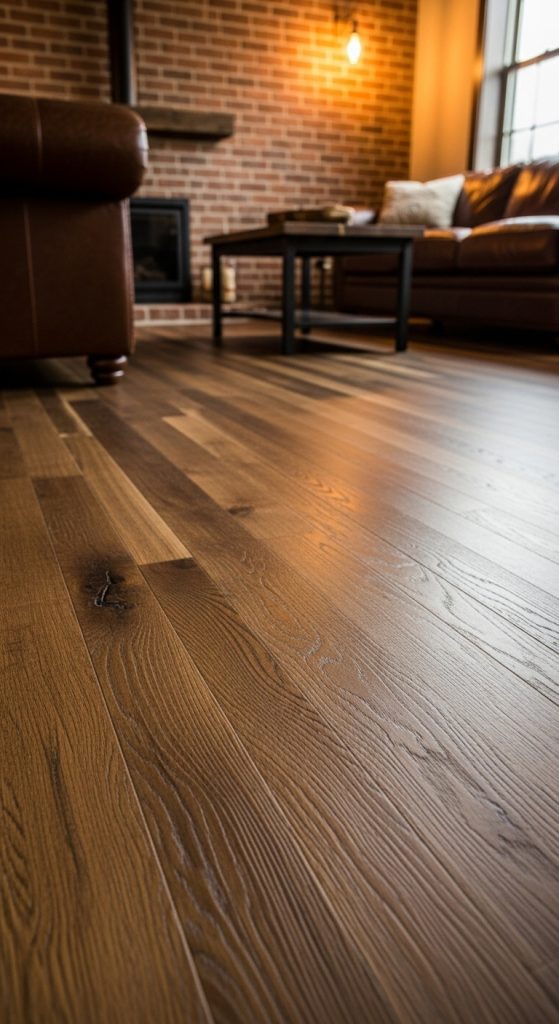
Distressed hardwood flooring brings character and an aged appearance to interiors, ideal for creating a lived-in, comfortable atmosphere. Each plank is intentionally textured through hand-scraping, wire-brushing, or distressing techniques that mimic natural wear over time. Preparation begins with selecting planks that feature visible grain and knots, as these enhance the authentic aged look. Materials often include oak, hickory, or birch, treated with low-sheen finishes that highlight texture. Installation can be traditional nail-down or floating. Distressed flooring is especially effective in rustic, farmhouse, or industrial designs where imperfection becomes part of the charm. Maintenance is easy since scratches blend naturally into the textured surface. This design combines heritage appeal with modern durability, giving spaces warmth and historical depth that feels both timeless and inviting.

8. Dark-Stained Hardwood Flooring
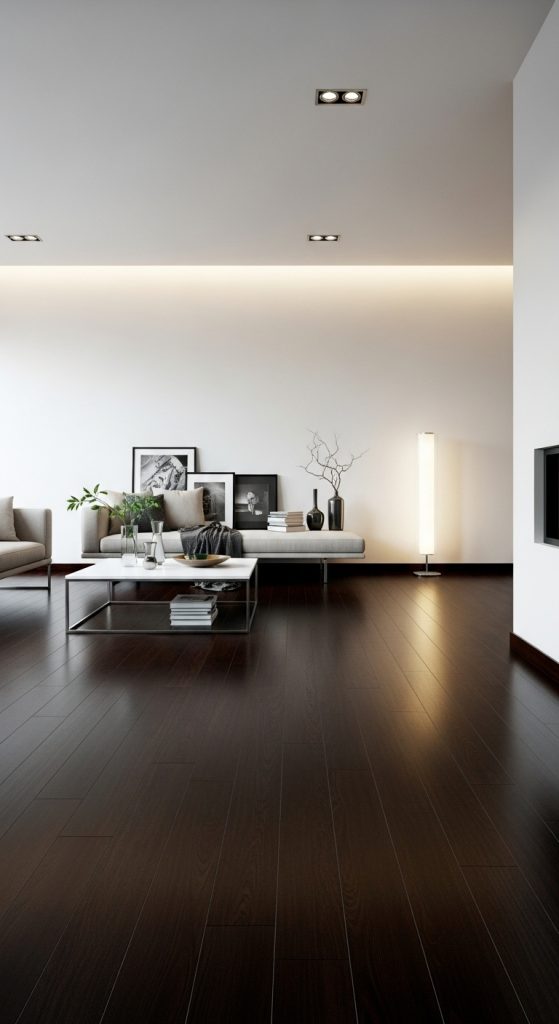
Dark-stained hardwood flooring introduces sophistication and depth to a room. It works well in both traditional and contemporary interiors, providing a dramatic contrast against light walls or furnishings. Preparation involves sanding and cleaning the surface before applying a stain evenly to achieve a consistent tone. Common materials include oak, walnut, and maple due to their ability to absorb stain effectively. Dark finishes such as espresso, ebony, or chocolate brown enhance grain visibility while offering a rich aesthetic. Installation follows standard practices, but attention must be paid to sealing and curing to prevent uneven coloration. While dark floors show dust more easily, they remain a popular choice for their elegance. Paired with ample lighting and neutral décor, dark-stained hardwood creates an atmosphere of sophistication and visual drama.
9. Whitewashed or Bleached Hardwood Flooring
Whitewashed hardwood flooring, also known as bleached wood flooring, is ideal for coastal, Scandinavian, or minimalist designs. The process involves applying a diluted white stain or liming solution to lighten the wood while maintaining visible grain. Preparation includes sanding the wood thoroughly to open pores for even stain absorption. Popular choices include oak, ash, and maple, as they respond well to bleaching. A water-based polyurethane or matte sealant is applied to protect the surface. Installation is similar to traditional planks, often using a floating or glue-down method. Whitewashed floors create a bright, airy feel, enhancing natural light and making spaces appear larger. This design pairs beautifully with soft textiles, natural materials, and neutral palettes, delivering a relaxed yet refined modern look.

10. Reclaimed Hardwood Flooring
Reclaimed hardwood flooring is both sustainable and full of history. Made from salvaged wood sourced from old barns, factories, or warehouses, each plank carries unique marks, patinas, and imperfections that tell a story. Preparation involves cleaning, kiln-drying, and milling the reclaimed boards to ensure they are free of pests and moisture. Materials can include oak, chestnut, pine, or maple, often available in mixed widths and colors. Installation requires careful planning, as reclaimed boards may vary slightly in thickness. The result is an environmentally friendly floor that exudes authenticity and character. Reclaimed hardwood suits rustic, industrial, or eco-conscious interiors. Beyond aesthetics, it supports sustainability by reducing demand for new lumber and repurposing valuable materials into a design statement rich with texture and personality.