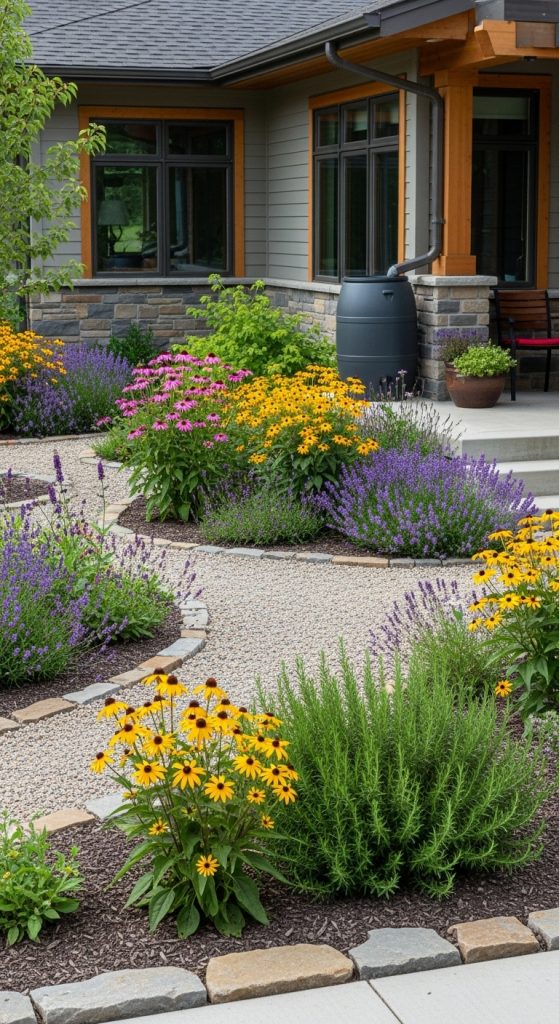
10. Sustainable and Low-Maintenance Landscaping
For homeowners seeking long-term beauty without high upkeep, sustainable landscaping is ideal. Preparation includes evaluating soil, sunlight, and drainage conditions to select appropriate native plants. Native species require less water, fertilizer, and care while supporting local wildlife.
Use drought-tolerant plants like succulents, lavender, or ornamental grasses. Replace some lawn areas with gravel or mulch beds to reduce water use. Drip irrigation systems are efficient and minimize waste.
Incorporate composting areas and rain barrels to recycle natural resources. Mulch reduces evaporation and prevents weed growth. Permeable walkways and driveways improve water absorption.
Sustainable landscaping emphasizes harmony with the environment while maintaining visual appeal. It reduces maintenance time, conserves water, and promotes biodiversity. By integrating green practices, homeowners enjoy a beautiful yard that remains functional and environmentally responsible. This approach represents the future of modern landscaping, combining aesthetics with ecological balance.