
10 Cozy Reading Nook Ideas For Home Renovation
A cozy reading nook is more than just a place to sit with a book. It is a personal retreat where you can relax, slow down, and enjoy quiet moments in your home. During home renovation, creating a dedicated reading nook can add both comfort and value to your living space. It does not require a large room or expensive furniture. With thoughtful planning, the right materials, and smart use of available space, even a small corner can be transformed into a warm and inviting reading area.

Reading nooks work well in bedrooms, living rooms, hallways, under staircases, near windows, or even in unused corners. The key elements include comfortable seating, proper lighting, storage for books, and a calming atmosphere. Materials such as wood, soft fabrics, warm lighting, and neutral colors help create a cozy feeling. Preparation is important, including measuring the space, choosing suitable furniture, and selecting lighting that does not strain the eyes.
In this blog post, you will find ten detailed and practical reading nook ideas designed specifically for home renovation projects. Each idea explains where it works best, what materials to use, how to prepare the space, and how to make it comfortable and functional. Whether your home is large or small, modern or traditional, these ideas will help you design a reading nook that feels personal, peaceful, and timeless.
1. Window Seat Reading Nook
A window seat reading nook is one of the most popular and timeless ideas for home renovation. It uses natural light and often transforms an unused window area into a cozy retreat. This type of nook works well in bedrooms, living rooms, or even hallways with large windows. The first step in preparation is measuring the window width and height to design a built-in bench or seating platform that fits perfectly.
Materials commonly used include plywood or solid wood for the bench structure, foam padding for comfort, and durable fabric for upholstery. Adding storage drawers or cabinets beneath the seat is a smart way to keep books, blankets, or cushions neatly organized. Soft seat cushions and a few throw pillows make the space inviting and comfortable for long reading sessions.
Lighting is usually provided by daylight during the day, but installing a small wall-mounted reading light or sconce is essential for evening use. Neutral or warm colors such as beige, soft gray, or pastel tones help create a calming environment. Curtains or roman shades made from light fabric allow you to control sunlight without blocking it completely. A window seat reading nook adds charm, comfort, and functionality to your home renovation.

2. Corner Armchair Reading Nook
A corner armchair reading nook is ideal for homes where space is limited but comfort is still a priority. Corners are often underused, making them perfect for creating a small reading area without major construction work. Preparation starts with choosing the right corner that is quiet and away from heavy foot traffic, such as a bedroom corner or a living room near a wall.
The main material needed is a comfortable armchair with good back support. Upholstered chairs with soft fabric or leather work well, depending on your home style. A small side table made of wood or metal is useful for holding books, tea, or reading glasses. Adding a floor lamp with warm light is important to avoid eye strain and create a relaxing mood.
Wall-mounted shelves above or beside the chair can be added during renovation to store books without taking floor space. Soft rugs, throw blankets, and cushions enhance comfort and warmth. Choosing calm colors like earth tones or soft neutrals helps the nook blend with the rest of the room. This reading nook is simple, affordable, and perfect for homeowners who want a cozy reading space with minimal renovation effort.

3. Built-In Bookshelf Reading Nook
A built-in bookshelf reading nook is a great choice for book lovers who want a dedicated and organized reading space. This idea works best during major home renovations, as it involves custom carpentry and wall modifications. The nook can be created between two bookshelves or within a large shelving unit, offering a library-like atmosphere.
Preparation involves measuring the wall space accurately and designing shelves that fit both books and seating. Materials typically include plywood or solid wood for shelves, MDF for backing panels, and foam padding for the seat. Paint or wood finishes should be selected to match the overall home interior. Neutral tones or natural wood finishes create a warm and classic look.
Comfort is enhanced with thick seat cushions, back pillows, and side bolsters. Installing built-in lighting such as LED strip lights or wall sconces improves visibility and adds a cozy glow. Ventilation should also be considered, especially if the nook is enclosed. This reading nook combines storage and relaxation in one design, making it practical and visually appealing. It adds long-term value and character to any home renovation project.

4. Under Staircase Reading Nook
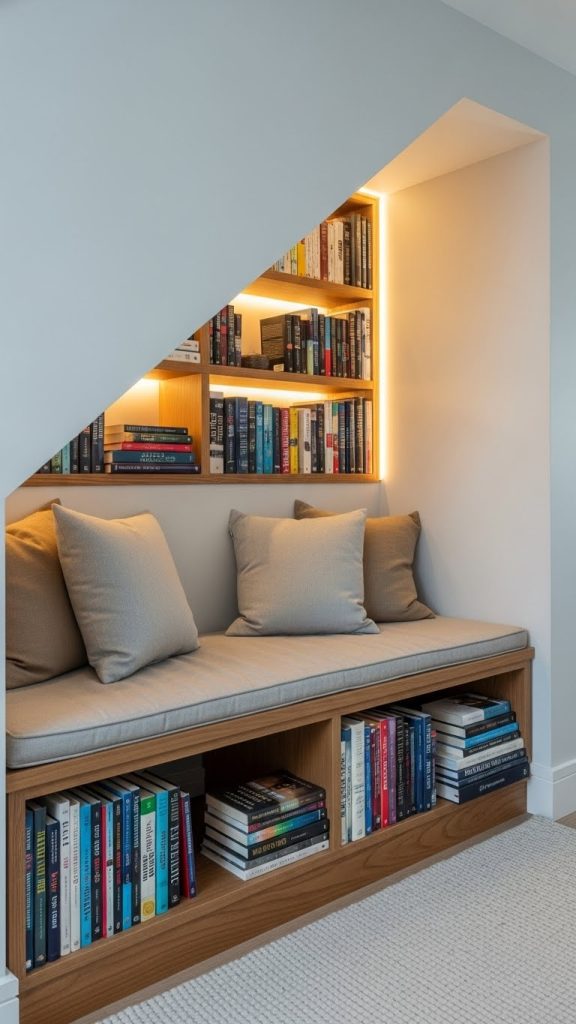
The space under a staircase is often overlooked, but it can be transformed into a charming and cozy reading nook. This idea is perfect for maximizing unused areas during home renovation. Preparation starts by assessing the height, depth, and shape of the space to ensure it can accommodate seating and lighting comfortably.
Materials for this nook may include wood panels for walls, built-in benches, or custom seating. Foam cushions and washable fabric covers are recommended for comfort and easy maintenance. Built-in shelves or cabinets can be installed along the walls to store books and decorative items. Proper lighting is essential, as under-stair spaces can be dark. Recessed lights, wall-mounted lamps, or LED strips work well.
Paint colors should be light or warm to prevent the space from feeling cramped. Soft rugs and cushions add warmth and texture. If privacy is desired, a curtain or sliding panel can be installed. This reading nook not only improves space efficiency but also adds a unique design feature to your home. It is an excellent example of smart renovation planning with both function and style.
5. Bedroom Reading Nook
A bedroom reading nook creates a peaceful environment for nighttime or early morning reading. It works well near a window, beside a bed, or in a quiet corner of the room. Preparation involves deciding whether the nook will be permanent, such as built-in seating, or flexible, using movable furniture.
Materials include a comfortable chair, chaise lounge, or small sofa. Soft fabrics like cotton, linen, or velvet enhance comfort. A bedside or wall-mounted reading lamp with adjustable brightness is important to protect the eyes. A small bookshelf or floating shelves can be added during renovation to keep books within reach.
Choosing calm and soft colors such as light blues, creams, or muted greens helps create a relaxing mood. Adding curtains, rugs, and throw blankets improves comfort and warmth. Sound insulation, such as thicker curtains or padded wall panels, can also be considered during renovation. A bedroom reading nook encourages relaxation and reduces screen time, making it a valuable addition to modern homes focused on comfort and wellness.

6. Living Room Reading Nook
A living room reading nook is ideal for families who enjoy reading together or want a shared relaxation space. This nook can be placed near a window, beside a fireplace, or in a quiet corner. Preparation includes arranging furniture to define the nook without blocking movement or making the room feel crowded.
Materials commonly used are comfortable sofas or lounge chairs, side tables, and floor lamps. Wooden shelves or cabinets can be added to store books neatly. Choosing durable upholstery is important since the living room is a high-use area. Warm lighting helps create a cozy atmosphere, especially in the evening.
Adding a rug helps visually separate the reading nook from the rest of the living room. Neutral or warm color schemes allow the nook to blend naturally with existing decor. Decorative cushions and blankets add comfort and style. This reading nook supports relaxation and social interaction while maintaining the overall function of the living room. It is a practical choice for families renovating shared spaces.

7. Attic Reading Nook
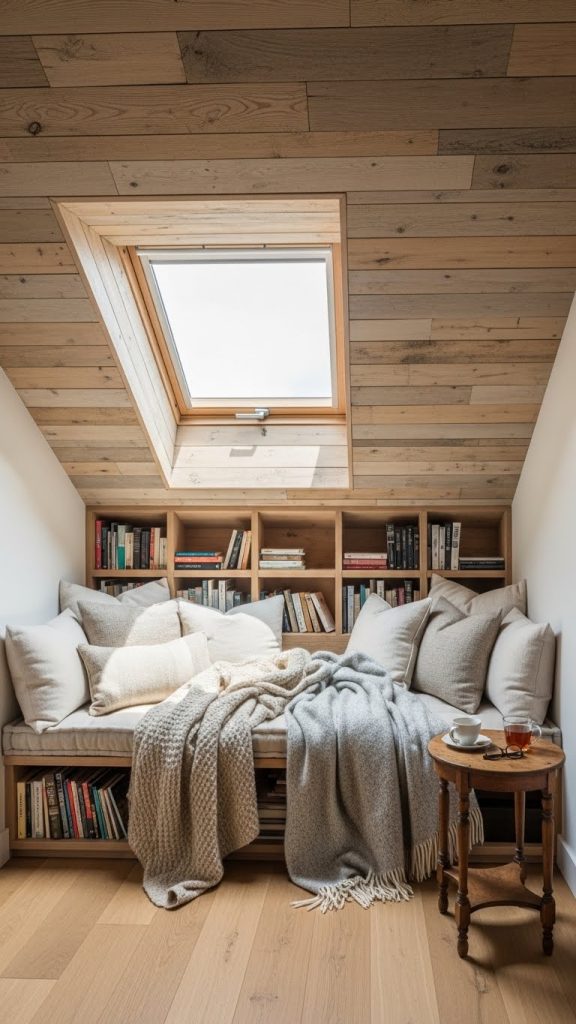
An attic reading nook offers privacy and a sense of escape from the rest of the home. It is especially suitable for homes with unused attic space that is being renovated. Preparation is critical and includes proper insulation, ventilation, and flooring to ensure comfort and safety.
Materials such as wood paneling, laminate flooring, and soft carpets are commonly used. Low-profile seating, floor cushions, or built-in benches work well in sloped attic spaces. Skylights or dormer windows provide natural light, while table lamps or wall lights ensure visibility at night.
Choosing light colors helps make the attic feel larger and brighter. Storage can be built into walls or under seating to maximize space. Soundproofing materials can also be added to create a quiet reading environment. An attic reading nook adds unique character to a home and turns an unused area into a valuable and cozy retreat.
8. Hallway Reading Nook
A hallway reading nook is a smart solution for narrow or unused hallway spaces during renovation. Preparation begins with measuring the hallway width to ensure seating does not obstruct movement. Built-in benches or slim chairs are ideal for this type of nook.
Materials include wood or MDF for benches, thin cushions for comfort, and wall-mounted shelves for books. Lighting is crucial, as hallways often lack natural light. Wall sconces or overhead spotlights provide focused illumination. Light paint colors help prevent the space from feeling closed in.
This type of reading nook works best for short reading sessions or quick relaxation moments. Adding a small rug and cushions improves comfort. A hallway reading nook adds function to an otherwise overlooked space and enhances the overall flow of the home. It is a creative and space-efficient renovation idea.

9. Home Office Reading Nook
A home office reading nook supports focused reading and research in a quiet environment. This nook can be separate from the work desk to create a clear boundary between work and relaxation. Preparation includes choosing a corner or window area within the office that feels calm and distraction-free.
Materials include a comfortable reading chair, footrest, side table, and bookshelf. Ergonomic seating is important for long reading sessions. Adjustable lighting helps control brightness based on time of day. Using sound-absorbing materials like curtains or rugs reduces noise.
Neutral and professional colors help maintain a productive atmosphere. This reading nook encourages learning and creativity while supporting work-from-home lifestyles. It is a practical addition for modern home renovations focused on multifunctional spaces.

10. Balcony or Indoor Garden Reading Nook
A balcony or indoor garden reading nook brings nature into your reading experience. Preparation involves ensuring the space is weather-protected and comfortable year-round. Flooring materials such as outdoor tiles, wood decking, or artificial grass work well.
Seating options include weather-resistant chairs, benches, or floor cushions. Soft textiles add comfort, but should be suitable for the environment. Proper lighting is important for evening reading, using lanterns or wall-mounted lights. Adding plants improves air quality and creates a calming atmosphere.
Neutral and natural colors enhance the connection with nature. This reading nook promotes relaxation and mental well-being. It is an excellent choice for homeowners who enjoy peaceful and refreshing spaces. A balcony or garden reading nook adds uniqueness and lifestyle value to any home renovation.
