10 Basement art studio ideas

A basement can be one of the best places to create an art studio at home. Many people overlook this space, but with proper planning it can become a quiet, inspiring, and practical area for creativity. Whether you are a painter, sculptor, illustrator, photographer, or craft artist, a basement studio offers privacy and enough room to experiment without disturbing the rest of the house. Basements are usually separate from the main living space, which means you can organize your materials, tools, and unfinished projects without worrying about constant cleanup.

However, creating a basement art studio requires careful preparation. Basements often have challenges such as limited natural light, moisture problems, low ceilings, and ventilation issues. With the right materials, layout planning, lighting systems, and storage solutions, these problems can be solved easily. A well-designed studio will improve your workflow, protect your materials, and make the creative process more enjoyable.
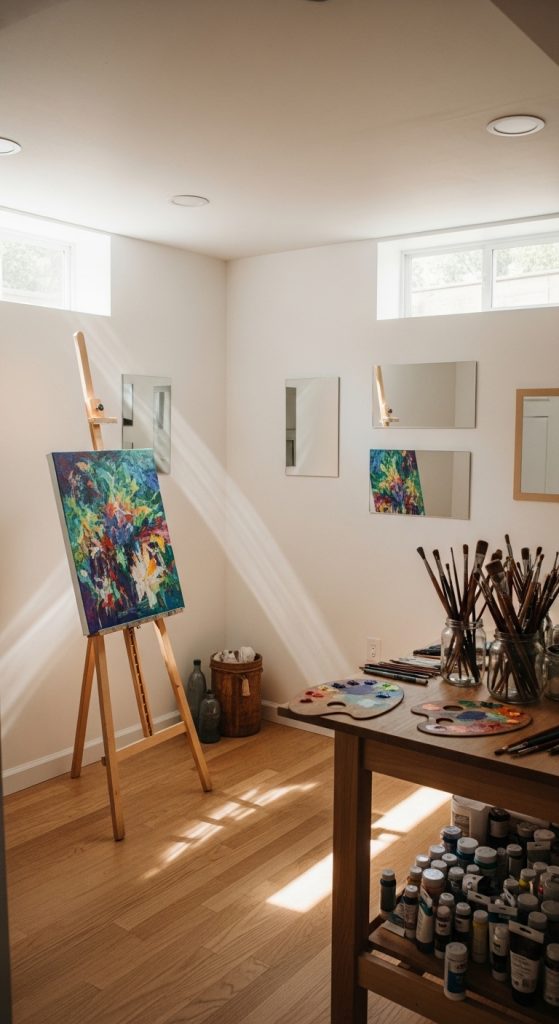
In this guide, you will learn ten practical basement art studio ideas. Each idea explains how to design the space, what materials you may need, and how to make the studio comfortable and functional. These ideas work for beginners as well as professional artists who want to transform their basement into a productive creative workspace.


1. Natural Light Focused Basement Studio

Lighting is one of the most important factors in any art studio. If your basement has small windows, you can design the studio around them to maximize natural light. Natural light helps artists see colors accurately and reduces eye strain during long working sessions.

Start by cleaning the basement windows and removing heavy curtains or obstacles blocking sunlight. Use light-colored walls such as white, cream, or pale gray to reflect the light throughout the room. Mirrors or reflective surfaces can also help spread natural light across the workspace.

If the windows are small, consider installing window wells outside the house. Window wells allow more sunlight to enter the basement and improve ventilation as well.

For work surfaces, place your main desk or easel close to the window. This will give you the best light while working on paintings, sketches, or crafts.

Materials you may need include moisture-resistant paint, window well covers, light curtains, and reflective wall panels. You should also add adjustable LED daylight lamps to support natural light during evening hours.

A natural light focused studio creates a calm atmosphere and makes the basement feel less enclosed. It also helps artists maintain color accuracy and improves productivity.


2. Painting and Drawing Studio Layout

A basement can be turned into a dedicated painting and drawing studio with proper layout planning. The key is to organize the space so that painting tools, canvases, and supplies are easy to access.

Start by dividing the studio into three zones: the work zone, the supply storage zone, and the drying or display zone. The work zone should include an easel or drawing table, comfortable chair, and proper lighting. Place this area in the center of the room so you have enough space to move around while painting.

The supply storage zone should include shelves, cabinets, or rolling carts for paints, brushes, pencils, sketchbooks, and palettes. Using labeled containers will help keep everything organized.

The drying zone is especially important for painters who work with oil or acrylic paints. Install wall racks or drying shelves where paintings can dry safely without being touched or damaged.

Materials needed for this type of studio include easels, sturdy tables, brush holders, sealed paint storage containers, wall racks, and protective floor covers. Vinyl or epoxy flooring works well because it is easy to clean if paint spills occur.

A well-organized painting studio allows artists to focus on creativity instead of searching for tools or cleaning messes.


3. Sculpture and Craft Workshop Studio

If you enjoy sculpting or working with crafts such as clay, wood, or mixed media, a basement studio can function as a small workshop. This type of studio requires durable surfaces and strong storage systems.

First, install a heavy workbench that can handle carving, shaping, or assembling materials. Solid wood or metal workbenches are ideal for this purpose. Make sure the bench is stable and large enough for your projects.

Next, consider installing pegboards on the walls. Pegboards allow you to hang tools like chisels, pliers, carving tools, and scissors. This keeps your tools visible and easy to reach.

Because sculpting can create dust or debris, proper flooring is important. Concrete floors sealed with epoxy coating are a good option because they are strong and easy to clean.

You may also need a small sink for washing tools and hands after working with clay or plaster. If plumbing is not available, a portable wash station can work as an alternative.

Important materials include a workbench, pegboards, tool hooks, sealed flooring, dust collection systems, and protective gloves. A workshop-style studio allows artists to handle heavy materials while keeping the basement organized and safe.


4. Digital Art and Illustration Studio

Many artists today work digitally using drawing tablets, computers, and design software. A basement can easily become a quiet digital art studio.

Start by setting up a strong desk that can hold a computer, drawing tablet, monitor, and keyboard. Ergonomic furniture is very important because digital artists often spend many hours sitting and drawing.

Use an adjustable chair that supports the back and maintains proper posture. Your monitor should be placed at eye level to reduce neck strain.

Lighting should be soft and balanced to prevent screen glare. Indirect LED lights or desk lamps with adjustable brightness work well for digital studios.

Cable management is another important factor. Use cable trays, clips, or sleeves to organize wires from computers, monitors, and power strips. This keeps the workspace neat and prevents accidents.

You may also want to install soundproof panels on the walls to create a quiet environment for focused work.

Materials required include a computer desk, ergonomic chair, drawing tablet, LED lighting, cable organizers, surge protectors, and soundproof wall panels. A digital art studio in the basement provides a distraction-free environment that helps artists concentrate on design and illustration projects.


5. Photography and Content Creation Studio

A basement can be transformed into a small photography or video production studio. This is especially useful for portrait photography, product photography, or social media content creation.

The first step is to create a clean shooting area. Use plain backdrops such as white, black, or gray fabric. Backdrop stands are affordable and easy to install.

Lighting is the most important element in photography studios. Softbox lights or LED panel lights provide even lighting and reduce shadows. Place two lights on the sides of the subject and one overhead if needed.

If you plan to shoot videos, sound control becomes important. Acoustic foam panels can reduce echo and improve audio quality.

You will also need space for camera equipment storage. Shelves or cabinets can store lenses, tripods, lighting equipment, and props.

Materials needed include backdrop stands, fabric backdrops, softbox lighting kits, tripods, acoustic foam panels, and camera storage cabinets.

A basement photography studio allows you to shoot professional images without worrying about weather or outdoor lighting conditions.


6. Art Supply Storage and Organization Studio

Many artists struggle with organizing art materials. A basement studio can solve this problem by focusing on smart storage solutions.

Start by installing tall shelving units along the walls. These shelves can hold paints, papers, canvases, fabrics, and other supplies. Use clear plastic containers so you can see the contents easily.

Labeling each container will save time when searching for specific tools. Drawer organizers can separate small items like pencils, markers, erasers, and craft accessories.

Rolling carts are also useful because they allow you to move supplies around the studio depending on the project you are working on.

Humidity control is very important in basement storage. Use a dehumidifier to protect paper, canvas, and wooden materials from moisture damage.

Recommended materials include heavy-duty shelves, clear storage bins, drawer organizers, rolling carts, labeling systems, and a dehumidifier.

An organized storage-focused studio helps artists maintain a clean workspace and ensures that materials remain in good condition for future projects.


7. Mixed Media Creative Studio

Mixed media artists often combine painting, collage, fabric, paper, and found objects. Because these projects involve many different materials, the studio must be flexible.

Create multiple work surfaces in the studio. One table can be used for painting, another for cutting or assembling materials. Folding tables can help save space while still providing large work areas when needed.

Wall space is very important for mixed media artists. Install cork boards or magnetic boards where you can pin inspiration images, sketches, or reference materials.

Storage bins should be separated based on material types such as fabrics, papers, adhesives, and decorative objects.

Floor protection is also important because glue, paint, or ink may spill during experiments. Use rubber mats or vinyl floor coverings to protect the basement floor.

Materials needed include large work tables, cork boards, storage bins, craft drawers, protective floor mats, and adjustable lighting.

A mixed media basement studio encourages experimentation and creativity because artists have enough space to work with many materials at once.


8. Quiet Meditation and Inspiration Art Studio

Creativity often improves in calm and peaceful environments. A basement studio can be designed as a quiet inspiration space where artists focus deeply on their work.

Start by using soft colors for walls such as light beige, pale blue, or warm gray. These colors create a relaxing atmosphere. Soft lighting from floor lamps or wall lamps can make the space comfortable for long creative sessions.

Add comfortable seating like a small sofa or armchair where you can relax, read art books, or think about new ideas. A small bookshelf can store sketchbooks, art magazines, and reference books.

Plants can also improve the atmosphere if the basement receives some natural light. If natural light is limited, artificial plants can still provide a similar visual effect.

Soundproof panels or thick rugs can reduce noise and create a peaceful environment.

Materials for this studio include soft lighting lamps, comfortable seating, bookshelves, rugs, soundproof panels, and decorative wall art.

A quiet inspiration studio helps artists slow down, reflect, and develop creative ideas before starting new projects.


9. Gallery and Display Basement Studio

Some artists like to display their work in the same space where they create it. A basement studio can include a small gallery area for finished artwork.

Start by painting the walls in neutral colors such as white or light gray. Neutral walls allow artwork to stand out and look more professional.

Install adjustable track lighting on the ceiling. Track lights can be directed toward specific artworks to highlight them properly.

You can also add floating shelves or wall-mounted frames to display paintings, sculptures, or crafts. If you frequently change artwork, consider using a rail hanging system that allows easy adjustments.

This type of studio is useful for artists who host small exhibitions, invite clients to view artwork, or simply want to admire their completed projects.

Materials required include track lighting systems, picture hanging rails, floating shelves, display stands, and professional frames.

A gallery-style basement studio helps artists present their work beautifully and creates a motivating environment to continue producing new art.


10. Budget Friendly DIY Basement Studio

Creating an art studio does not always require a large budget. With creativity and simple materials, you can build a functional basement studio at a low cost.

Start by repurposing old furniture. An unused dining table can become a work desk, and old bookshelves can store art supplies. Wooden crates can be stacked to create simple storage units.

Instead of expensive flooring, use large protective drop cloths or rubber mats to protect the floor from paint spills. For lighting, affordable LED shop lights provide bright and energy-efficient illumination.

DIY wall organizers can be made from pegboards, jars, and recycled containers. Mason jars attached to wooden boards can hold brushes, pencils, and markers.

You can also create your own inspiration wall using cork boards or simple pinboards made from cardboard and fabric.

Materials for a budget studio include second-hand furniture, pegboards, drop cloths, LED shop lights, recycled containers, and DIY shelving units.

A budget friendly studio proves that creativity does not depend on expensive equipment. With thoughtful planning, even a simple basement can become a productive and inspiring art workspace.

Leave a Reply

Your email address will not be published. Required fields are marked *