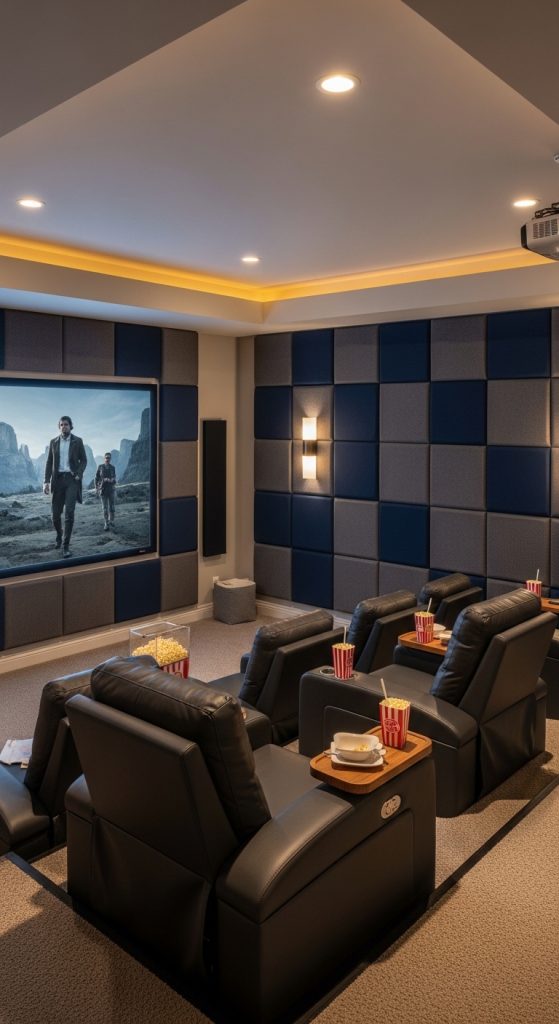
10 Basement accent wall ideas
A basement can easily become one of the most comfortable and stylish areas of a home if it is designed thoughtfully. However, basements often feel dark, cold, or unfinished because they are located below ground level and receive little natural light. One effective way to transform a basement is by creating a beautiful accent wall. An accent wall is a single wall in a room that is designed differently from the others using color, texture, materials, or patterns. It becomes the visual focus of the room and adds personality without overwhelming the space.
Basement accent walls can help brighten the area, create warmth, and define the overall style of the room. Whether the basement is used as a family lounge, entertainment area, home theater, office, or guest bedroom, the right accent wall can dramatically improve the atmosphere. From simple painted designs to textured materials like wood panels, brick, or stone, there are many options that suit different budgets and design preferences.
Before starting any accent wall project in a basement, preparation is very important. Basements may have issues like moisture, uneven walls, or poor insulation. Proper cleaning, sealing, and choosing moisture resistant materials will help ensure the design lasts for many years. In this guide, you will learn ten practical basement accent wall ideas, including preparation steps, recommended materials, and useful tips to help you create a stylish and functional basement space.
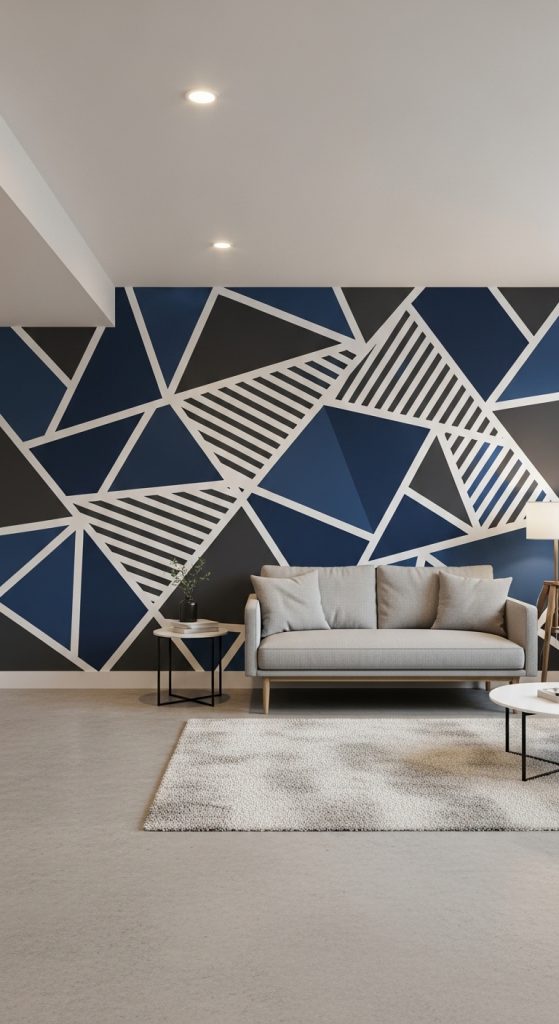
1. Painted Geometric Accent Wall
A painted geometric accent wall is a modern and affordable way to upgrade a basement. It uses shapes such as triangles, rectangles, or diagonal lines to create a visually interesting design. This idea works well in entertainment rooms, home offices, or gaming areas.
Before painting, the wall must be properly prepared. Start by cleaning the surface with a mild cleaner to remove dust and grease. If the basement wall is concrete or drywall, check for cracks or holes and fill them with patching compound. After repairs, apply a primer that is designed for basement environments. A moisture resistant primer helps prevent paint from peeling.
The materials required include painter’s tape, measuring tape, a level, paint rollers, paint brushes, and two or three paint colors. Use painter’s tape to outline your geometric pattern. Make sure the lines are straight by using a level or measuring tool.
Latex or acrylic paint works well for basement walls because it dries quickly and resists moisture. Once the paint is dry, remove the tape carefully to reveal sharp, clean lines.
This type of accent wall adds depth and energy to a basement. Light colors can make a small basement feel larger, while darker tones create a dramatic and cozy environment.
2. Reclaimed Wood Accent Wall
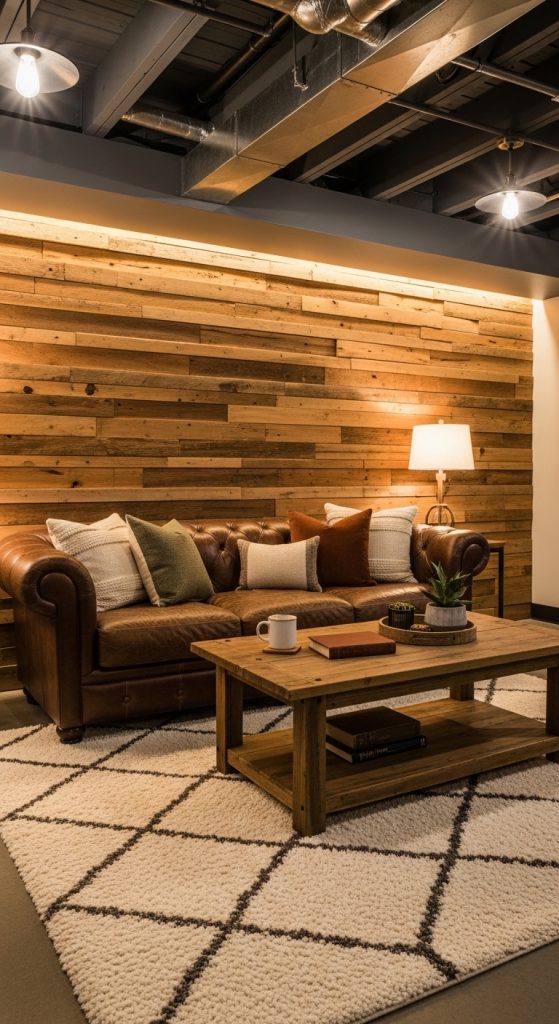
A reclaimed wood accent wall brings warmth and natural texture to a basement. Since basements can feel cold and unfinished, wood helps create a cozy and inviting atmosphere. Reclaimed wood also adds a rustic and environmentally friendly touch.
Preparation is important before installing wood in a basement. First check the wall for moisture issues. Use a moisture barrier or vapor barrier if necessary. This step protects the wood from warping or damage over time. Next install plywood backing or wooden furring strips to create a stable surface for attaching the wood planks.
Common materials include reclaimed wood boards, construction adhesive, nails or screws, a nail gun, a saw, and a level. The boards can be arranged horizontally, vertically, or in a mixed pattern for a unique look.
Before installation, clean the reclaimed wood and sand rough edges. Some homeowners choose to seal the wood with a protective clear coat to prevent dust and moisture damage.
Reclaimed wood accent walls are perfect for basement bars, family lounges, and entertainment spaces. The natural variation in color and texture creates a beautiful focal point that feels comfortable and timeless.
3. Stone Veneer Accent Wall
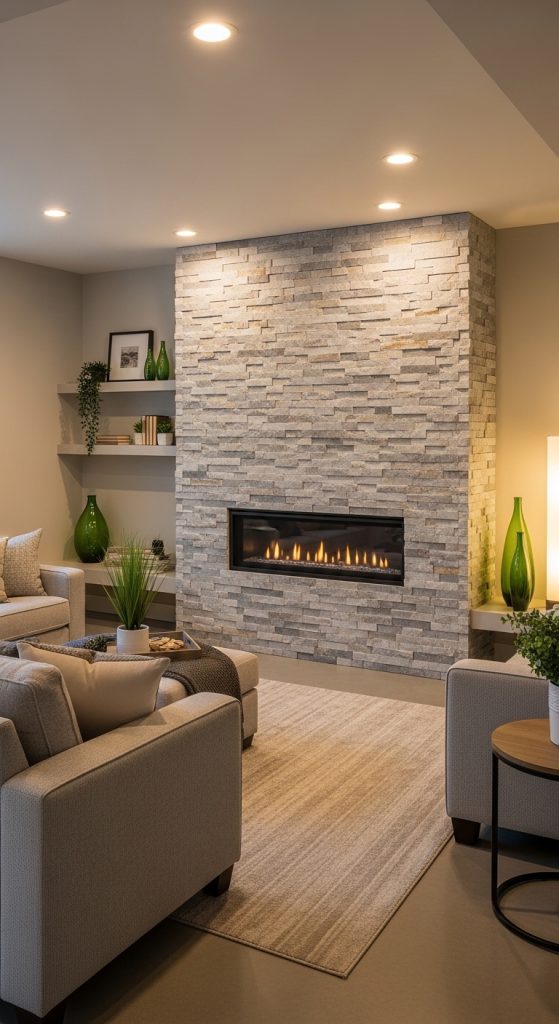
Stone veneer creates a luxurious and dramatic basement accent wall without the heavy weight of real stone. Veneer panels are thinner and easier to install, making them suitable for basement walls.
Preparation begins by inspecting the wall surface. The wall must be clean, dry, and structurally sound. Concrete or drywall surfaces should be coated with a bonding agent or cement board to help the stone veneer adhere properly.
Materials for this project include manufactured stone veneer panels, mortar or adhesive, a trowel, a level, a wet saw or tile cutter, and grout. Some veneer products come in interlocking panels that make installation easier for beginners.
Start from the bottom of the wall and work upward. Apply adhesive evenly and press each panel firmly in place. Use a level regularly to keep the rows straight.
After installation, fill any gaps with mortar or grout to create a natural stone appearance. Some homeowners also apply a stone sealer for extra protection.
A stone veneer accent wall works especially well in basement living rooms or around fireplaces. It adds texture, depth, and an elegant natural appearance that instantly upgrades the space.
4. Brick Accent Wall
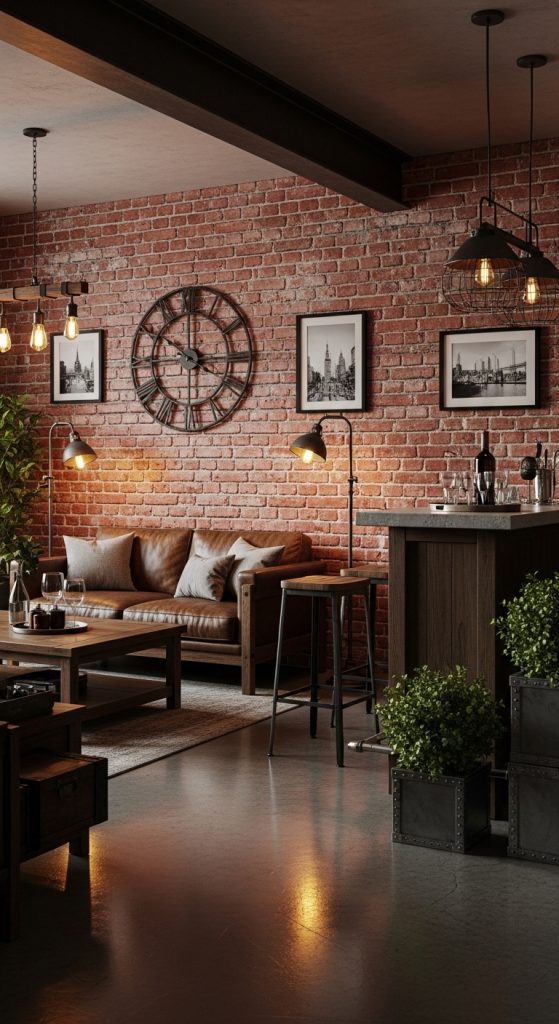
A brick accent wall gives a basement a classic industrial style. It works well in modern loft inspired basements, game rooms, or home bars. Real brick can be used, but brick veneer or brick panels are usually easier and lighter.
Start by preparing the wall surface. Clean the wall thoroughly and repair any cracks or uneven areas. If the wall is drywall, installing cement board first will provide better support for brick veneer.
The materials required include brick veneer panels or thin bricks, mortar or construction adhesive, a trowel, spacers, a level, and grout. Lay out the brick pattern before installation to ensure even spacing.
Apply adhesive or mortar to the wall and press the brick pieces into place. Use spacers to maintain consistent gaps between bricks. Once the adhesive dries, apply grout between the bricks to complete the look.
Brick accent walls can be left natural for a rustic feel or painted white or gray for a modern appearance. Sealing the bricks can help protect them from basement humidity.
This accent wall style adds character and texture while creating a stylish focal point in the basement.
5. Shiplap Accent Wall
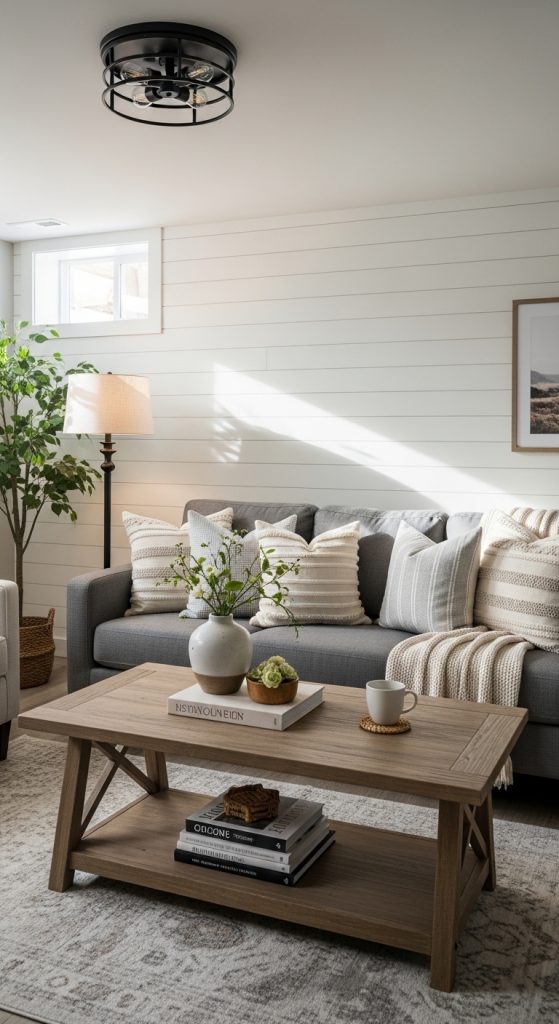
Shiplap walls are known for their clean horizontal lines and farmhouse inspired style. This type of accent wall can brighten a basement and make it feel more organized and welcoming.
Preparation begins by ensuring the wall surface is flat and dry. If the basement wall is concrete, install wooden furring strips to create a frame for attaching the boards. This also improves ventilation behind the panels.
Materials include shiplap boards, a nail gun, finishing nails, construction adhesive, a saw, and paint or stain. Many shiplap boards are pre primed, which saves time during the finishing stage.
Start installing the boards from the bottom of the wall and move upward. Use a level to keep each row straight. The boards are designed with grooves that create small gaps between each plank.
After installation, fill nail holes with wood filler and lightly sand the surface. Paint the wall with moisture resistant paint. White, light gray, or soft blue colors work well in basements because they reflect light and make the space feel larger.
Shiplap accent walls are simple yet stylish and can transform a dull basement into a bright and comfortable living area.
6. Wallpaper Accent Wall
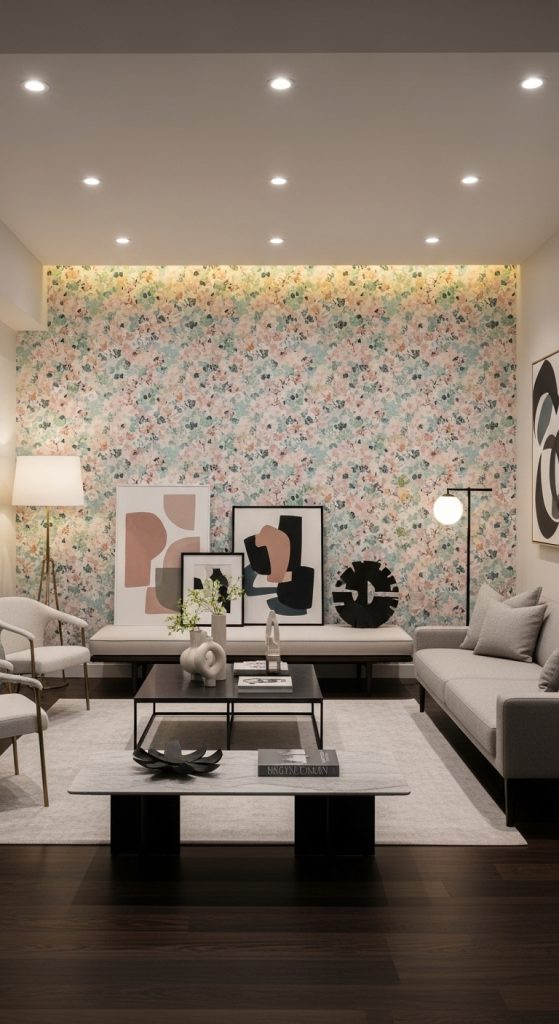
Wallpaper is one of the quickest ways to add color and personality to a basement accent wall. Modern wallpapers come in many patterns, including floral, geometric, textured, and mural designs.
Proper wall preparation is important for successful wallpaper installation. The wall must be smooth, clean, and dry. Fill any holes or cracks with joint compound and sand the surface to make it even.
A primer designed for wallpaper helps the adhesive stick better and also makes future removal easier. Moisture resistant wallpaper is recommended for basement environments.
Materials include wallpaper rolls, wallpaper adhesive, a smoothing tool, a utility knife, a measuring tape, and a level.
Measure the wall carefully and cut wallpaper strips slightly longer than the wall height. Apply adhesive to the back of the paper or directly to the wall depending on the product instructions. Press the paper gently onto the wall and smooth out air bubbles using the smoothing tool.
Wallpaper accent walls work well behind sofas, entertainment units, or basement beds. They add visual interest and can easily change the mood of the entire room.
7. Board and Batten Accent Wall
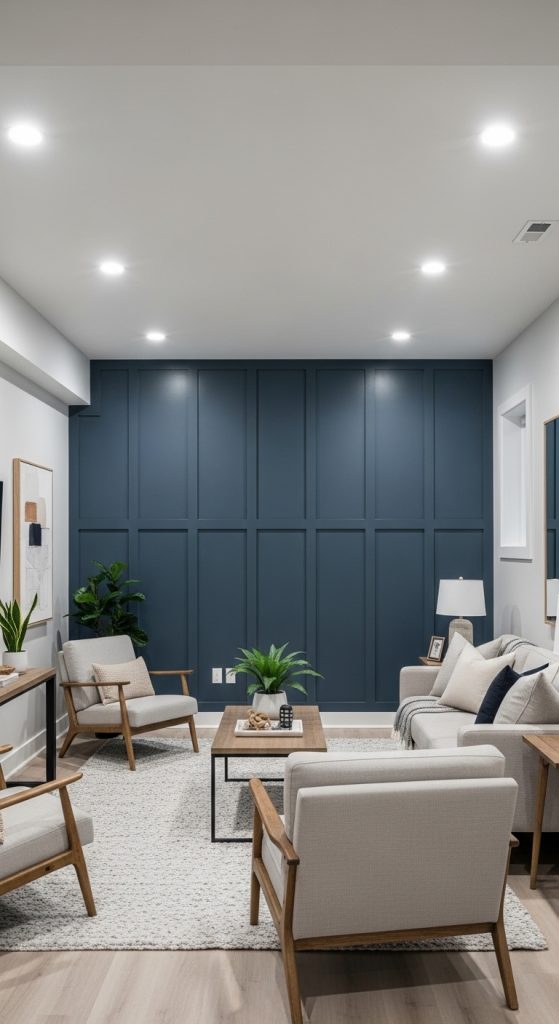
Board and batten walls create a structured and elegant design that works well in many types of basement rooms. This style uses vertical boards placed over a flat wall surface to form a pattern of panels.
Start by preparing the wall. Clean the surface and repair any imperfections. If the basement has moisture concerns, apply a moisture resistant primer before installation.
Materials include medium density fiberboard or wood boards, construction adhesive, finishing nails, a nail gun, a level, caulk, and paint. The boards are typically installed vertically with horizontal trim pieces at the top or bottom.
Measure the wall and plan the spacing between boards before installation. This ensures the pattern looks balanced and symmetrical. Attach the boards to the wall using adhesive and nails.
After installation, fill nail holes and gaps with caulk or wood filler. Once the surface is smooth, paint the entire wall in a single color.
Board and batten accent walls add depth and architectural detail. Dark colors create a dramatic effect, while lighter colors make the basement feel bright and elegant.
8. LED Light Panel Accent Wall
An LED light panel accent wall can transform a basement into a modern entertainment space. This idea works particularly well in home theaters, gaming rooms, or media lounges.
Before installation, ensure the wall is clean and free of moisture issues. Since electrical components are involved, plan the wiring carefully and follow safety guidelines.
Materials include LED light panels or LED strip lights, mounting brackets, power supplies, wiring connectors, and a controller for adjusting colors and brightness. Some systems also allow smartphone control.
Install a backing panel such as plywood or MDF to mount the lights securely. Arrange the LED strips in patterns like squares, hexagons, or vertical lines.
Connect the wiring according to the manufacturer’s instructions. Hide cables behind the panel for a clean appearance.
LED accent walls can change colors and brightness levels, creating different moods for movie nights, parties, or relaxation.
This modern design adds a futuristic touch to a basement while also providing soft ambient lighting.

9. Tile Accent Wall
Tile accent walls are durable, easy to clean, and resistant to basement moisture. They are often used behind basement bars, bathrooms, or entertainment areas.
Start by preparing the wall with cement board if necessary. Cement board provides a strong and moisture resistant surface for tile installation.
Materials include decorative tiles, tile adhesive or thin set mortar, spacers, a tile cutter, a trowel, grout, and a sponge.
Spread adhesive evenly across the wall using a notched trowel. Place the tiles carefully and use spacers to maintain even gaps. Continue installing tiles row by row while checking alignment with a level.
After the adhesive dries, apply grout between the tiles using a grout float. Clean the surface with a damp sponge to remove excess grout.
Tile accent walls come in many materials such as ceramic, porcelain, glass, or stone. Light colored tiles can brighten a dark basement, while textured tiles create depth and interest.
This type of accent wall is practical and long lasting.

10. Fabric Panel Accent Wall
A fabric panel accent wall is a unique idea that adds softness and sound absorption to a basement. It is especially useful in home theaters or music rooms where controlling sound is important.
Begin by preparing the wall surface and installing a wooden frame or backing board. This structure will hold the fabric panels in place.
Materials include plywood panels, foam padding or acoustic foam, fabric of your choice, a staple gun, and mounting brackets.
Cut the foam and fabric to match the size of the panels. Attach the foam to the board using adhesive, then stretch the fabric over the foam and staple it tightly to the back of the panel.
Once the panels are ready, mount them evenly on the wall using brackets or screws. Panels can be arranged in a grid pattern or other decorative layout.
Fabric accent walls add warmth, color, and comfort to a basement space. They also help reduce echoes and improve sound quality, making them ideal for entertainment areas.
With the right fabric and design, this accent wall can create a stylish and comfortable basement environment.