2. Install a Corner Sink
A corner sink is an excellent option when space is extremely limited. Traditional sinks often take up valuable floor space, while a corner sink uses an area that is usually unused.
Before installation, measure the corner carefully to ensure the sink fits properly. The plumbing lines may need to be adjusted depending on the bathroom layout. It is also helpful to check the height and accessibility of the sink to make sure it remains comfortable to use.
Corner sinks are available in several materials such as ceramic, porcelain, glass, and stainless steel. Ceramic and porcelain are the most common because they are durable, easy to clean, and affordable.
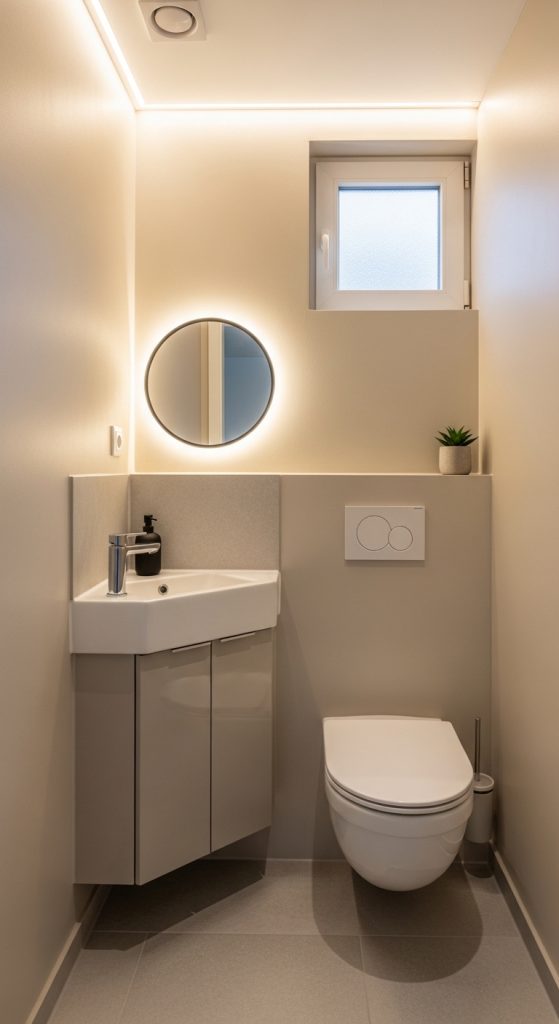
The installation process involves mounting the sink securely into the corner and connecting the water supply and drainage pipes. Waterproof sealant should be applied around the edges to prevent moisture from damaging the walls.
Using a corner sink creates extra room for other fixtures such as cabinets, towel racks, or storage shelves. It also improves the flow of movement inside the bathroom.
This idea is especially useful for powder rooms and very small bathrooms where every inch must be used efficiently.