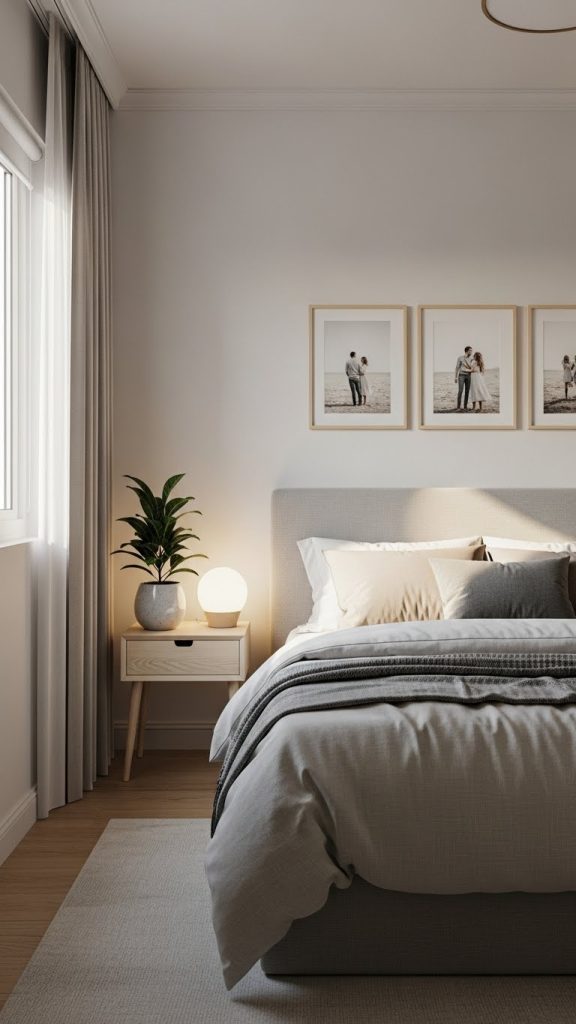
10 Small Bedroom Inspirations
Designing a small bedroom can feel challenging, but with the right ideas and planning, even the smallest space can become comfortable, stylish, and highly functional. A small bedroom does not mean you have to compromise on beauty or comfort. In fact, limited space often encourages smarter design choices, better organization, and creative use of materials. The key is to focus on smart furniture, light colors, efficient storage, and thoughtful layout planning.
Before starting any bedroom makeover, preparation is essential. Measure the room accurately, note the location of doors and windows, and consider how much natural light enters the space. Decide how the room will be used, whether it is only for sleeping or also for work, reading, or storage. Choosing the right materials such as wood, metal, fabric, and paint finishes also plays an important role in durability and comfort.
In this blog post, you will find ten small bedroom inspirations that are practical and easy to apply. Each idea explains preparation steps, materials used, and how to make the most of limited space. These inspirations focus on comfort, organization, and visual balance so your small bedroom feels open, calm, and welcoming.
1. Light Color Palette for an Open Feel
Using a light color palette is one of the simplest and most effective ways to make a small bedroom feel larger. Soft shades such as white, cream, beige, light gray, or pastel tones reflect light and create an airy atmosphere. Before painting, clean the walls and repair any cracks or uneven surfaces. A smooth wall finish helps the color look clean and fresh.
For materials, choose low-VOC wall paint for better indoor air quality. Matte or eggshell finishes work well because they reduce glare while still reflecting enough light. Pair light-colored walls with matching or slightly darker bedding to maintain visual balance. Avoid heavy contrast, as it can make the room feel boxed in.
Furniture should also follow the light color theme. Wooden furniture with a light stain or white laminate blends well with pale walls. Curtains in sheer or semi-sheer fabric allow natural light to enter while maintaining privacy. Flooring in light wood or neutral tiles further enhances the spacious effect.
This inspiration works best for rooms with limited natural light. The overall result is a calm, bright bedroom that feels open and relaxing despite its small size.

2. Smart Storage Bed Design
A storage bed is a practical solution for small bedrooms where storage space is limited. Before choosing a bed, measure the room carefully and decide how much storage you need. Options include drawers under the bed, lift-up hydraulic storage, or box storage.
Materials commonly used for storage beds include engineered wood, plywood, or solid wood. Engineered wood with laminate is cost-effective and easy to maintain, while solid wood offers long-term durability. Make sure the bed mechanism is strong and easy to operate.
Use the storage space to keep items you do not need daily, such as extra bedding, seasonal clothes, or travel bags. Organize the storage area with fabric boxes or dividers so items remain accessible and neat.
Choose a simple headboard design to avoid visual clutter. Upholstered headboards add comfort without taking extra space. This inspiration allows you to reduce the need for additional wardrobes or cabinets, keeping the bedroom open and organized.

3. Minimalist Furniture Layout
A minimalist furniture layout focuses on using only what is necessary. Start by listing essential items such as the bed, a small wardrobe, and a bedside table. Avoid bulky furniture that overwhelms the room.
Preparation includes creating a floor plan on paper or digitally to see how furniture will fit. Materials such as slim metal frames, compact wooden units, and floating shelves are ideal for minimalist bedrooms.
Choose furniture with clean lines and simple designs. A platform bed without a footboard saves visual space. Wall-mounted lights or reading lamps replace bulky table lamps and free up surface space.
This approach makes cleaning easier and improves movement within the room. The bedroom feels calm and organized, which is especially important for rest and relaxation. Minimalism is not about removing comfort but about removing excess.

4. Vertical Storage and Wall Shelves
Using vertical space is essential in small bedrooms. Wall shelves, tall cabinets, and hanging organizers help store items without using floor space. Before installation, check wall strength and mark shelf positions carefully.
Materials for wall shelves include solid wood, MDF, or metal brackets with wooden planks. Choose finishes that match the room’s color palette. Floating shelves create a clean look and can be placed above the bed, desk, or wardrobe.
Use vertical storage for books, decor items, plants, or folded clothes. Keep heavier items on lower shelves for safety. Avoid overcrowding shelves, as this can make the room look messy.
Vertical storage draws the eye upward, making the room feel taller. This inspiration is ideal for rooms with high ceilings but limited width or length.

5. Multi-Functional Furniture Pieces
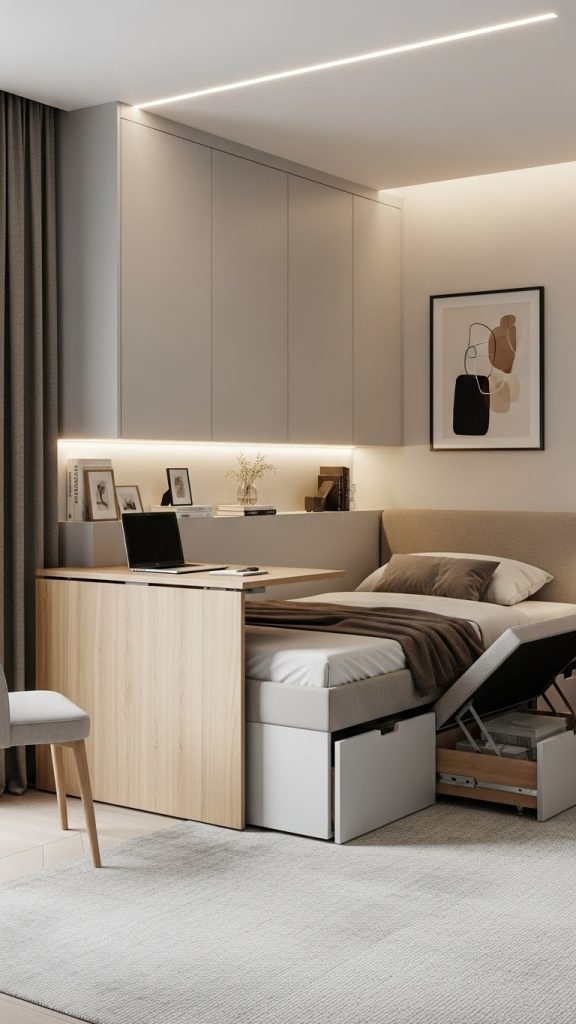
Multi-functional furniture is perfect for small bedrooms. Examples include a bed with built-in drawers, a desk that folds into the wall, or a bench with hidden storage. Preparation involves identifying areas where one piece can serve multiple purposes.
Materials should be strong and durable, especially for moving parts. Hinges, sliders, and joints must be high quality. Wood and metal combinations are commonly used for strength and style.
A foldable desk can serve as a workspace during the day and disappear when not in use. An ottoman with storage can be used for seating and storing blankets. These pieces reduce clutter and improve room efficiency.
This inspiration helps maintain a clean look while meeting daily needs without overcrowding the space.
6. Mirrors to Enhance Space
Mirrors are a powerful design tool for small bedrooms. They reflect light and create the illusion of depth. Before placing a mirror, identify where natural or artificial light hits the room.
Materials include glass mirrors with wooden, metal, or frameless designs. A large wall mirror or mirrored wardrobe doors work best. Ensure mirrors are securely mounted for safety.
Place mirrors opposite windows or light sources for maximum effect. Avoid placing them where they reflect clutter. A simple frame keeps the look clean and modern.
This inspiration instantly makes a small bedroom feel brighter and more spacious without structural changes.

7. Cozy Corner Bed Placement
Placing the bed in a corner can free up valuable floor space. This layout works well in narrow rooms. Preparation includes measuring bed size and ensuring enough space to move around comfortably.
Use a solid bed frame made of wood or metal. Add a padded headboard or wall cushions for comfort. Wall-mounted bedside shelves replace traditional tables and save space.
Use soft bedding and layered textures to make the corner feel cozy rather than cramped. This layout creates a snug sleeping area while leaving room for other functions.
8. Soft Lighting for Comfort
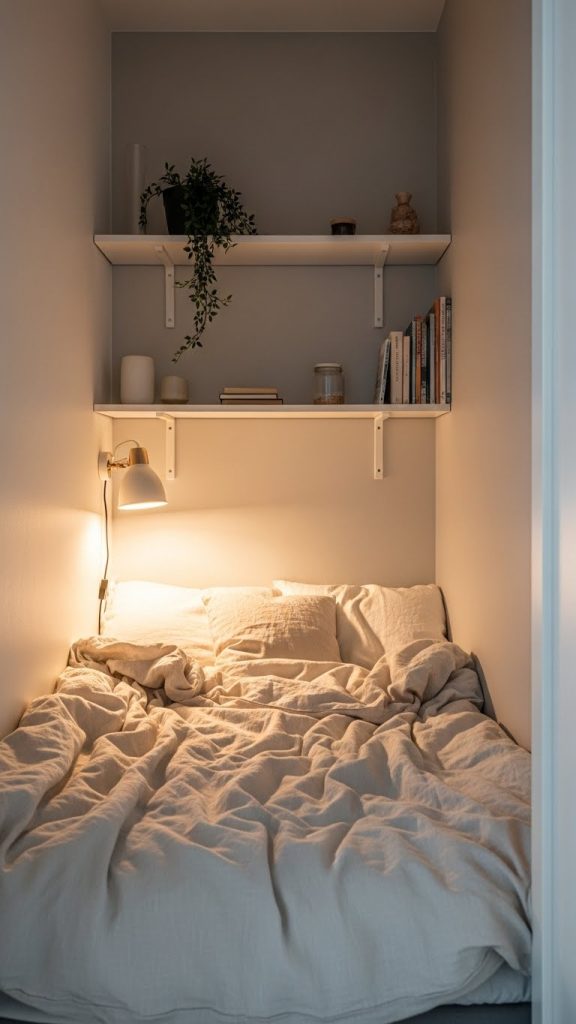
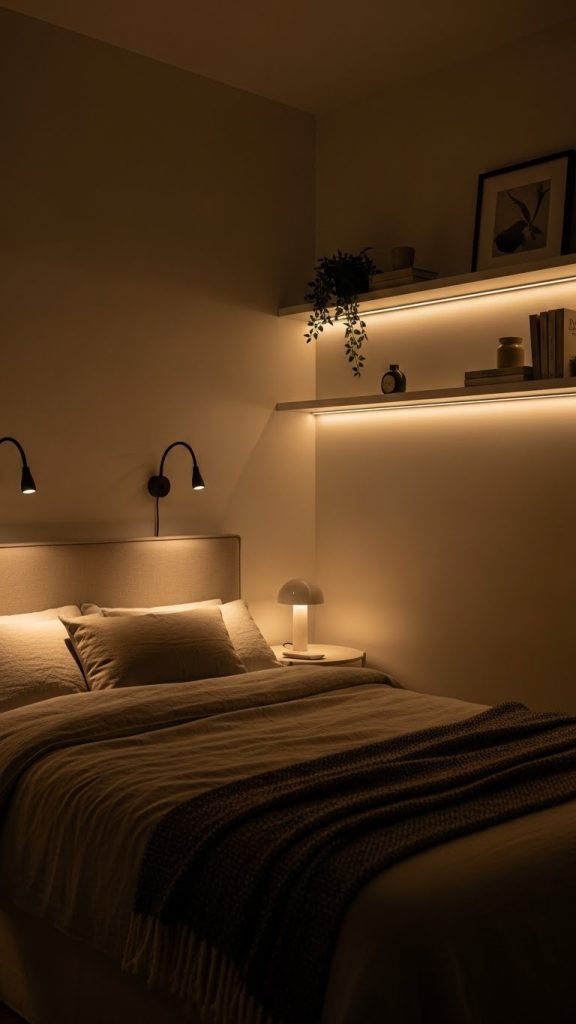
Lighting plays a major role in how a small bedroom feels. Avoid harsh overhead lighting. Instead, use layered lighting such as wall lamps, pendant lights, and LED strips.
Materials include warm LED bulbs, fabric lampshades, and concealed lighting channels. Warm light creates a relaxing atmosphere and reduces eye strain.
Install wall-mounted reading lights to save space. LED strips under shelves or beds add depth and softness. Proper lighting makes the room feel larger and more inviting.
9. Compact Wardrobe Solutions
A compact wardrobe designed to fit the room dimensions can save space. Sliding doors are better than hinged doors in small rooms. Preparation includes measuring height and width accurately.
Materials include plywood or MDF with laminate or veneer finishes. Interior organizers such as drawers, hanging rods, and shelves improve usability.
Choose light-colored or mirrored wardrobe doors to avoid visual heaviness. A well-designed wardrobe reduces clutter and keeps the bedroom organized.

10. Personal Touch with Simple Decor
Adding personal decor makes a small bedroom feel warm and welcoming. Choose a few meaningful items instead of many small decorations.
Materials include framed photos, fabric wall art, indoor plants, and soft textiles. Use lightweight frames and avoid heavy wall hangings.
Keep decor minimal and aligned with the room’s color scheme. A single accent wall or a few cushions can add character without overcrowding.
This inspiration ensures your bedroom reflects your personality while staying functional and peaceful.